
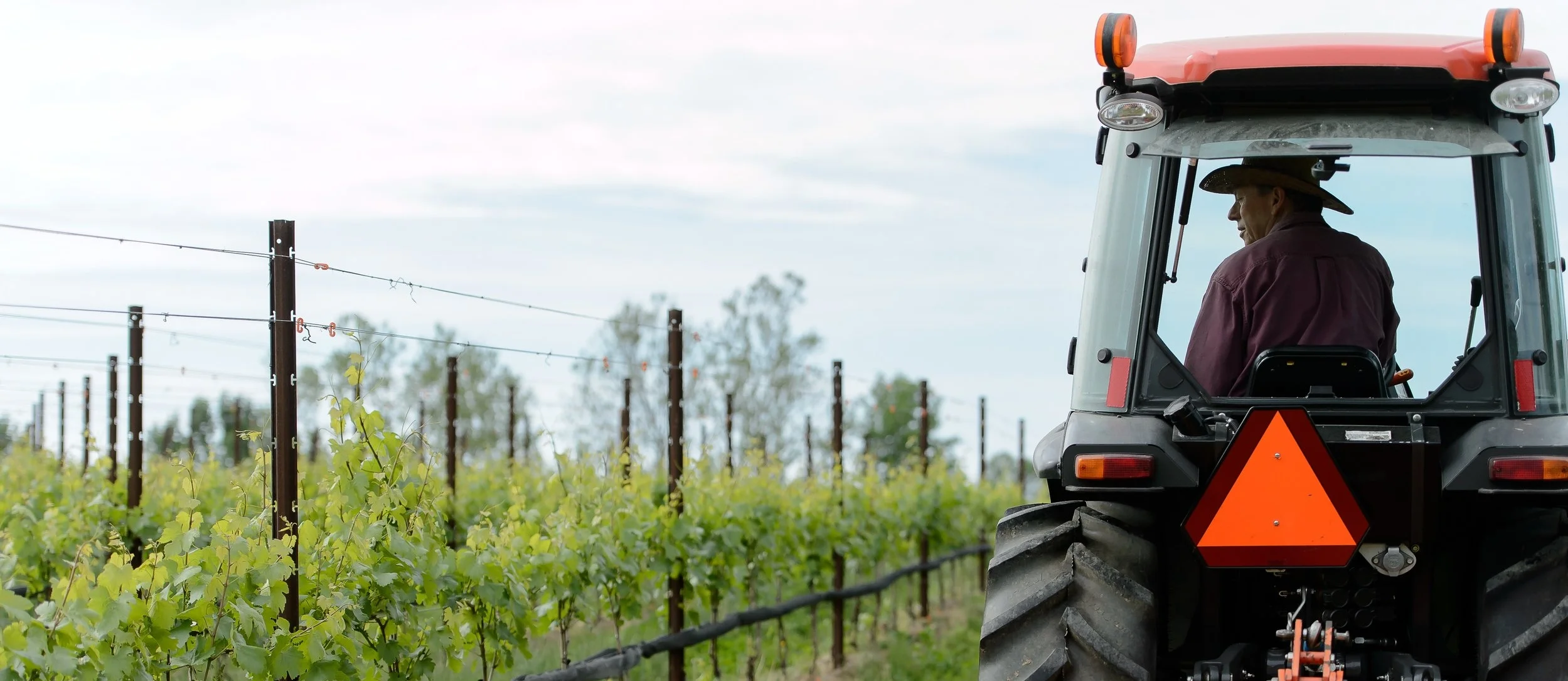

Reflections on the 2026 World Living Soils Forum
Polly and I were recently invited to attend the World Living Soils Forum in Arles. Hosted by Moët Hennessy, the wine and spirits division of LVMH, the forum celebrated the progress in advancing regenerative agriculture and rebuilding healthy soils. It gathered a remarkable community—growers, scientists, business people, and advocates—around the shared conviction that farming and living systems must be tended together. While regenerative agriculture as a means of improving soil health remained the focus, panels also covered biodiversity, agroforestry, water quality, and financing, with many highlighting the work of our colleagues from the Porto Protocol.
Polly and I were recently invited to attend the World Living Soils Forum in Arles. Hosted by Moët Hennessy, the wine and spirits division of LVMH, the forum celebrated the progress in advancing regenerative agriculture and rebuilding healthy soils. It gathered a remarkable community—growers, scientists, business people, and advocates—around the shared conviction that farming and living systems must be tended together. While regenerative agriculture as a means of improving soil health remained the focus, panels also covered biodiversity, agroforestry, water quality, and financing, with many highlighting the work of our colleagues from the Porto Protocol.
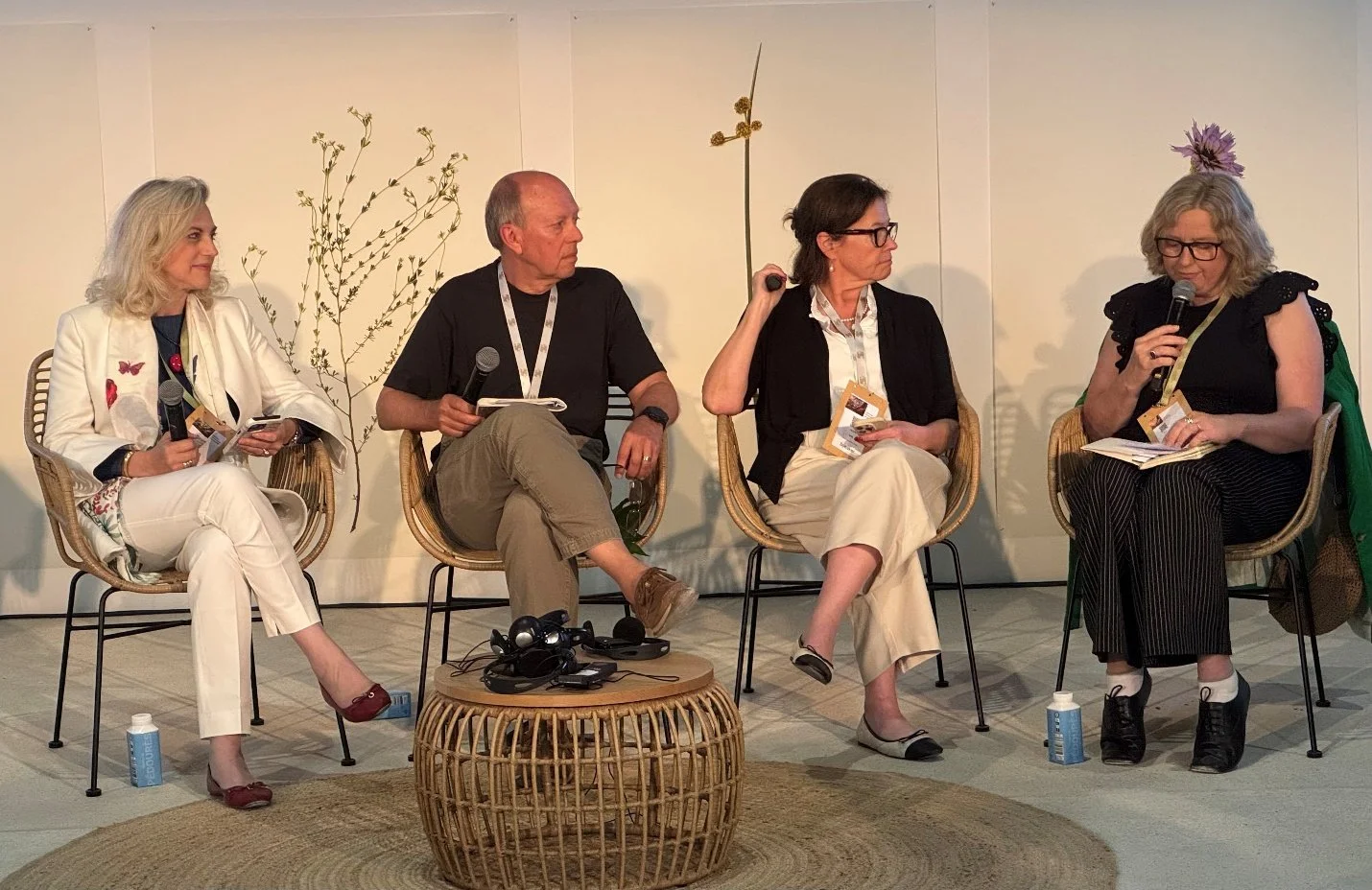
Biodiversity Panel with Nicole Rolet, Heleen Rabe, and Becky Sykes
The WLSF also enabled LVMH to showcase its work to regenerate vineyard ecosystems. Among the twenty-nine LVMH estates, Château Cheval Blanc stands out for its significant investment in agroforestry, adopting a contrarian approach by planting trees within the vine rows. The commitment to regeneration sometimes requires considerable short-term financial sacrifice. Champagne producer Maison Ruinart, another LVMH property, continues to use these methods despite a 20% decrease in yield, which has significantly affected its bottom line.
By extensively promoting the work of its subsidiaries in a luxury-brand communication style, the meeting at times felt more like advertising than an exchange of agricultural initiatives. Still, in a world filled with corporate greenwashing, LVMH appears more committed to creating a sustainable future than most. Antoine Arnault (the son of billionaire CEO Bernard Arnault, more on this later) summarized the company’s many efforts, including important partnerships with UNESCO to protect biodiversity and the World Wildlife Fund to preserve the Congo Basin rainforest.
Despite the festive atmosphere, the extraordinary opportunity to learn from more than 600 participants, and the honor of sharing Dodon’s experience on two panels, I came home curiously unsettled. Part of this feeling stemmed from the luxury branding, which clashed with the deadly serious subjects at hand. I need to get over my aversion to glitz. LVMH does it very well, and if some people are motivated to act by excessive showiness, then so be it.
But for those of us who came to Arles hopeful, the days there were a study in contradiction. We found ourselves caught between two truths: on one side, rooting for the genuine progress toward healthy, living ecosystems; on the other, the immense shortcomings of so many of these efforts, especially those that remain untouched. It is a tension that everyone working toward just and sustainable agricultural systems always feels.
What struck me, then, was not the meeting's communal effervescence, which it had in abundance, but its collective cognitive illusion. Most presentations concluded that we understood enough to adopt nature-based solutions to our environmental and agricultural problems. In this view, success depends not on a reciprocal relationship with nature but on the clever selection of the most appropriate cover crops and the precise timing of their termination. I kept returning to the same unease: the work is real and valuable, and yet so much of it seems to miss the point. How can we hold both truths at once—and honestly ask whether we are moving toward our shared goal?
Chemist Leslie Orgel must be turning in his grave. His second rule, that “evolution is cleverer than you are,” says it all. Embracing this concept requires us to change our relationship with nature, adopting humility and casting aside the delusion that humans are superior to the other eight billion species on the planet, free to do with them as we wish. It requires us to be part of, not in charge of, a holistic, self-regulating, resilient world.
Grasping evolution’s lessons requires openness, patience, and attention to what is happening around us. The solution to a cover crop problem will usually be in plain sight, either along the edge of a farm field or within it, not in a consultant’s cookbook of recommendations developed hundreds or even thousands of miles away. Grasses and forbs already adapted to the local ecosystem will dominate these areas if we encourage their growth. They will also adjust to changing seasons and conditions, the very definition of resilience.
Scaling regenerative successes was also at the forefront of most minds at the WLSF, but there were few novel insights. Many attendees and speakers, including the sponsors, represented large companies seeking to implement regenerative practices globally. Others sought to promote wider adoption of globally uniform certification schemes. Yet nature and evolution operate locally, often in multiple places at once, slowly spreading until they converge on one or more solutions. This is Rudolf Steiner’s central insight: knowledge that fits the farm is grown on the farm, not shipped to it.
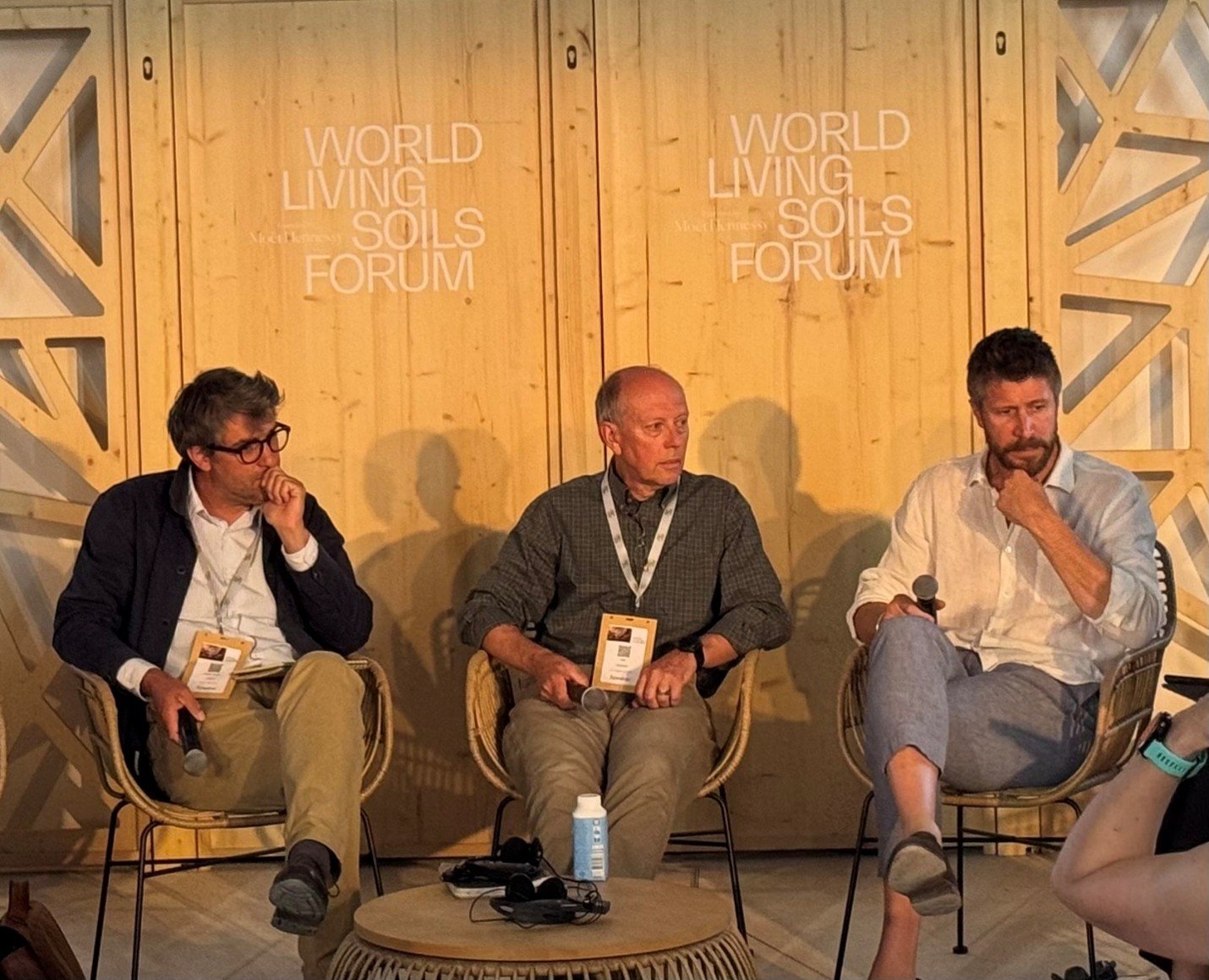
Agroforestry panel with Pierre-Olivier Clouet and Benedikt Bösel.
Social psychology deepens our understanding of why decentralized knowledge transfer is important. When systemic change is imposed from outside the community, it threatens identity, heightens uncertainty, and triggers resistance. Conversely, lasting transformation begins within individuals and then extends to communities. Implementing a global vision will require the hard work of many local projects, not global magic bullets.
Agroecology has a significant commitment to social justice, a principle that most practitioners extend to the growing regenerative agriculture movement. The WLSF focus on young farmers was both refreshing and disturbing. A few presentations, most notably by Benedikt Bösel, emphasized the need to make farming attractive – intellectually, socially, financially, and spiritually- to younger generations if the regenerative changes we seek are to become commonplace. Agroecology has always understood farming as a social practice as much as a technical one, and a movement that cannot welcome the next generation will not endure. No one, however, mentioned the role of large corporations, which frequently use their considerable market power to control the prices of farm inputs, labor, and products, thus suppressing the wages needed to support young families.
Nature doesn’t offer solutions to these entirely human challenges. Panels on financing, insurance, certification, and coalitions failed to offer solutions to the fundamental structural barriers that trap farmers in a system that pays only a third of the true costs of our food and shackles them to subsidy payments that leave no room for innovative practices that would sequester carbon dioxide, reduce eutrophication, cut chemical and plastic pollution, and improve product quality.
Widespread adoption of regenerative agriculture thus remains limited, in part due to corporate influence, aggressive marketing, and public policies that prioritize profits over public health, the environment, and social justice. LVMH and its luxury-brand peers have been criticized for low wages, exploitative business practices, and lack of transparency. I doubt the contrast between its ultra-high-net-worth CEO and migrant workers making less than five dollars for a 90-hour work week is the vision of a regenerative world the organizers intended. Still, it was in the WLSF background for many.
Although their visibility makes their moral shortcomings more apparent, worker exploitation isn’t confined to luxury brands. Modern agriculture in the United States traces its origins to policies that forcibly displaced indigenous peoples from their ancestral lands, expanded production by appropriating slave labor, and enriched itself under Jim Crow-era policies that drove Black families from their farmland, failings that extend to my own family. The problem is so pervasive that B-Lab, an organization that certifies companies based on their social and environmental performance, transparency, and accountability, doesn’t consider it foundational. Facing our weaknesses, individually and collectively, is the first step toward achieving a regenerative vision.
Life is complicated. Doing good for the environment doesn’t ensure we will treat our fellow humans with dignity, respect, and fairness. Yet how can we regenerate nature if we continue to exploit one another? I hope future editions of the WLSF will demonstrate that LVMH has used its power and influence to join with others to create a more equitable social contract with the rest of society. As the author and environmentalist Paul Hawken notes, “The promise of business is to increase the well-being of humankind through service, creative invention and ethical philosophy.”
The tension I felt in Arles will not resolve; it will travel with us. Our task is to welcome it—to embrace it as it widens into the full spectrum of human and natural experience—and to carry the community we are building toward deeper and more distant points of environmental and social justice. It will not be perfect, and it will never be quite enough. But we believe that traveling along this road, patiently and together, is the future we should seek.

An Update on the April 21 Frost
I’ve been getting a lot of questions about the effects of last week’s devastating frost at Dodon, when no vine was left untouched, despite improved cold-air drainage in the low spots and the fans running in a futile attempt to bring warm air into the vineyard.
I’ve been getting a lot of questions about the effects of last week’s devastating frost at Dodon, when no vine was left untouched, despite improved cold-air drainage in the low spots and the fans running in a futile attempt to bring warm air into the vineyard.
Many of our colleagues took even more desperate measures, such as scalping the ground with mowers, applying nutrients to disrupt nucleation and alter intracellular osmolarity, and using helicopters, open fires, and smudge pots, all of which can create air circulation. None of this worked. There was simply too much cold air. Only the vineyards along the Chesapeake and at 6-800 feet above a valley floor survived unscathed.
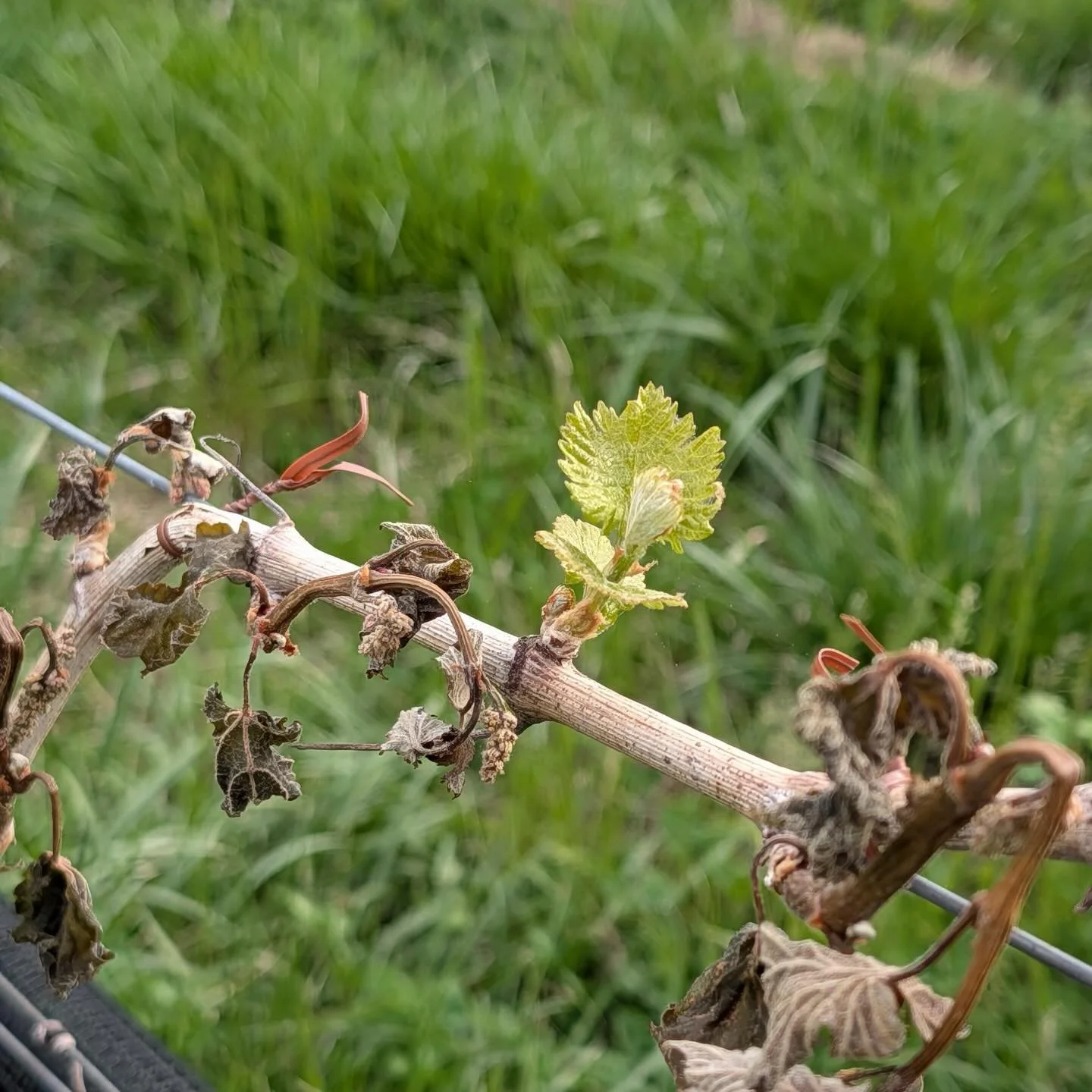
It was worse than it looked. As the highest and warmest spot in the vineyard, the Merlot in the first few rows of Block 41 along the driveway was the least affected, but even these vines showed signs of damage. We lost almost all the primary buds in the Chardonnay, Cabernet Franc, and Sauvignon. The Merlot, Petit Verdot, and Cabernet Sauvignon were not quite as far along, so a few primary buds had yet to break, but even these sustained severe damage.
Fortunately, grapevines have compound buds. Usually, only the primary buds emerge. These are the most vigorous and fruitful, producing shoots that bear two or more clusters. If the primary buds fail to break or are damaged by frost or other injury, secondary buds emerge within hours or days. Much of the green tissue in the vineyard now is the result of these buds. Sadly, they are much less fruitful than the primary buds, producing at most a single cluster.
It's much too early to know the full extent of the damage to the vintage. We won’t know this until fruit set in mid-June at the earliest, and even then, the growing season will bring many challenges. My best guess is that we can reasonably expect a crop of 30-40% of normal, about 12 to 15 tons of fruit or 700 to 900 cases of wine, most of which will likely go to white and rosé production. Some of our industry colleagues have already declared the vintage a complete loss, laying off workers in the process.
Because it takes vines several years to fully recover from an injury of this magnitude, the losses are likely to continue beyond 2026. The white vines first frosted in 2020 and again in 2021 and 2022 still haven’t returned to full productivity. We don’t know whether the ecological practices we use will alter this course, though it makes sense that healthy, well-nourished vines in a functioning ecosystem will heal faster than unhealthy vines planted in poor soil.
Fortunately, our business plan anticipates these events, so we’re likely to be fine in the long run, at least this time around. But the longer term is still unclear. We had never experienced a killing spring frost until 2020. They are now annual occurrences, adequately addressed by the cold drains, at least until now.
The underlying challenge is warming driven by fossil fuel combustion and outdated agricultural practices. Hotter winter temperatures trigger earlier bud break, extending the risk period. At the same time, atmospheric warming disrupts the polar vortex, allowing cold Arctic air to dip into temperate regions later in the season. The slowdown of the Atlantic Meridional Overturning Circulation (AMOC) compounds this cooling. These problems are worsening.
Members of the global wine industry have responded vigorously to the harmful effects of climate change and environmental degradation through global organizations such as the Porto Protocol Foundation, the Regenerative Viticulture Foundation, the International Wineries for Climate Action, and locally through the Dodon Center for Ecological Farming, which Polly and I established last year. We hope you will join us by becoming informed about the challenges of climate change, supporting these and many other climate-focused groups, talking with your neighbors about what you learn, and taking other practical steps. The wine industry may be among the first to experience the full effects of climate change, but it will not be the last.

2025 Vintage Summary: Resilience Takes Center Stage
I usually prepare an annual vintage summary in December, but life and competing demands got in the way. After an extended holiday filled with family visits, we watched the U.S. government invade Venezuela and Minneapolis and threaten Greenland. Suddenly, the operations of a small farm in Davidsonville seem insignificant.
But times like these also remind us of the importance of strong, resilient communities, whether they are based in nature, semi-natural like our vineyard, or centered on human connections.
I usually prepare an annual vintage summary in December, but life and competing demands got in the way. After an extended holiday filled with family visits, we watched the U.S. government invade Venezuela and Minneapolis and threaten Greenland. Suddenly, the operations of a small farm in Davidsonville seem insignificant.
But times like these also remind us of the importance of strong, resilient communities, whether they are based in nature, semi-natural like our vineyard, or centered on human connections.
Nature has much to teach us about how communities of organisms work together to mitigate the impacts of natural disasters, pollution, and invasive species. We learned a lot about resilience in 2025; here is my vintage report.
Extreme Drought and then Rain Start the Season
The 2025 vintage was marked by winter drought, months of heavy spring rain, then drought again, equipment failures, the Spotted Lanternfly invasion, and ongoing learning from our experiences.
On April 10, just around budbreak, the U.S. Department of Agriculture declared Anne Arundel County a federal disaster area due to several years of drought. The aquifer was lower than ever recorded.
Almost on cue, the drought started to ease. We were happy to get some rain, which increased nutrient turnover as the vines and cover crops emerged from winter dormancy.
By May, however, the rainfall became excessive, with 11.5 inches that month, 10 inches in June, and 6 more in the first half of July. On Friday, June 13, alone, an incredible 5 inches fell in just an hour and fifteen minutes.
Several effects are anticipated from this heavy rainfall during the first half of the growing season. First, the soil would become waterlogged, with mud puddles forming in low spots throughout the vineyard and heavy compaction from tractor passes. The vines' roots would become starved for oxygen, reducing their ability to absorb nutrients, resist pests, and set fruit, which limits the harvest size and quality. Additionally, the excessive water would create ideal conditions for fungal diseases, including bunch rot and downy mildew.
Yet, here at Dodon, none of this occurred. There were no puddles. The vines kept growing, even as many of our colleagues across the region reported yields 50-80% below normal at harvest. In fact, we experienced our second-largest harvest ever. Despite the tough conditions, we even managed to reduce pesticide applications compared to the 2024 vintage, which had much better conditions.
While I can’t prove it, I like to believe that the resilience seen in the vineyard comes from our farming practices-practices that rebuild soil health and restore functioning ecosystems. This experience aligns with emerging science that shows an extraordinary connection between biodiversity and resistance to extreme weather events.
The mechanism behind these benefits is straightforward. Different plants with varying root depths break up “plow-pan,” compacted soil that blocks rainwater infiltration, and create pathways that improve infiltration. Years of building a diverse soil microbiome create disease-suppressive soils that act as the vineyard's immune system, a function that now extends to control of insect pests.
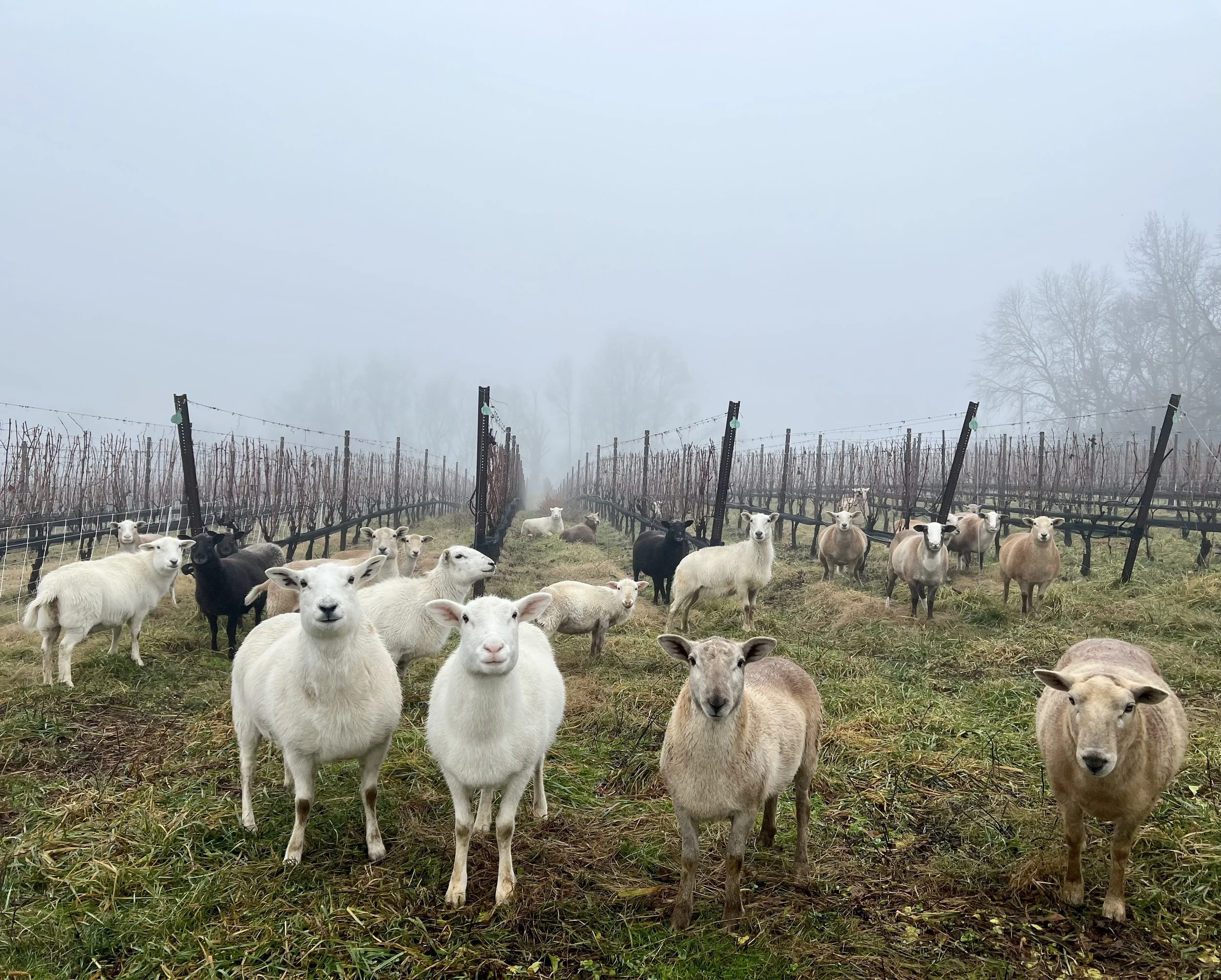
Simply put, we’ve confirmed that a healthy environment—one with diverse plant, insect, mammalian, and microbial life—helps create strong, vibrant, and resilient vines that resist all but the most extreme conditions.
Nature Heals Itself, But Can It Also Fix the Tractor?
In late April, we arrived to find the glass on a tractor door had shattered. To this day, we don’t know how or why this happened. Vandalism seems like the most likely cause, but we simply don’t know.
Replacing the glass was a quick and easy process, causing only a few days of inconvenience. However, a few weeks later, the engine of the other tractor caught fire while Kurtis was spraying. Roberto and Kurtis quickly took control of a truly dangerous situation, putting out the fire and stopping the engine by pulling the battery cable.
This time, the disruption was more severe. It took months to get the required parts. Our mechanic is also a busy farmer who needed to put up hay before the next rain. We quickly fell behind on essential vineyard chores, including crimping, tilling, and hedging. Being without one tractor meant hours spent changing implements and counterweights whenever we needed to finish a specific task. The vineyard team eagerly stepped in, working extra hours and doing as much as possible by hand.
The apparent cause of the fire can be linked to biodiversity loss, climate change, and malfunctioning ecosystems. Mice chewing on the wiring harness caused overheating, which was likely the main reason for the fire. This isn’t a new problem.
Over the past few years, we’ve had more rodents than usual around the farm. A year ago, they chewed through the truck's fuel line. An increase in rodents in the meadows has also led to more ticks than we’re used to.
The rise in mouse populations, as it turns out, is caused by changes in the ecosystem. You’ve probably heard the phrase “follow the money," but in nature, we “follow the food.” Bird populations, including raptors that keep rodent numbers in check, have decreased significantly over the past century. Warming temperatures, habitat destruction, and the reintroduction of coyotes have disrupted food chains, migration patterns, and reproduction, leading to a surge in rodent numbers.
At the same time, we’ve enhanced plant and insect diversity in and around the vineyards, providing more food and habitat for rodents. Essentially, we’ve increased the availability of rodent food while removing their natural predators, a clear example of a trophic cascade in action.
Tractor fires, fuel line leaks, and more ticks around the meadows are the result. For now, our response is to add more bat and hawk boxes, which we hope will help rebalance the ecosystem and keep the tractor running smoothly.
Redundancy to the Rescue
Narrow escapes marked the first part of the season. We endured the rain and still had a full, high-quality crop. We repaired the tractor in time to hedge before hanging the bird nets. Then came the final days of harvest, along with Spotted Lanternfly, a broken motor on the sorting table, and finally, a destemmer that wouldn’t start.
Broken equipment at the end of the growing season is common on a farm, but we work hard to ensure that the crush goes smoothly. Forty-two tons of ripe fruit need to be processed quickly and efficiently. Every tool, from the snips to the press, is serviced, checked, cleaned, and regularly inspected.
Yet just a few tons into the red crush, the sorting table started to wobble. One of the two vibrating motors had shut down. We checked the wiring, getting shocked a few times as we found that a ground wire was connected in the wrong spot. We tried to order a new motor, but it would take months to arrive from Italy. In the end, we jury-rigged the table to run on one motor — a little awkward and slow, but still workable.
The last day of the crush was expected to be lighter, with only three tons more, so we took an extra half-hour to sleep in. Everything appeared normal, and the team was relaxed and happy, until I flipped the destemmer switch. Nothing. After two hours of troubleshooting and several calls to the manufacturer, still nothing.
Fortunately, we had our old destemmer in storage. Out it came, and soon cleaned, sanitized, and ready to use. It runs at about a quarter of the speed of the broken one, but at least it runs.
Just like with the tractor, having a spare showed that redundancy can be a crucial part of resilience. When I shared this story with a Navy submarine commander several months later, he immediately understood what I meant. On a submarine, where broken parts can mean life or death, they keep as many as eighteen replacement parts for each system.
SLF Finally Arrives
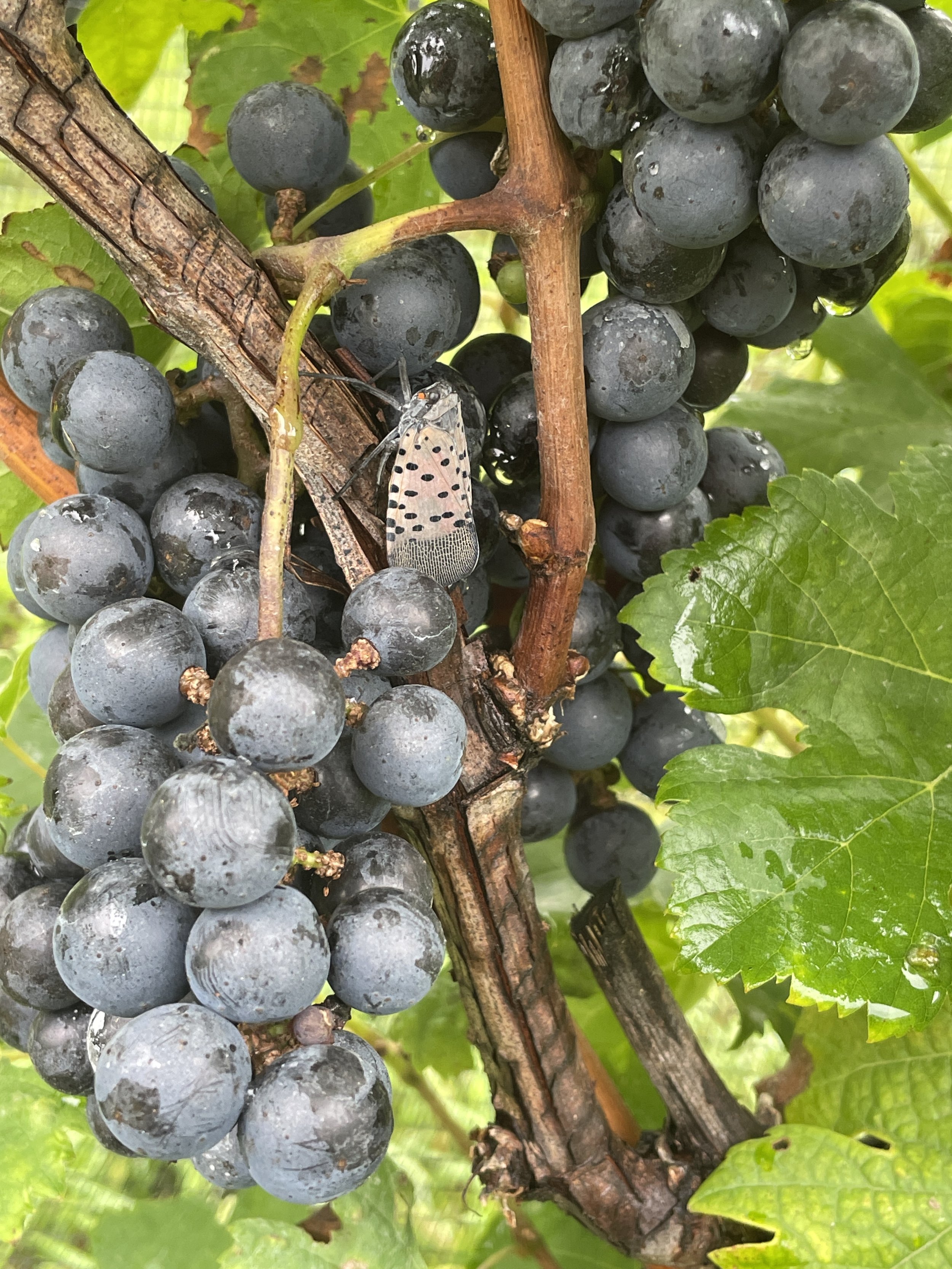
We have known for years that the Spotted Lanternfly (SLF) would arrive. We prepared by removing hundreds of Ailanthus altissima, also known as the Tree of Heaven (TOH), which attracts SLF and enhances its reproductive ability and lifespan. We also installed songbird and bat boxes to attract natural predators. These efforts yielded only limited success.
By mid-summer, many of the Ailanthus we killed a year ago had grown vigorous new shoots. These sprouts had attracted large numbers of SLF. At this point, I felt we had no choice but to use pesticides—an herbicide to eliminate the Ailanthus and a long-lasting insecticide to reduce the SLF population. Like in medicine and public health, sometimes targeted treatments are necessary when cultural practices fall short.
We hoped that reducing the number of SLF near the vineyard would decrease their population within the vineyard. However, we started noticing adult SLF in the vineyard in early August, though there were very few until Regina spotted three on a single shoot in Row 3 of Block 40, the first red block to be harvested. The next day, the first three rows were covered. Since the fruit had already been harvested, we decided to apply a long-acting insecticide by hand to these rows alone. The number of SLF per vine we observed would likely weaken their ability to survive the winter.
And so, the rest of the fall passed. An infestation would appear—some large, some small, but almost always on the outer edges of the vineyard—that we would treat. We had two goals: first, to prevent excessive feeding that would weaken the vines enough to prevent them from surviving the winter; second, to reduce egg laying in the vineyard.
We don’t yet know the results of our efforts. It seems likely that the insecticide reduced their numbers, but many egg masses remained in early November. When I surveyed areas with a high concentration of Ailanthus in nearby woods, I found very few SLF, suggesting that the insects probably flew into the vineyard from elsewhere. In other words, while adding bat boxes and birdhouses may help, unless they are used throughout the community and unless host trees for miles around are removed, we are likely to continue seeing SLF in the vineyard. These measures will only have a major impact if implemented community-wide.
Team Updates
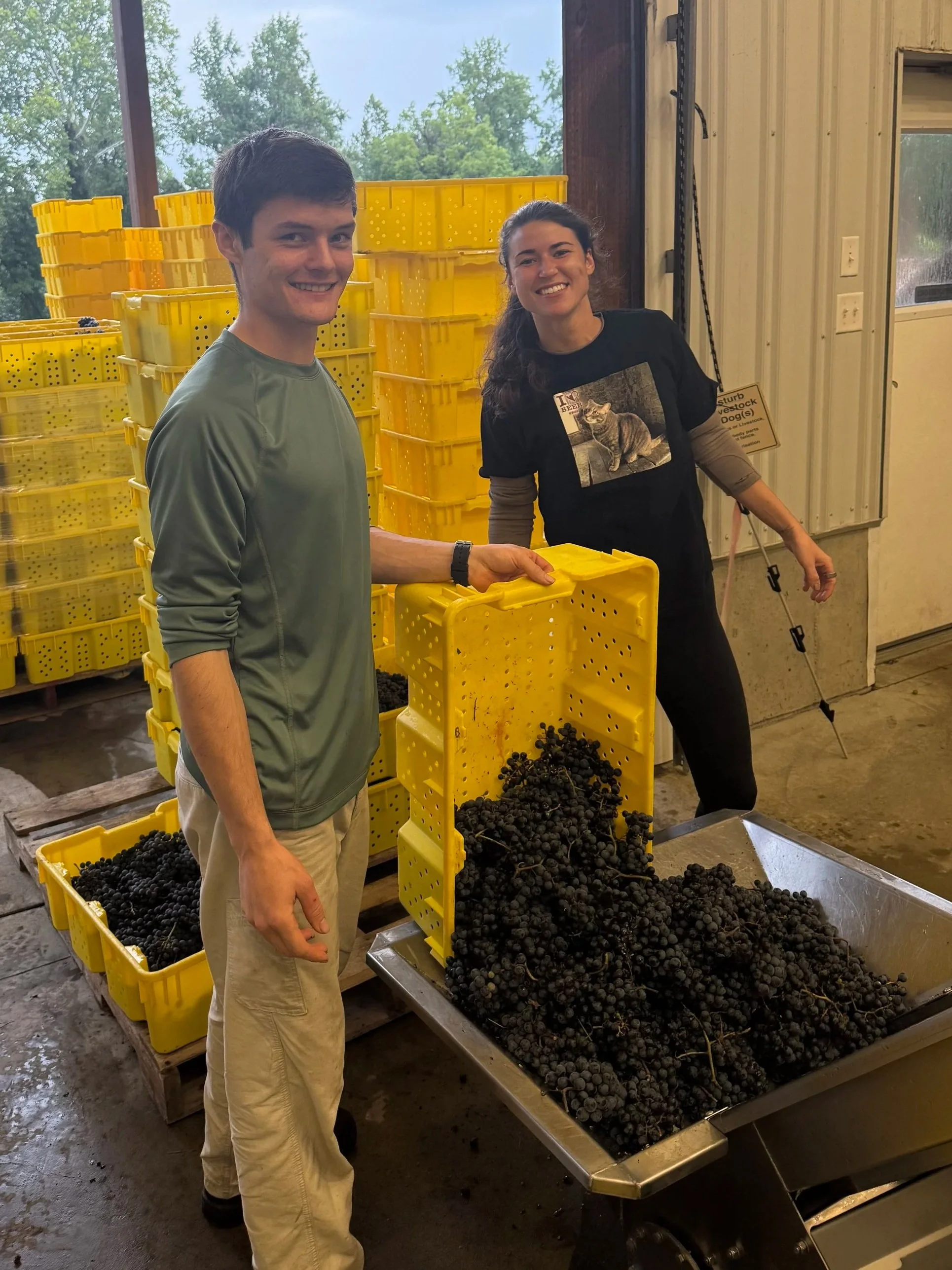
Some moments are bittersweet. After years of a long-distance relationship, Operations Manager Katie Sircovics will join her husband, JJ, at Fort Bragg later this month. It’s been wonderful to watch her grow both personally and professionally, and we’re glad to celebrate this joyful milestone in her life.
I have so many great things to say about Katie – her practical solutions when we overcomplicate things, her willingness to take on any task to be helpful, and her dedication to Dodon’s mission. But mostly, I’ll miss her delightful presence.
Fortunately, Katie will continue as Dodon’s operations manager, working remotely except during harvest, when she’ll return to the crush pad to assist Kurtis in the cellar and support the front-of-house team during the busiest part of the season.
We’re excited to welcome Jen Daszczyszak (pronounced datz-a-shock) to the full-time team as the wine club manager. Jen joins us from the Clarice Smith Performing Arts Center at the University of Maryland, where she managed the costume shop and was recognized in 2024 for new ideas that embody the spirit of moving Fearlessly Forward with innovative and creative thinking. Jen is also a self-described “wine nerd.” Many of you will recognize Jen as a wonderful host and tour guide, having served on Dodon’s part-time team for several years.
New Activities
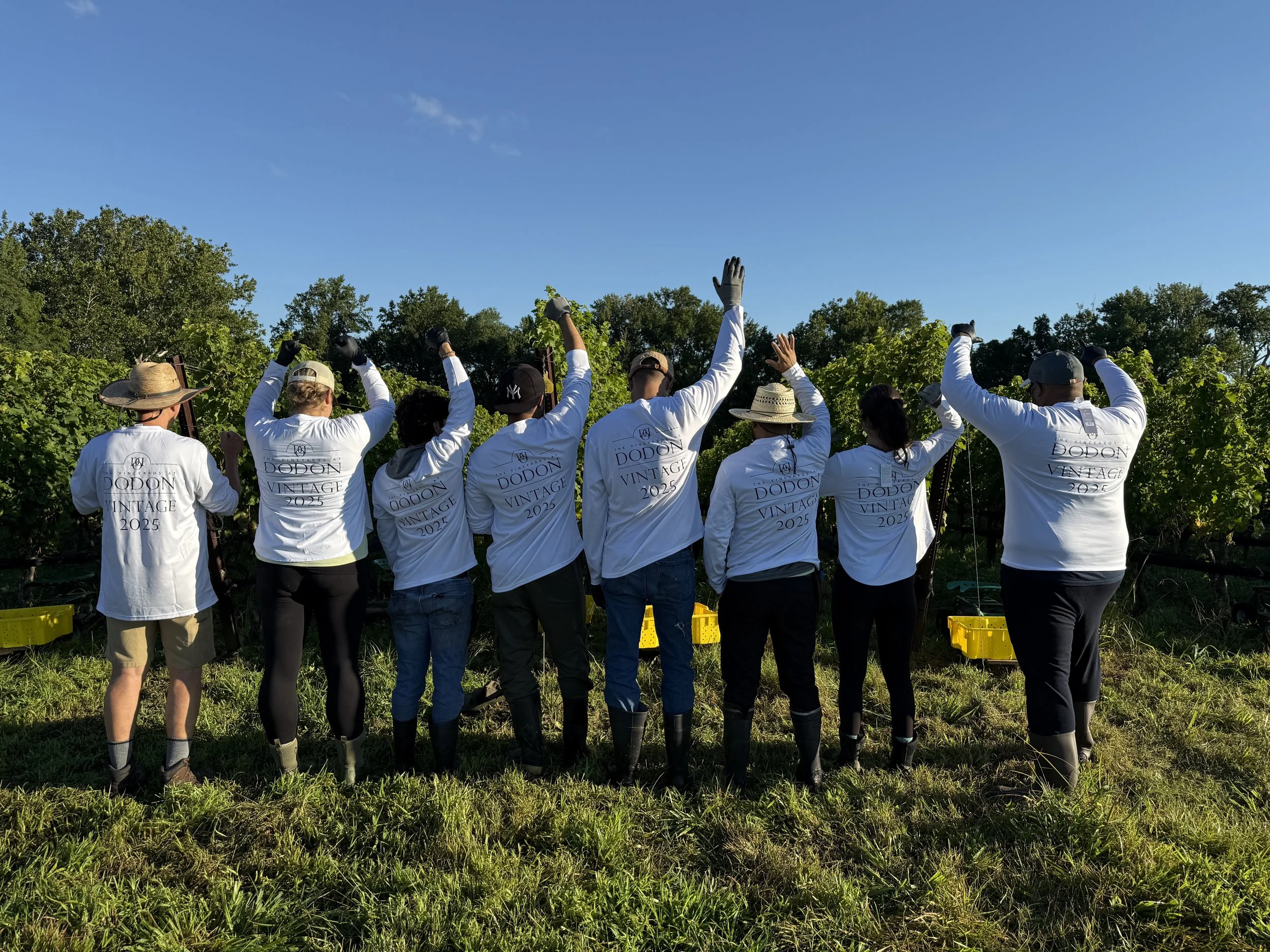
The new farming operations, which we call “The Gardens at Dodon,” are underway, with new fencing, clearing invasive species for the food forest, and apple trees growing in the nursery. We appreciate receiving a planning grant from the U.S. Department of Agriculture to explore the feasibility of the food forest, expanded silvopasture, apple orchard, and vegetable projects. Our goals are complex, balancing the financial sustainability of historically low-margin businesses with our community, environmental, and justice objectives, so that a robust business plan will be crucial.
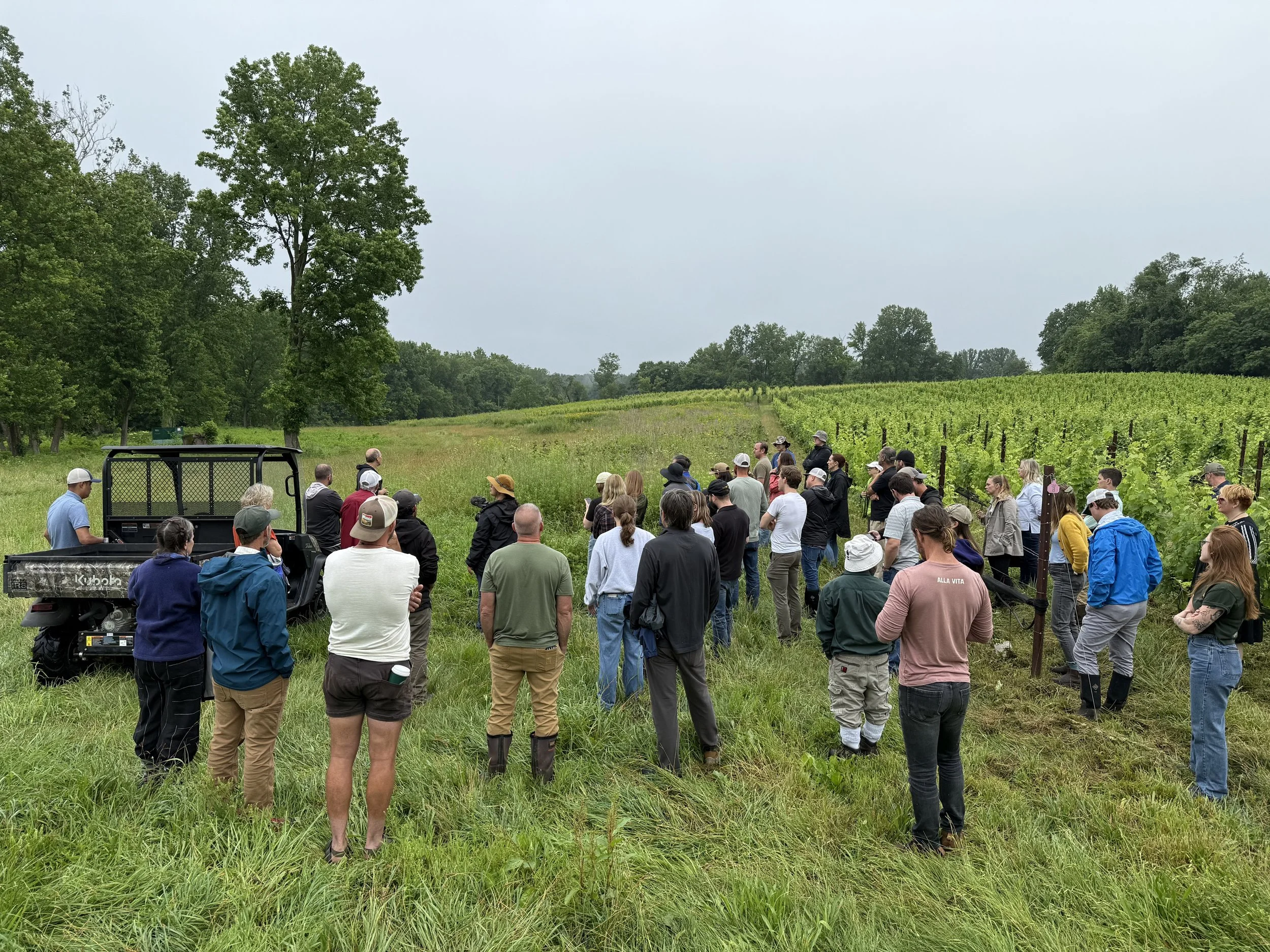
Polly and I are especially excited about the Dodon Center for Ecological Farming. We held a very successful “soft” start in June with a workshop on regenerative viticulture with our partners Kelly Mulville and Elaine Patrini from Paicines Ranch in California. In July, we convened the Board of Directors, which approved the Center's Mission and Vision statements and offered strategic input on several ambitious projects, including a workshop for congressional staff in collaboration with the Climate Farm School, now scheduled for May 2027.
What Nature Teaches Us
I began this essay reflecting on how nature can teach us about resilience, symbiosis, and functioning communities. Even plants, which we often see as passive because they are anchored in one place, are active members of their ecosystems. For example, when a pollinator approaches, plants sense the vibrations of fluttering wings and release just the right amount of pollen. In a sense, they anticipate the upcoming visit, just as we might prepare for a dinner party.
Plants also distinguish between the friendly sounds of a butterfly and the threatening noises of a pest. When a sharpshooter, a type of leafhopper that spreads Pierce’s Disease, gets close, grapevines release chemical distress signals. Some of these signals travel through the plant’s vascular system to the roots, where interaction with microbes greatly enhances the plant's defenses. The plant also releases volatile chemicals into the air, alerting its neighbors about the impending threat and attracting natural predators of the sharpshooter.
Walking down a vineyard row, whether we perceive it or not, we are immersed in this sea of plant volatiles. The vines are communicating their emotions to us, too. If only we could train our senses to listen to their signals, it might change our understanding of life and our role in nature. As author Zoe Schlanger asks in her remarkable book, The Light Eaters, “What if the lovely aroma of a freshly mown lawn represents the screams of grass?”
Of course, not all plants, even those of the same species, respond to threats in exactly the same way. Some react strongly, releasing large quantities of volatile chemicals, while others are more subdued. It’s as if the plants have unique personalities, all of which are necessary for the health of the population. Since they all play a role, if one of the personality types is removed from the environment, the entire population collapses. It turns out that in nature, life relies on diversity, a lesson that our human leaders would do well to learn.
And Finally, a Musical Theme for the Season
As always, I offer a musical theme for the vintage. Composed during the Gilded Age, Mahler’s Symphony No. 2, known as The Resurrection Symphony, takes us from a funeral through various stages of grief in the first four movements to a sense of eternal renewal in the fifth, where Mahler reproduces a portion of Klopstock’s poem, "Die Auferstehung."
Rise again, yes, rise again,
Will you, my dust, after a brief rest!
Immortal life! Immortal life
Will he who called you, give you.
The Gilded Age bears striking similarities to today. It was a time of rapid technological change, wealth accumulation, and political power by the rich, but it was also marked by rising income inequality, environmental damage, and worker unrest, eventually giving way to the Progressive Era. Mahler’s symphony reminds me that whether the ecosystem is damaged environmentally or socially, the future can be hopeful if we have a clear vision of what it could become. I hope that Dodon will serve as this visible example of what a just, ecological future can look like, if, as Ayana Elizabeth Johnson reminds us, “we get it right.”

Maryland agriculture’s ‘triple aim’: food, environmental and social justice
This Op-Ed was written by The Vineyards at Dodon Co-Owner Tom Croghan, and published by the Baltimore Sun on March 13, 2023.
Click here to access the Op-Ed.
Governor Wes Moore has committed to ending child poverty. Maryland agriculture has a crucial role to play if the state is to achieve this audacious goal.
Eliminating food insecurity for the state’s children is vital to the solution. Doing so in a way that restores functioning ecosystems and eliminates disparities should become the driving force for all agriculture policies and practices. Maryland will only end child poverty if it pursues these linked goals concurrently. Food, environmental and social justice thus form agriculture’s “triple aim.”
Good nutrition is a foundation of healthy child development and should be agriculture’s primary objective. Well-nourished children grow, learn, play and participate in their communities. They are more resilient in the face of crisis. And they are less likely to engage in violent and anti-social behavior.
Yet the state’s current food system is incompatible with good nutrition. Most Maryland farmland is devoted to low-value commodity production like corn, soybeans and wheat. Some of these crops are processed into food and food additives, such as breakfast cereals, snacks and high fructose corn syrup. Most of the remainder becomes animal feed.
Moreover, changes in farming practices over the past half-century have reduced the nutrient density of our food. As a result, nearly 15% of Americans have unrecognized scurvy. The food we produce is detrimental to our children’s well-being.
To feed children healthy diets, Maryland agriculture should shift from its allegiance to commodity crops and chickens to emphasizing fruits and vegetables. To do so will be challenging. Food production focused on nutrition will look very different from its current design. It will require farmers to acquire new knowledge and equipment. Innovative, on-farm processing and distribution infrastructure will need to be established. Eating patterns will shift. Existing power relationships will uneasily change with them.
Children living in poverty contribute the least to climate change and environmental degradation, yet they are the most likely to be negatively affected. They are more susceptibleto the consequences of air and water pollution. Extreme weather events disrupt access to food, shelter and education. Warmer temperatures alter the survival, distribution and behavior of insects and other species leading to changes in infectious diseases.
Here, too, agriculture plays a critical role. Creating a robust local food system will enhance adaptation and resilience in the face of crisis. Applying the tools of agroecology — cover crops, food forests, adaptive grazing and natural areas — will promote carbon sequestration, reduce chemical and plastic pollution, and support the diverse insect, bird and animal life necessary for functioning ecosystems.
Because it is based on values rather than objective measures, equity may be the most difficult-to-accomplish element of the triple aim. Certainly, gains for some ought not to be achieved at the expense of others. Beyond this minimum, Maryland must grapple with the consequences of a system that excluded Black farmers from assistance programs and land ownership, exploits its largely immigrant workforce and thus perpetuates an inequitable social order.
The components of the triple aim are interdependent. Changes pursuing one goal can affect the other two, sometimes negatively. For instance, Maryland’s Healthy Soils Program targets large, commodity-crop operations. It offers little help to the state’s small farms, especially those in urban settings, that would also benefit from better soil health. By not explicitly considering the state’s more than 6,000 small producers, the state boosts its industrial-scale monoculture crop systems but leaves fruit and vegetable producers behind.
The burden of this policy choice falls disproportionately on poor communities and children. They are more likely to develop diet-related chronic conditions, are more vulnerable to the consequences of climate change, and have fewer resources to adapt to changing environmental conditions.
In other words, the state’s plan to address climate change comes at the cost of its food and social justice goals. As a result, it misses the opportunity to reduce child poverty and could worsen it. A more balanced approach to healthy soil would have included subsidies for organic amendments, technical assistance and other tools that small fruit and vegetable producers need.
Agriculture alone will not end child poverty. Changes in education, housing, employment, tax policy, health care and the environment are also necessary. Moreover, the obstacles to the triple aim are substantial, and they are primarily political rather than technical. But the limitations and pain of the required agricultural transformation — the disruption of institutions, habits, beliefs and income streams — should not deny us the opportunity to achieve Governor Moore’s vision.

Spotted Lanternfly, Rain & Tariffs - Oh My!
Harvest is approaching quickly. Veraison started on July 15, which is typical for recent vintages. What’s unusual is how fast it’s progressing. The Merlot is nearly finished, and even the Cabernet Franc has begun.
We’ve received many questions about how we are managing the rise in Spotted Lanternfly, or SLF, the effects of this summer’s heavy rains, and how tariffs are affecting the business.
Harvest is approaching quickly. Veraison started on July 15, which is typical for recent vintages. What’s unusual is how fast it’s progressing. The Merlot is nearly finished, and even the Cabernet Franc has begun.
We’ve received many questions about how we are managing the rise in Spotted Lanternfly, or SLF, the effects of this summer’s heavy rains, and how tariffs are affecting the business.
Spotted Lanternfly

SLF has appeared in large numbers throughout Davidsonville. As grape growers, we have been monitoring the outbreak since it began a decade ago, and we first noticed it near the vineyard in 2023. In large quantities, SLF can devastate a vineyard, and even a small number can harm wine quality.
The best information on SLF is available on the Penn State Extension website. Although it provides state-of-the-art details, the site mainly focuses on cultural practices (such as circle traps and scraping egg masses in winter) and insecticides. It largely overlooks nature-based solutions that depend on healthy ecosystems, which will be needed to control the invasion.
Working with the Maryland Department of Agriculture and the Integrative Ecology Lab at Temple University, we have developed an approach that mainly relies on natural predators, such as birds and bats. To attract these predators, we created diverse wildflower and tree habitats around the vineyard, providing them with plenty of food and shelter throughout the year, especially during their breeding season. We also installed about six bat boxes and twelve songbird houses. The mobile coop will allow us to bring chickens directly to any hot spots that develop in the vineyard.
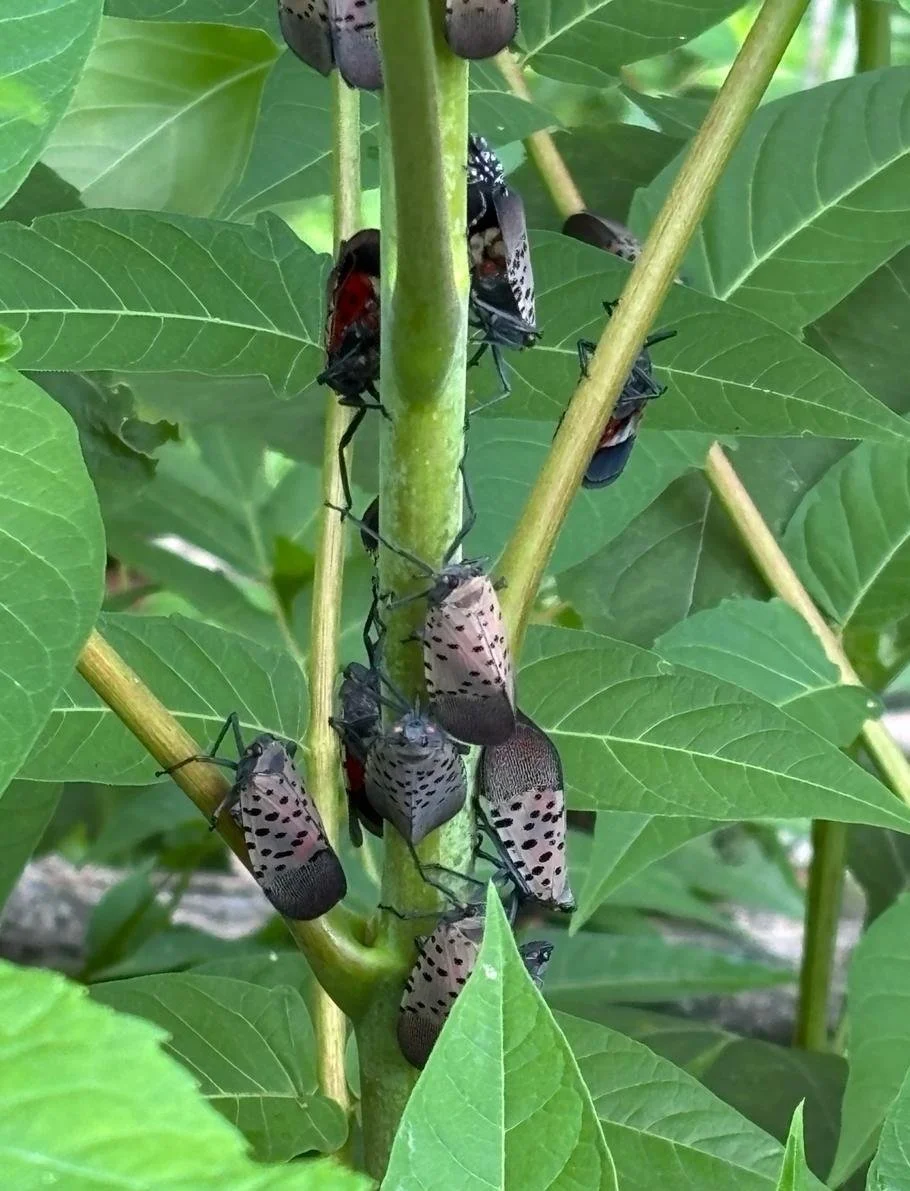
We’ve also removed as many Tree-of-Heaven (TOH), the preferred habitat for SLF, as possible from the landscape. We use the hack-and-squirt method described on the Penn State website. Research shows that SLF that do not spend part of their lifecycle on Tree-of-Heaven are less likely to reach adulthood, and that birds are more likely to eat SLF that have not fed on TOH.
Frequent Downpours
Anyone who lives in Davidsonville knows it's been a very wet summer, but this doesn’t fully convey the extent of the rain. After a dry winter, we received 11½ inches in May (the most we’ve ever recorded), 10 inches in June (including five inches in just over an hour on June 14), and nearly 6 inches through July 19. This amount can cause poor fruit set, slow fruit development, excessive vine vigor, saturated soils that limit oxygen to the roots, and increased mildew pressure. Moreover, saturated soils compact easily, which damages soil structure and further decreases water infiltration and retention.
Despite the potential for significant harm, the vineyard's growing resilience is apparent. The rain has soaked in quickly, providing ample soil oxygen and preventing mud puddles. Fruit set was only slightly affected, resulting in crop estimates just above the 2024 vintage. (The increase is due to increased yield in the west vineyard as the vines recover from four consecutive years of frost damage. Mildew has been minimal, so we haven’t needed to increase fungicide use beyond the baseline established over the past two years. As a bonus, because there were very few Japanese beetles, we haven’t had to use insecticides in the vineyard this season.

Tariffs
As you may have seen, the administration announced yesterday a 15% tariff on European goods, up from 2.3%. Many of the essential supplies we purchase from Europe that are not available from other sources will thus cost more. For instance, barrel aging adds about $2 per bottle of wine. Since we carefully select barrels from specific forests in France, this is our only source. The bottles themselves cost $1.30 each. We prefer European bottles because they are lighter, weighing around 400 grams, compared to the 550-gram bottles from U.S. suppliers.
Corks are $0.75 per bottle and come from cork oak trees in Portugal and Spain. There is no U.S. supplier. Finally, we source fermentation supplies, chiefly yeast and nutrients, from a French company. We also purchase a fining product called chitosan from them. An organic protein derived from the cell wall of the fungus Aspergillus niger, chitosan removes spoilage organisms like Brettanomyces and residual pesticides from the wine before it is bottled. These products add $0.30 per bottle.
In total, the tariffs will thus add about $20,000 to our costs of production.
There is a common thread through the 2025 vintage so far. Growing grapes in Maryland is never assured. New and evolving threats have compounded the uncertainty this year. At the same time, government safety net programs like FEMA, crucial weather forecasting from NOAA, and USDA grant funds that train farmers to succeed in a rapidly changing world are in retreat. Despite the challenges, we remain committed to our team, our community, and restoring nature.
Correction. The original version of this post stated that wine and spirits would likely be exempt from the new tariffs. However, on Thursday, July 31, the administration announced that European wine would face a 15% tariff, while South African wine would face a 30% tariff. It’s challenging to manage a small business in such an uncertain environment.
The new tariffs sadden me. While I don’t need wine to survive, it provides pleasure and a sense of discovery. Wine acts as a window into terroir and culture. It brings us closer together, offering a simple way to start a conversation about something greater. We shouldn’t make this more complicated.

Regenerative Viticulture Conference at The Vineyards at Dodon June 16 & 17
REGENERATIVE VITICULTURE INTENSIVE
June 16 - 17, 2025
The Vineyards at Dodon is pleased to partner with Kelly Mulville and the Paicines Ranch Learning Center to host an intensive one-and-a-half-day workshop on regenerative viticulture. During this field and classroom-based opportunity, you will learn the tools of ecological viticulture, the science that supports them, how they can be applied in diverse settings, and their benefits for the environment and the wine.
The program is designed for winegrape growers, wine producers, wine merchants, vineyard managers, agroforesters, students, educators, and anyone passionate about healthy ecosystems should attend.

2024 Vintage in Review
Just as we aim to farm in the service of nature, we seek to farm in the service of our community. In the spirit of reporting to our community “shareholders,” I offer this 2024 review. It’s lengthy, but there is much to report: a fantastic harvest, widespread recognition of our environmental approach, and the slow emergence of plans for our next chapter.
Happy New Year 2025!

Co-owners Tom Croghan & Polly Pittman
Just as we aim to farm in the service of nature, we seek to farm in the service of our community. In the spirit of reporting to our community “shareholders,” I offer this 2024 review. It’s lengthy, but there is much to report: a fantastic harvest, widespread recognition of our environmental approach, and the slow emergence of plans for our next chapter.
2024 Vintage in Review
Most vintages in the mid-Atlantic are a struggle, characterized by too much or too little rain, late frost, and excess humidity. The most recent season wasn’t one of them; we had a spectacular vintage.
After a very wet winter, the mostly dry season offered the calm, smooth rhythm we hope for (but never plan for). With plenty of chill hours, bud break began mid-April at 76-degree days, marking the first time since 2021 that vine phenology was in sync with the rest of the ecosystem. Over the next few weeks, temperatures dipped below freezing four times, but the wind machines limited frost damage to small areas of the West Vineyard. Nature hinted at authority, keeping us alert and thoughtful, but we avoided crushing blows.
Nearly perfect bloom weather meant an excellent fruit set. Record hot, dry weather during June and July limited disease pressure and sped the march toward ripening. Veraison appeared on July 15, the earliest ever. Two inches of rain over the next week refreshed the vines, the cover crops, and their human tenders to make a solid push to harvest.
Nighttime temperatures also dropped as low as the mid-40s, rising into the 70s in the afternoon during mid-August and early September. This diurnal variation is perfect for ripening, slowing sugar accumulation and evaporation while promoting flavor and phenolic development.

Sauvignon Blanc grapes on their way to the press.
We started picking the Sauvignon Blanc on the north slope of the East Vineyard on August 26 and quickly moved through the remaining Sauvignon and Chardonnay, finishing on August 30. The Sauvignon Blanc acids and flavors held up admirably despite the excessive heat of the summer, making this vintage our best ever. The Chardonnay was somewhat less resilient but still excellent. We wish we had more volume, but the vines are recovering from three years of significant frost damage from 2020 through 2022.
After a week-long break, we leisurely picked 2.5 tons of Cabernet Franc from the swale in the South Vineyard. We took this fruit directly to the press and fermented it in stainless steel to make an exceptional Reserve Rosé, one of our most sought-after wines.
The vendanges peaked on Thursday, September 12, when an early nor’easter started moving up the east coast from Florida. The team harvested 23 tons in an extraordinary effort, picking from dawn to dusk over six days. The last fruit arrived on the crush pad at noon on Tuesday, September 17, one hour before thirteen days of rain began. Kurtis and Katie then wrapped up the season with two weeks of 16-hour days in the cellar.

Cabernet Franc hanging on the vine.

Part of the harvest team after the last block of grapes was picked.
Overall, we harvested 39 tons of outstanding fruit. While about 12% less than the 2023 vintage record, the balance and quality could not have been better. In many ways, the 2024 vintage demonstrates that luck is the confluence of preparation and opportunity. The vines tolerated the drought because of the increasing soil organic matter, the transition to Guyot Poussard pruning, and a knowledgeable, committed team willing to put the mission before themselves.
With the satisfaction of having outrun the rains, the 2024 vintage offered a happy break from the usual chaos of the growing season, evoking Johannes Linstead's Between Tears. It allowed us to stretch our skills in new ways, fusing a decade and a half of growing and winemaking experience with the complexity and diversity of the natural world to create the signature harmony, balance, and depth we seek. The result is perfectly summarized in Emmanuel Pahud and Jacky Terrasson’s elegant Aprés un Rêve (after a dream).

Thumbs up to a great vintage.
New Threats and Old
While it was a lovely vintage, it still brought worry. Two new threats arrived at Dodon this year. Both can devastate a vineyard and are typically treated with intense insecticide applications. In each case, we’ve opted for a different path.
Spotted Lanternfly, or SLF, is an invasive planthopper that feeds on sap, robbing the plant of essential nutrients. While it can feed on many trees, its preferred hosts are the invasive Ailanthus trees, also known as Tree-of-Heaven, and grapevines. Adults are active in August and September during the harvest, swarming into some vineyards by the millions. In many cases, wine quality is compromised. Sadly, in some instances, SLF takes enough nutrients that the vines cannot survive winter dormancy. One colleague in Pennsylvania lost 35 acres of vines early in the SLF epidemic.
Recent research has shown that birds and other SLF predators leave them alone when they have fed on Ailanthus but eat SLF when they feed on different plant species. We have thus aggressively eliminated Ailanthus trees around the vineyard, hoping that natural predators will substantially reduce the SLF population size. When we found adult SLF almost exclusively on dead or dying Ailanthus in August, we left them in anticipation of cutting down those trees in December, thus allowing us to eliminate any SLF egg masses laid in the upper branches.
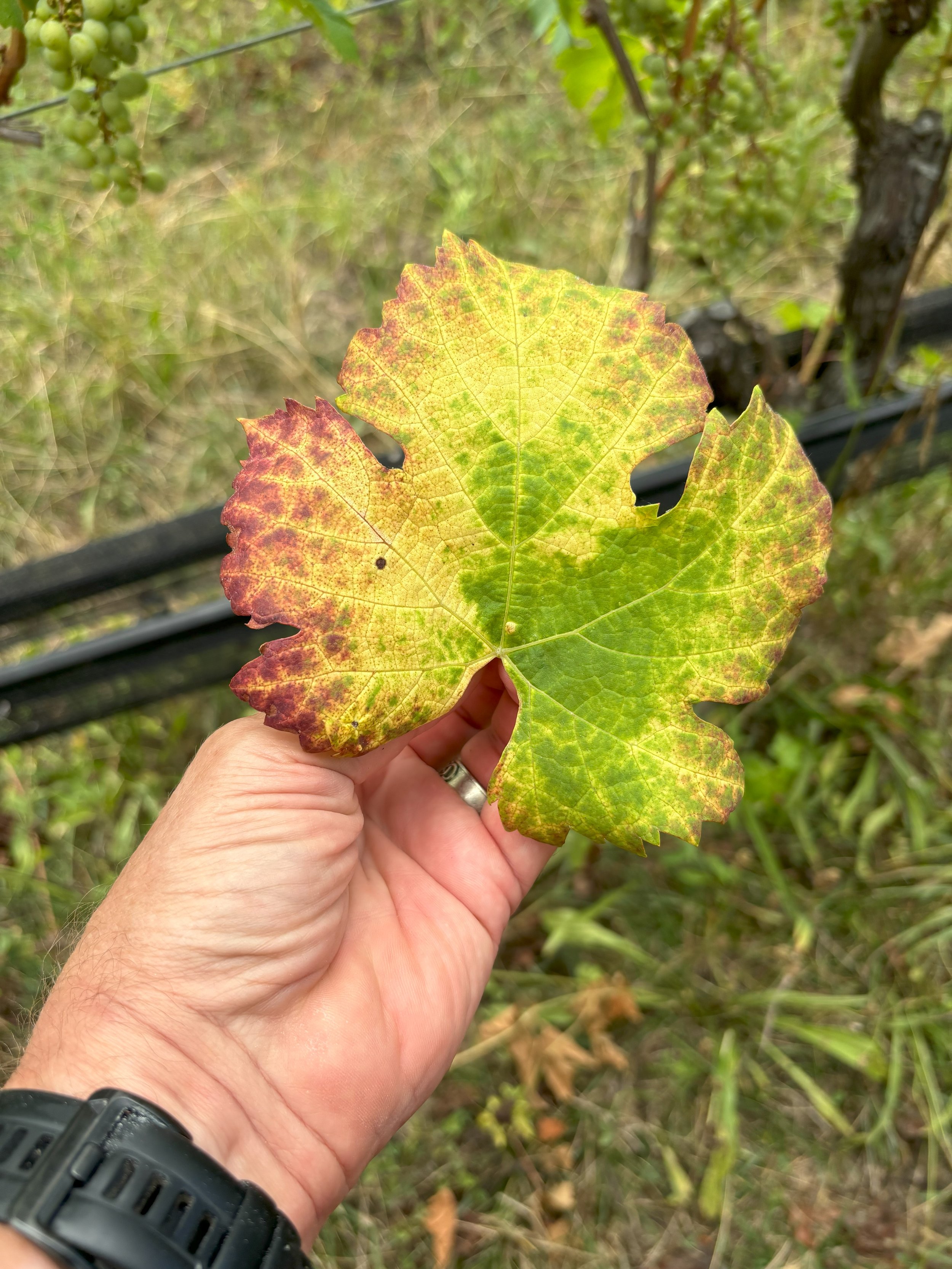
Discolored grape leaves can be a symptom of Pierce’s Disease.
We’re also taking a landscape approach to reduce the impact of another new arrival—Pierce’s Disease, or PD. PD is a bacterial infection caused by Xylella fastidiosa and spread by leafhoppers such as the broad-headed sharpshooter. Xylella and sharpshooters are commonly found in our region, but infection in grapevines has been controlled until recently by cold winters, which limited bacterial survival in the vines.
The conventional approach to treating established Xylella infections is vine removal and intensive insecticide applications during May and June when sharpshooters are active. But as my colleague Sam Droege of the U.S. Geological Survey’s Bee Lab reminds us, we can’t spray our way out of an endemic condition.
Just as with humans, the crucial step in controlling the consequences of any infection, in this case, Xylella, is to ensure healthy plants that are resilient to disease and the conditions that aggravate it. Xylella infects the xylem, the plant’s vascular structure that carries water and nutrients from the roots to other tissues. Plants with robust immune systems – for example, with plenty of phytonutrients like Vitamin C – living in healthy soil with aggregate structure to store water will tolerate infection. This is likely why we did not observe the typical signs of Pierce’s Disease until the extreme drought conditions of last summer, while many of our neighbors observed signs and symptoms much sooner.
As with Ailanthus, we are modifying the landscape outside the vineyard to reduce the spread of PD. Broad-headed sharpshooters prefer wetland habitats like the area that connects the South and East Vineyards. To make this area less hospitable to sharpshooters and Xylella, we’re removing invasive and dominant plant species, like mugwort, multiflora rose, and native grape vines, and replacing them with aromatic mints, such as bergamot, elderberry, and willow. The result will benefit the environment and the vineyard while also providing edible plants that we plan to use for non-alcoholic beverages, herbal teas, and medicinal purposes.

Spotted Lanternfly found on Ailanthus tree trunk.
I want to recognize the Maryland Department of Agriculture’s Spotted Lanternfly division and the team from the Integrative Ecology Lab at Temple University for helping to scout and develop an eco-friendly approach to what could be a damaging SLF infestation. We also thank Sam Droege and my colleagues Paulo Pereira and Emmanuel Bourguignon from the Living Vineyards project for their help envisioning the wetland restoration project.
For most sectors, environmental challenges loom on the horizon. But for wine growers, they are here. One example is the recent story of our colleague Stephen Cronk and his wife, Jeany. They sold their Information Technology business in London and moved to a Provence vineyard. Since purchasing the property west of St. Tropez in 2019, they've contended with severe frost and wildfires. (If you look through the charred timbers in the linked picture, you can see how close a 2021 fire came to their home.)
Stephen recently sent even more devastating news about their “nightmare” 2024 vintage, including frost, hail, rain during the harvest, flooding, and mudslides resulting from wildfire-induced vegetation loss in the hills that abut the vineyard. Stephen’s vintage summary for the Regenerative Viticulture Foundation, an organization he founded in response to concerns about his property's resilience, is included in RVF’s December newsletter.
In the Anthropocene, every region and every person faces new climate risks every year.
Other News

Hannah, Eleanor & Kurtis celebrate the end of a busy harvest season!
Babies and Such: On the human front, we were thrilled that, right after the summer bottling, Dodon team members Kurtis and Hannah welcomed their first child, daughter Eleanor. Kurtis was back by harvest, ready to lead the cellar work. Then, as we settled the last 2024 red wines into their barrels for the élevage, my son, Ian, and his wife, Michaela, welcomed their son, Kepler. Both babies are happy and healthy, bringing us additional joy. In between, Katie and JJ got married.
White House Initiative: In June, we joined the White House’s America the Beautiful Freshwater Challenge, becoming the first vineyard operation in the United States to do so. Led by Sara Gonzalez-Rothi, Senior Director for Water Quality (and a Dodon wine club member!), this partnership of 235 organizations seeks to preserve and restore freshwater ecosystems that provide us with food and water, protect our community from floods and storms, and offer a source of recreation and beauty. We are honored to be part of this extraordinary group of committed environmental leaders.
Wine Enthusiast Nomination: In September, Wine Enthusiast magazine announced that Dodon was among five nominees for its American Winery of the Year Award. As a relative newcomer, being included among legendary Napa Valley wineries like Schramsberg Vineyards is humbling. The winner, La Crema, is owned by the Jackson Family, founders of the International Wineries for Climate Action with Familia Torres. Jackson Family participates in the Porto Protocol’s Living Vineyards project, which I help lead. We salute the Jackson Family team and their work to ensure a better environment.
While our nomination was nominally related to our sustainability practices, as highlighted by Civil Eats, it truly reflects the team's commitment, dedication, and passion. Regina creates the collective effervescence that unifies a talented group to achieve shared goals that are collectively bigger than us. Katie’s critical thinking solves seemingly intractable challenges. Hannah’s grace, elegance, and wine knowledge make our service sparkle. Roberto’s persistence, enthusiasm, and devotion inspire all of us during summer’s dog days.
Promotion: Changes to the vineyard team have become a regular occurrence this time of year. I’m excited to announce that Kurtis will become Dodon’s winemaker in the new year. During his two years as Assistant Winemaker, Kurtis has demonstrated the initiative, determination, curiosity, and independence to take on this new role. He is also an extraordinary team player, eager to learn and contribute to all aspects of the business, including hospitality and financial management.
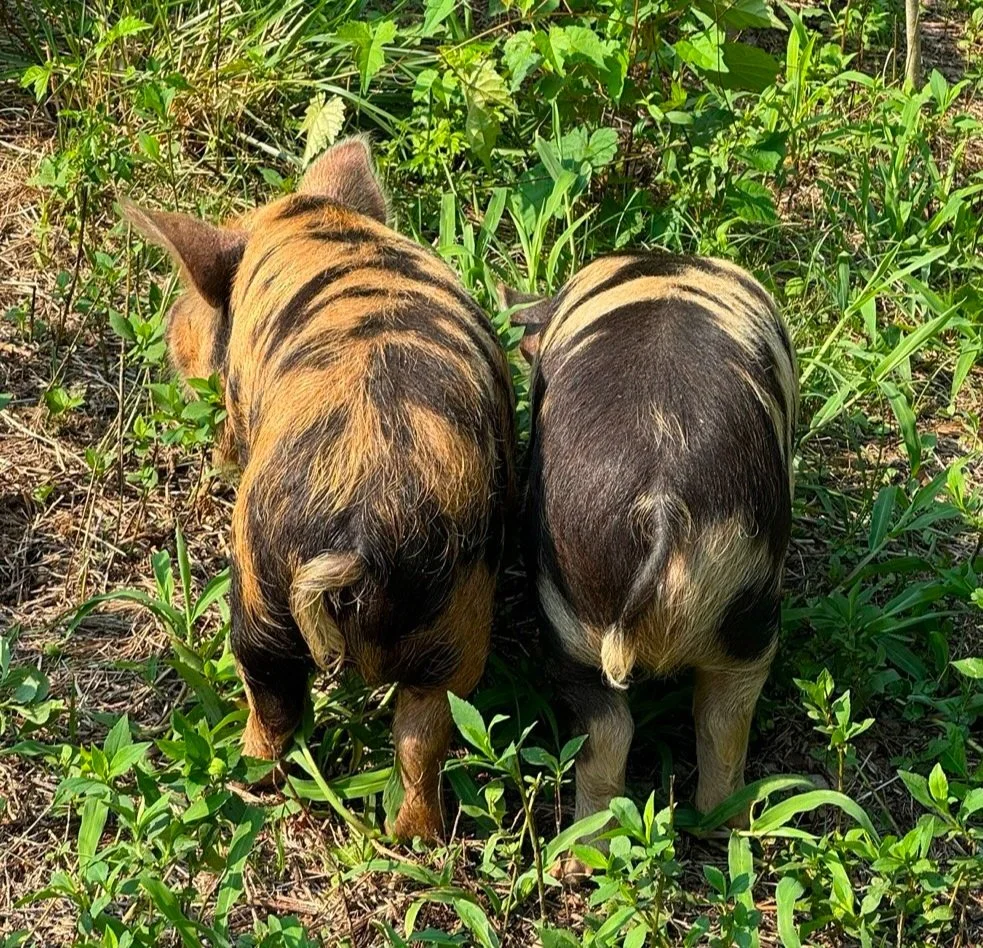
Couscous & Quinoa, Dodon’s KuneKune Vineyard pigs.
Pigs (yes, really): We’ve added Quinoa and Couscous, Kune Kune pigs from New Zealand, to the vineyard team. With weak neck muscles that prevent them from nibbling on leaves and fruit, Kune Kunes (pronounced Koonie Koonie, meaning “fat and round” in Māori) will graze the vineyard during the growing season to control weeds and add diversity to the soil microbiome, complementing the sheep droppings. Their short, upturned snouts also limit rooting and soil disturbance. And their gregarious disposition makes them great companions for the guard dog Willa, the ewes, and, of course, us humans!

New Evidence on Effectiveness of Agroecology: I have discussed our agroecological practices in a prior post, Farming in Service of Nature. At the time, these measures had solid experimental support, especially from the Jena Experiment, but their application in our vineyard was based mainly on intuition, listening to nature, and anecdotes. It’s reassuring that new research in real-life settings is validating our decisions. In a study in two Italian vineyards, researchers found that cover crop height is inversely proportional to fungal pathogen dispersal. A second study from Mendoza demonstrates the benefits of spontaneously growing grasses and forbs on carbon storage and biodiversity in row middles, albeit in a very different climate from Dodon’s.
Wine and Health: My past work in mental health policy has followed me into the world of wine. I have stepped down after a decade as Chair of the Maryland Wineries Association Government Affairs Committee. This year, I was asked to join the WineAmerica Board of Directors to advise the organization on health issues. Alcohol, in general, and wine, in particular, have complicated effects on health. Assessing these effects with any precision is difficult. I enjoy working on these kinds of questions.
In December, a committee convened by the National Academy of Science, Engineering, and Medicine released its most recent evidence review, which Felicity Carter nicely summarized in the trade press. Sadly, mainstream journalism has rejected the conclusions of the world’s most objective, apolitical, authoritative scientific body. Continuing to report that alcohol consumption in any amount is detrimental to health ignores the possibility that wine with dinner likely poses little risk for most people, and it may bring benefits to our health, which, as the World Health Organization reminds us, goes beyond disease prevention to include one’s wellbeing.
The Next Chapter
The wine industry may be at the forefront of the climate catastrophe, but all agriculture is approaching the firing line. According to the United Nations Food and Agriculture Organization report “State of the World’s Biodiversity for Food and Agriculture,” agriculture’s current industrial model is destroying itself and us with it. The report details the alarming damage to the biodiversity that sustains crop production. It describes our reliance on an increasingly small group of species, the destruction of habitat and land-clearing, and the unsustainable use of resources. And this is just the consequence of biodiversity loss. Extreme weather, drought, rising temperatures, and degraded soil add to the challenge.
The magnitude of the challenges ahead of us is daunting. The possibility of the food system collapsing is increasing, yet our political leaders have failed to act. Experts proposed a national food policy a decade ago. In 2019, the Eat Lancet Commission created a “planetary health” diet to reduce greenhouse gas emissions and improve health. Still, we have yet to produce a national or state food policy or to incorporate climate change into our national dietary guidelines.
Without political leadership, businesses and individuals are trying to implement the necessary changes. Doing so will be more complex and challenging than it should be without public leadership. Only the government can coordinate and finance an effort of this size and ensure the benefits and costs are equitably distributed. But, as Paul Hawken writes in The Ecology of Commerce, “The promise of business is to increase the well-being of humankind through service, creative invention, and ethical action.” We must still do our part.
At the Vineyard, the “triple aim” approach I proposed two years ago has served us well as a roadmap. Over the past decade, we’ve used the planetary boundaries framework to enhance biodiversity, reduce eutrophication and pollution, and remove carbon dioxide from the environment. We’ve been transparent when reporting our successes and failures.
In this context, we have begun to plan new farming operations to create a sustainable food source. While still in the early phase of the new project, which I call the “Do Your Part Initiative,” here are five key components of the vision that Polly and I have developed:
Converting the tree plantings to the north and east of the East Vineyard to a silvopasture that combines the benefits of trees and hedgerows with grazing.
Adapting the current grazing areas to silvopasture by planting 350 apple trees will also allow cider production.
Adding a “potager” or chef’s garden in the bowl between the winery and the South Vineyard will create what we hope will become a beautiful entrance to the winery that produces food.
Developing a “food forest” garden west of the Sauvignon Blanc blocks (West Vineyard), including picnic areas for our Wine Club Members.
Establishing a nonprofit “Learning Center” to provide apprenticeships for beginning farmers, bring together established fruit and vegetable producers to create new markets, and educate the public and policymakers about agroecology.
We would welcome your input as we continue to shape plans. We are most excited about crafting a vision of what a just, ecological society could look like. It’s doing our part.
As always, we are deeply grateful for your support. Happy New Year!


Tom Croghan & The Vineyards at Dodon: Living Vineyards Project
Biodiversity provides essential services to our community, including pest control and pollination, yet it is declining at an alarming rate, primarily due to agriculture. In response to this crisis, Tom is a member of the leading team of the Porto Protocol’s Living Vineyards project that seeks to establish ecosystem restoration projects on 20% of global vineyard acreage by 2030.
This initiative “envisions a world where the art of winemaking harmonizes with the preservation and restoration of the natural environment, setting a new standard for responsible viticulture.”
The Vineyards at Dodon is now on iNaturalist App
Living, vibrant ecosystems are crucial to achieving our environmental, community, and winemaking goals. Over the past decade, we have implemented farming practices that encourage diverse native and naturalized plants in and around the vineyard while discouraging invasive plants that can easily dominate the landscape and provide habitat for detrimental insects.
Welcome to The Vineyards at Dodon Nature Restoration project.

Living, vibrant ecosystems are crucial to achieving our environmental, community, and winemaking goals. Over the past decade, we have implemented farming practices that encourage diverse native and naturalized plants in and around the vineyard while discouraging invasive plants that can easily dominate the landscape and provide habitat for detrimental insects.
Now, we need your help monitoring our progress. iNaturalist is an online network of people sharing information about biodiversity. By downloading the iNaturalist app and recording your observations when you visit, you will record the number of different plant, insect, and avian species and their relative frequency on the property.
You can find the iNaturalist app in your App Store. You can learn how to use the app here.
Please remember when making observations that Dodon is a working farm where safety precautions should always be observed. Your safety is our top priority, and we appreciate your understanding and cooperation in this matter.
Always wear appropriate shoes and clothing when walking around the property.
Watch carefully for uneven terrain, gopher holes, and other obstructions.
Use sunscreen and insect repellent; check for ticks frequently.
Keep an appropriate buffer between you and the livestock. Do not approach, try to pet, or feed Willa, Dodon’s livestock guardian dog, the sheep, or the chickens.
Do not bring any dog near the sheep.
Do not enter the vineyard or meadow unless you are accompanied by a member of the Dodon staff.
Do not let your children explore the property unaccompanied.
Do not pick any flowers, touch the grape vines, or taste grapes without explicit permission from a team member.
Have fun learning more about the natural world around us.
Understanding Wine Chemistry with Kurtis
We were recently asked for simple definitions of common wine chemistry terms, like brix, acidity and pH. Dodon’s assistant winemaker, Kurtis, took some time to respond. We thought our community might enjoy his answers!
We were recently asked for simple definitions of common wine chemistry terms, like brix, acidity and pH. Dodon’s assistant winemaker, Kurtis, took some time to respond. We thought our community might enjoy his answers!

In North America, we measure the sugar content of grapes using °Brix. Brix represents the total soluble solids (SS) in a solution. In wine grapes, these SS are primarily made up of the fermentable sugars glucose and fructose. A typical range of °Brix at harvest is 19-25°, a number that tells a winemaker how much alcohol they should expect after fermentation is complete. So, a wine with 21°Brix could be estimated to yield 11.7%-13% abv depending on the fermentation temperature, the yeast used, and storage conditions.
Acidity is arguably what makes the taste of wine unique compared to other alcoholic beverages. Tartaric, malic, and lactic are the chief acids in wine and vary in proportion depending on the farming methods used to grow the fruit, when it was harvested, and how the wine was made. Tartaric acid is the primary acid in grapes and has the most significant influence on taste. Too much tartaric acid can make wine taste sour. Malic acid, the principal acid in apples, is secondary to tartaric but still naturally present in grapes. It tastes sharper than tartaric acid - think green apples. Lactic acid, the acid that lends milk its freshness, is a "softer" acid. It is the product of the conversion of malic acid during malolactic fermentation. We measure the acidity in wines as titratable acidity (TA) in grams per liter (g/L), so a wine with 8g/L TA has more acid and is more acidic than 4g/L.

Wine pH is generally between 3 and 4 on a scale of 0-14, with 0 being the most acidic, 14 the most basic, and 7 neutral. Wine pH measures how many free hydrogen ions (H+) are in an acidic solution. H+ comes from the various acids present in wine, but the absolute amount of H+ depends on how strongly it binds to the underlying salt, sodium tartrate, for example, or other components, such as the tannins, in a wine's solution. A wine's pH partly correlates with the quantity of tartaric, malic, or other acids. For example, two wines could have 7g/L TA but have a pH of 3.3 and 3.5, respectively.
Winemakers are primarily concerned with pH because of the effect on longevity and spoilage. High-pH wines tend to oxidize at a higher rate, giving them a nutty taste, and they are subject to microbial spoilage. High-pH wines may thus require more sulfites.
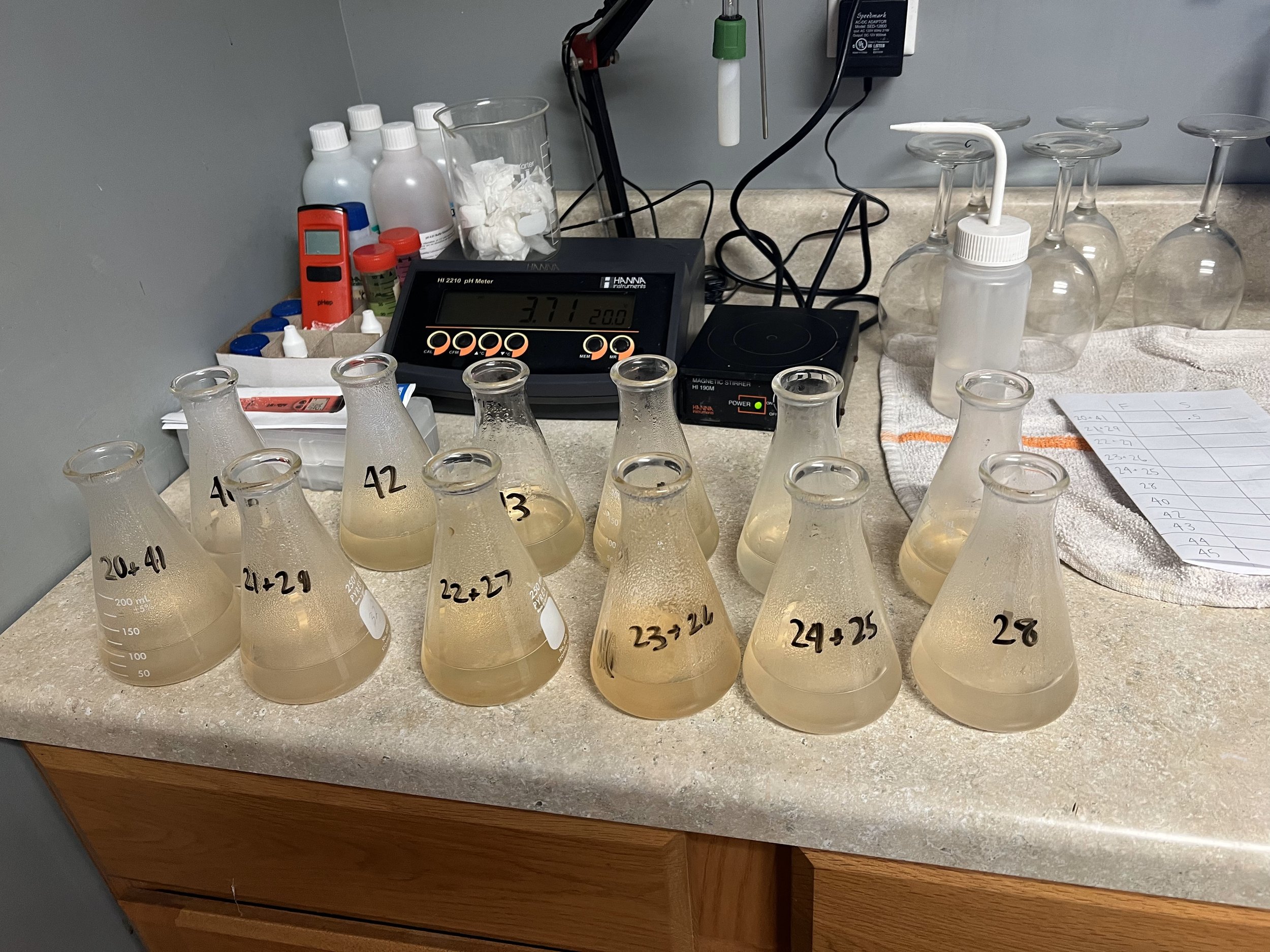
These three components of wine have a very close relationship to each other and account for most of a wine’s taste. The Brix/sugar content of wine yields ethanol, which masks bitterness, imparts sweetness, creates body, and influences aromatics. A wine with low alcohol would taste thin and watery, whereas high alcohol wine tastes hot and overpowering.
Acidity and the subsequent pH create freshness in wine, preserve aromatics, decrease bitterness, and make wine food-friendly. Wine’s acid levels can accentuate or diminish the other flavors present. Think of it like lemonade without the proper proportion of lemon juice to sugar. If there is not enough lemon juice, the drink tastes too sweet. If there is too much, then it tastes sour. The balance of wine comes from the stylistic choices of alcohol content, acidity, and tannins.
General guidelines for how a region/grape/style can affect these three elements are:
Cooler temperatures retain more acidity in the grapes but provide lower Brix
Warmer temperatures lose more acidity but can develop higher Brix
The varietal grown can considerably impact acidity levels and how early the fruit ripens (thus, how much time they have in the growing season). Petit Manseng has notoriously high acid levels and thus ripens very late in the season.
The winemaker's style and decision of when to pick significantly impacts the varying levels of Brix and acidity. For example, if they pick early or underripe, the grapes could retain a lot of acidity even if grown in a warm climate.
To help demonstrate how these three components of wine are linked, I’ve included two hypothetical examples of a potential grape analysis on opposite spectrums:
Low Brix/ High Acid/ Low pH
Example numbers: 19°Brix, 12g/L TA, 3.10 pH
Cool growing regions allow for these characteristics and are typical of sparkling wines. The high acid is desired for the bright and acidic taste of sparkling wines while the low Brix would yield a lower abv. This is ideal because the secondary fermentation that most sparkling wines go through increases the alcohol slightly.
High Brix/ Low Acid/ High pH
Example numbers: 25°Brix, 4g/L TA, 3.70 pH
A vine can naturally impart enough sugar to reach around 25°Brix; anything past 25° results from dehydration. Most 25°Brix wines can only be achieved in warm and dry climates with a long growing season. The resulting wine would be around 15% abv and likely lack acid. The result can be a bold, powerful wine style that should be consumed relatively soon after bottling.
Growers and winemakers can also influence the balance of sugar and acid present in wine. For example, regenerative agriculture methods like cover crops and animal integration that build soil health have been shown by David Montgomery to increase vitamin C levels, the precursor of tartaric acid, in crops. At Dodon, we have seen a 50% increase in titratable acidity since implementing these techniques. These methods also reduce Brix and, thus, alcohol and are likely to help mitigate the effects of climate change-induced warming.
In the cellar, many Chardonnay makers use a naturally occurring bacterial fermentation to convert malic acid to lactic acid, resulting in a smoother, fuller-bodied, less tart wine.
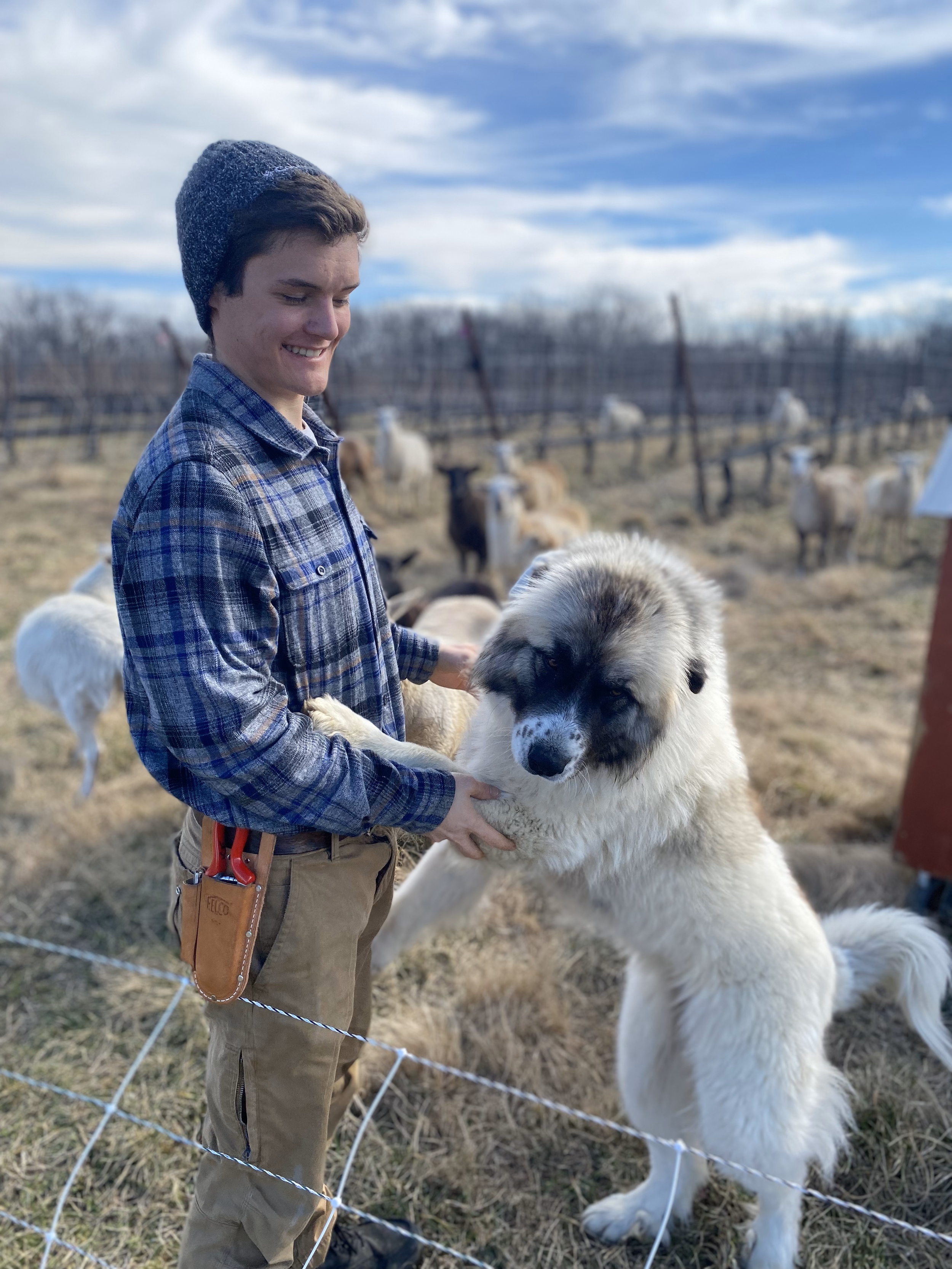
Kurtis joined the team in January 2023. After graduating from The Culinary Institute of America, he started his career in the restaurant industry in Annapolis. His curiosity about food preservation led him to fermentation and a wine career. Kurtis served as a harvest intern at Dodon in 2020 and 2021 at Antiyal in Chile’s Maipo Valley. After his internship, he moved to The Wine Collective in Baltimore as Assistant Winemaker. Kurtis recently completed the Winemaking Certificate Program at UC Davis and is eager to apply what he has learned to Dodon's vineyard and wines.
Tom's Speech at Environmental Council of the States Meeting
On Monday, June 26, Tom spoke at the opening reception of the 2023 State Environmental Protection meeting hosted by the Environmental Council of the States (ECOS). ECOS is the national, nonpartisan association of state and territorial environmental agency leaders and is led by Ben Grumbles, the former Secretary of the Maryland Department of the Environment. Tom was introduced by Kevin Atticks, current Secretary of the Maryland Department of Agriculture, and the former Executive Director of the Maryland Wineries Association.
Several people who reviewed or heard Tom’s comments regarding the nexus of agriculture, health, the environment, and social justice suggested that he share them….

On Monday, June 26, Tom spoke at the opening reception of the 2023 State Environmental Protection meeting hosted by the Environmental Council of the States (ECOS). ECOS is the national, nonpartisan association of state and territorial environmental agency leaders and is led by Ben Grumbles, the former Secretary of the Maryland Department of the Environment. Tom was introduced by Kevin Atticks, current Secretary of the Maryland Department of Agriculture, and the former Executive Director of the Maryland Wineries Association.
Several people who reviewed or heard Tom’s comments regarding the nexus of agriculture, health, the environment, and social justice suggested that he share them.
Thank you, Kevin, and thank you, Ben.
It’s a privilege to be here with you tonight. I am deeply grateful that you are willing to take time away from your lives and your families to come to Washington for this meeting.
As the consequences of climate change intensify, it must sometimes feel like you are in the middle of a never-ending bucket brigade putting out the fires, but we need you to persevere. Only you, only government, can underwrite the investment, coordinate the stakeholders, and ensure equitable distribution of the costs and benefits at the scale needed to avoid the looming cataclysm.
This mission, your mission, is crucial.
You will hear more about climate-smart agriculture tomorrow. Many of these vital projects aim to rapidly implement agroecological practices like cover cropping, composting, livestock integration, and agroforestry that sequester carbon, enhance biodiversity, and restore ecosystems. These are essential if we are to keep the planet within its habitable boundaries.
We know these tools work. At Dodon, for example, we’ve used them over the past decade to increase soil organic matter by 10-fold. We’ve planted 1600 trees, many of them traditional food sources, and created acres of meadows and hedgerows.
The result has been better resilience to increasingly extreme weather, like the 4-inch downpour we had when Ben visited a year ago. We’ve also reduced insecticide use by 70% and fungicide use by a third, and we’ve increased the nutrient density of our crop. The organic matter alone represents nearly 3000 tons of sequestered carbon dioxide.
As you know, agriculture, at least as it is currently practiced, may be the main threat to the very ecosystems on which it depends, but it is also the industry most affected by climate change. Most fruits, nuts, and vegetables consumed in Maryland come from California’s central valley, the desert southwest, and Chile. We may want to think about moving some, perhaps all, of this production east, where water is more available, and shipping is less dependent on a canal that is now 40% below its normal levels. Everyone who eats has a stake in the outcome.
The challenge is implementing these new approaches as time runs short. This is why your role is so crucial. It requires a collaboration that hasn’t been happening nearly enough. A few weeks ago, for example, a local news site hosted a panel on climate change that included six Maryland cabinet members, some of whom are here tonight. Unfortunately, the Secretary of Agriculture was not invited, a glaring oversight.
So, Ben, thank you for leading the way by inviting Secretary Atticks, and me - a farmer - to this meeting. You’ve set the stage for creating a comprehensive blueprint for agriculture that produces healthy food in a way that restores ecosystems and mitigates racial inequities. It’s what I call agriculture’s triple aim.
One place to start this radical transformation might be for each state to convene a high-level commission reporting directly to the Governor on equity, health, and the environment. Kurt Vonnegut wrote the task statement in his 1988 Letter to the Future. The commission might be led by the “Secretary for the Future,” also a Vonnegut proposal.
One goal of this commission would be to resolve the conflicts that will inevitably arise as agencies concentrate on their own narrow objectives.
There are many conflicts already. For example, with a few exceptions, climate-smart agriculture focuses on how we grow, not what we grow. But climate-smart grains used to feed cows will still result in methane production, and when used to make corn chips and Cocoa Puffs, they will still be the ultra-processed source of exponentially increasing rates of obesity and diabetes that disproportionately affect people of color.
Ultimately, the purpose of the commission should be to restore common sense to a preposterous agricultural landscape that shackles farmers in a system that pays only a third of the true costs of food, that responds to the carbon sequestration on my farm by imposing higher property taxes on value-added operations, and that incentivizes chicken nuggets and Twinkies instead of fresh produce for children in poverty. Is it any wonder that suicide rates among farmers are three and a half times the national average?
So, thank you again, Ben, for paying a premium for the seven kilograms of sequestered carbon dioxide represented in each bottle of Dodon wine you purchased for this wonderful reception. We could not afford to do what we do if our customers were unwilling to pay for it.
Choosing between healthy food, the environment, and social justice is a false choice. We can accomplish all three if we work together to blend agriculture’s experiential wisdom with modern environmental science, an effort that requires meaningful discourse among all stakeholders.
Fortunately, we have some good examples. In my industry, which is at the forefront of the detrimental effects of climate change, The Porto Protocol is an international peer-to-peer learning network seeking to find workable solutions to the challenge. Established five years ago, it now has more than 300 members in sixteen countries across the industry value chain. Their tagline? “There is no competition in the climate effort.”
Future Harvest, a regional regenerative agriculture association with more than 700 members, is another exemplary organization that trains beginning and experienced farmers to grow vegetables and graze livestock using climate-smart techniques.
Finally, I hope we can look beyond shiny new technologies for solutions. As the chemist Leslie Orgel said, “Evolution is cleverer than you are.” Don’t misunderstand; I’m not a Luddite. I love our precision sprayer, and I can’t wait for an affordable electric robot to ease the burden of floor and canopy management. CRISPR offers enormous potential to improve the quality of food. But if we do not fix the system in which they are used, these technological treasures will be nothing more than seeds on a barren landscape.
In contrast, over the last three and a half billion years, nature has designed elegantly complex, self-regulating systems that can serve as templates for the future. Janine Benyus of the Biomimicry Institute talks about encountering an engineer crying as he contemplated a mangrove. He had worked on desalination for over thirty years, yet he had only just recognized that these trees use solar power to remove salt, sequester carbon dioxide, and discard oxygen as a waste product.
“It’s beautiful,” he said. “Why did no one tell me?”
Thank you.

Farming in Service of Nature
Loss of biodiversity may be humanity’s greatest threat, even more than climate change. Food production is the primary cause. At Dodon, we seek to reverse this trend and thus enhance the ecosystem services that will allow us to reduce our physical and chemical footprint…
written by: Tom Croghan, co-owner and winemaker
When we planned the first vineyard field trials in 2007, Polly and I aimed to produce high-quality wine with a light environmental footprint. And from the beginning, our viticulture received high marks for sustainability.
Sadly, our farming at the time was misguided. The landscape had been devastated by centuries of conventional agriculture. Our “sustainable” practices reduced the rate of harm, but they did not reverse it. Instead, we were unintentionally perpetuating a methodical march to environmental degradation.
Over the last decade, we have drawn from many sources outside of viticulture to learn methods consistent with our values, including the traditional methods of Cuban farmers who fed a nation following the collapse of the iron curtain, novel science that explains the inner workings of ancient ecosystems, and the inspiration of our colleagues at Future Harvest.
Rather than preserve the destructive cycles of our early years, our farming practices now focus on regenerating soil health, restoring biodiversity, and enriching ecosystem function. We aim to create a wholesome environment for the vines and those who work with them by reducing chemical, plastic, and nutrient pollution while enhancing biological activity.
Regenerating Soil Health

Healthy soil is a complex ecosystem composed of living organisms (microbes, invertebrates, and roots), organic matter (the remains of these once-living things), rocks, water, and air-filled pores. Winemakers like to talk about the unique minerals that produce all the fine qualities of the wine they make. But soil’s real value is in the living part and its detritus.
The Chesapeake Bay’s western shore soil in the 17th century likely contained about 5% organic matter. It was less than 0.3% by the time we first planted grapevines. The structure and composition of the soil had significantly shifted from its native configuration.
A few dominant bacterial species replaced the diverse microbes that maintain woodland ecosystems. None of the nematodes, arthropods, or earthworms crucial for nutrient cycling, soil structure, and fertility remained.
At Dodon, we rely heavily on the tools of agroecology to regenerate the soil. Our goal now is to accelerate, as much as possible, the natural soil-building processes that once dominated the region.

We start by limiting tillage to the area under the vines and cultivating diverse cover crops in and around the vineyard. After experimenting with non-native cover crops like mustard, radishes, and annual ryegrass, we’ve learned that spontaneously growing, perennial grasses and forbs adapted to the local environment are best.
Our recent surveys reveal up to thirty different species per square meter. This extraordinary plant diversity is associated with improved soil structure, diverse microbial populations, large below-ground invertebrate populations, excellent water infiltration and storage, and high soil oxygen content.
Second, we apply organic amendments that add carbon and other essential nutrients to the soil. Using a foundation of ramial woodchips, we balance the compost with azolla. This rapidly growing aquatic plant scavenges the nutrients in the runoff from Dodon’s horse pastures. We also add the byproducts of our winemaking – spent yeast, stems, and skins. These practices both build soil and reduce the eutrophication that results in the Bay’s dead zones.

We incorporate indigenous microorganisms into the compost using soil from the surrounding forest. These bacteria, fungi, and archaea suppress disease by improving vine nutritional status, activating plant defense mechanisms, secreting antimicrobial substances, and increasing tolerance to injury. They also produce complex macromolecules, such as ascorbic acid, terpenes, and polyphenols, that defend the plants and make flavorful wine.
Finally, we integrate herbivorous grazing animals, or ruminants, into the system, supplying the new populations of microbial detritivores necessary for carbon, nitrogen, and phosphorus cycling. Our pasturing method, formally known as adaptive multi-paddock grazing but more commonly called “MOB” grazing, reproduces the evolutionary patterns of early grazers that may have allowed the earth to cool following the mid-Miocene climatic optimum.

Restoring Biodiversity
Loss of biodiversity may be humanity’s greatest threat, even more than climate change. Food production is the primary cause. At Dodon, we seek to reverse this trend and thus enhance the ecosystem services that will allow us to reduce our physical and chemical footprint.
Diverse vegetation in and around the vineyard – between the vine rows and in surrounding meadows, hedgerows, and woodlands – creates a habitat for mixed populations of vertebrate, invertebrate, and microbial life. Beneficial insects, in turn, reduce pest populations, enhance soil structure, and support microbiomes. In addition, highly diverse agricultural systems result in better yield, less pest damage and pesticide use, more carbon sequestration, and higher nutrient density.
Enhancing insect diversity may also benefit grape yield and wine flavor considerably. For example, Nicole Sierra-Rolet, also a member of The Porto Protocol, reports a 30% increase in yield at Chêne Bleu in southeastern France, which she attributes to larger bee populations.
Another colleague, Nuno Gaspar de Oliveira of Natural Business Intelligence, has demonstrated the transfer of native yeasts by butterflies from the surrounding landscape onto the developing grapes during vine bloom. These yeasts can later be found in the fermentations, contributing to the complexity of wine flavor.

To achieve these goals, we encourage native, low-growing grasses and forbs between vine rows by crimping tall grasses that out-compete other desirable species. In addition to their benefits on soil health, terminating these cover crops at bloom releases nutrients from decomposing roots and adds a mulch layer that cools the soil and prevents the spread of soil-borne fungal pathogens.
Pollinator meadows, hedgerows, and other natural areas offer beneficial insects and wildlife food, shelter, and places to breed and raise their young. In 2018, we installed three acres of meadows with 28 native grass and forb species, including Rudbeckia, Asclepias, Solidago, and Heliopsis spp., contributing to ecosystem benefits and season-long beauty. Remarkably, vineyard blocks adjacent to the meadows no longer require treatment for Japanese beetles, a significant insect pest in our region.
To extend these benefits, we contracted with the Maryland Department of Natural Resources to plant 1600 trees and shrubs as hedgerows this spring. Several species, such as Corylus americana (American hazelnut), Prunus angustifolia (Chickasaw plum), and Castanea pumila (dwarf chestnut), were once essential food sources for the first peoples of our region.
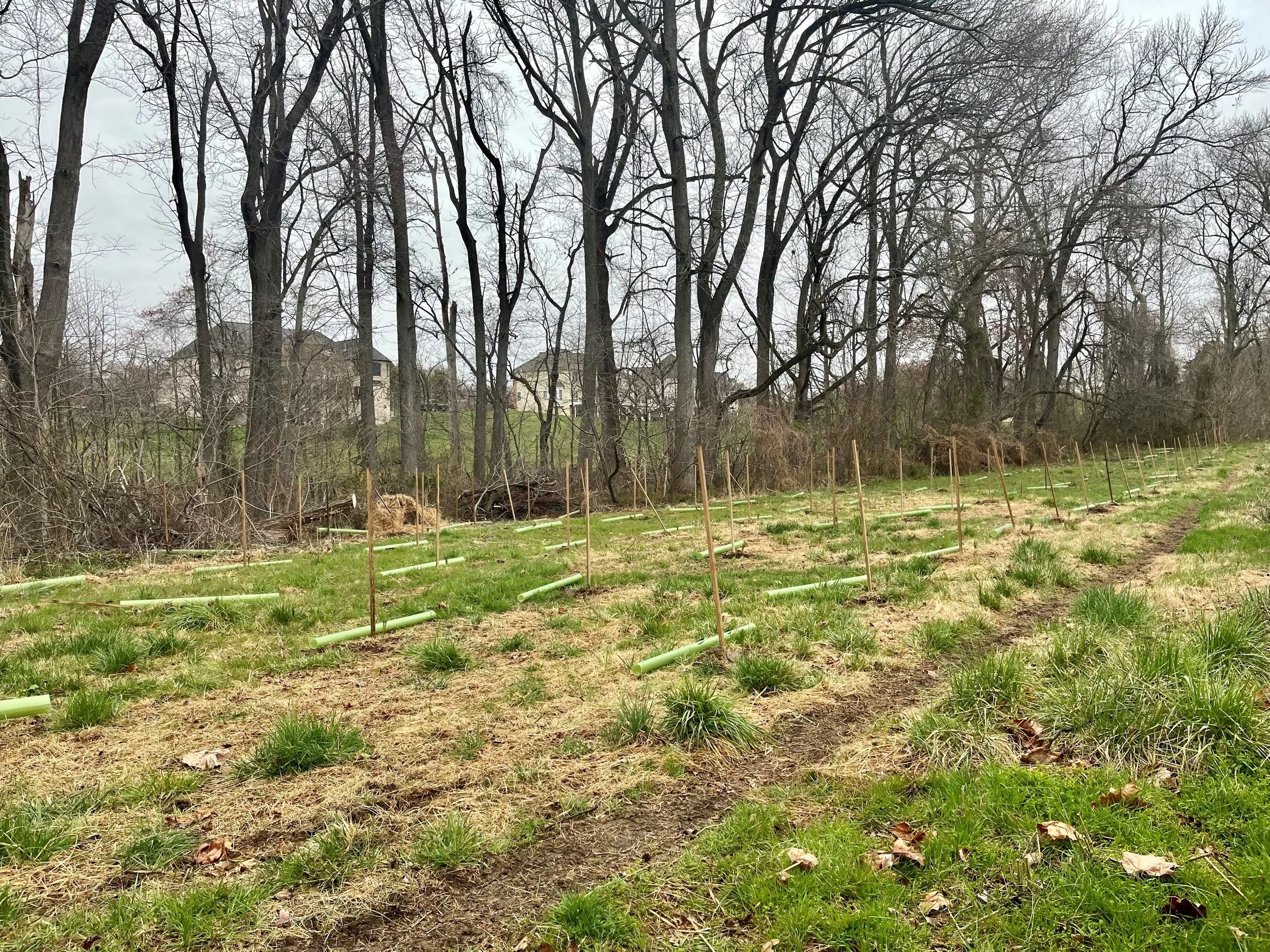
Enhancing Ecosystem Function
During the first meeting of Maryland’s Healthy Soils Advisory Committee, one of the members, an experienced and highly regarded farmer, was surprised to learn that he might have a soil health problem. He had become so accustomed to using fertilizer, pesticides, cultivation, and irrigation that it hadn’t occurred to him that a fully functioning soil ecosystem might reduce or eliminate the need for these inputs.
While we often think of agricultural landscapes solely in terms of food production, they are multifunctional. Farm ecosystems provide a habitat for microbes, insects, and birds that suppress diseases and pests, purify water, and store carbon. In addition, they offer opportunities for recreation and aesthetic beauty. In other words, farm landscapes play an essential role in our well-being.
Restoring these ecosystem functions is not straightforward, however. Returning to the past is neither possible nor desirable. Humans arrived in our region about 8-10,000 years ago when a much colder climate sustained the nomadic hunter-gatherer population. The area remained woodland until European settlers brought plows, smallpox, and novel plants and animals, changing the landscape forever. The pre-European ecosystems would support neither modern human needs nor a vineyard of wine grapes.
Neither will the current agricultural system that is dependent on chemical, plastic, and carbon pollution. So, what to do? We are in uncharted territory without a clear roadmap. Rather than following a prescribed recipe, we observe nature for lessons. How are similar invasive species managed in natural settings? Why have carbon dioxide levels declined in other epochs? How do animals graze in the wild, and what are the consequences?

We believe we are on the right path in choosing the holistic process evoked by Orgel’s Second Rule, “Evolution is cleverer than you are.” It’s a deliberate route, dependent on trial and error at the generational timescales of microbes, insects, plants, soil, humans, and geology. It considers the well-being of people and the organisms with which we share the planet.
Given these constraints, the process is remarkably swift. And it appears less prone to unanticipated consequences than quick technical fixes, the latest trend, or magical thinking.
When planting, we tend to focus on native species of plants that support native insects. Defining native, however, is complex. Take narrow-leaf plantain, for example. This naturalized “weed” is native to Great Britain. Unlike more invasive species like Johnsongrass and multiflora rose, it has integrated well, providing diversity, nutrients for butterflies and bunnies, and medicine for people without overwhelming the landscape.
Most people consider narrow-leaf plantain a native, recalling hours of shooting the seed heads during childhood. Immigrants – plants, insects, and people - can add wonderfully to our lives, a lesson in reciprocity we would do well to understand.
We planted the oldest vineyard blocks in the east vineyard fourteen years ago. From the beginning, we confined tillage to the area under the vines, eliminated herbicides, and planted several species of tall fescue as a cover crop. Following the difficult 2018 vintage, we intensified the effort by adding multispecies cover crops, initiating the compost program, and integrating sheep.
As a result of our effort, we’ve observed better soil structure and water infiltration during increasingly frequent extreme rain events. Soil organic matter has increased 10-fold, representing about 2500 tons of sequestered carbon dioxide. We reduced insecticide use by 70% and fungicide use by a third. Meanwhile, increased plant phytochemical levels, such as ascorbic acid, produced resistance to pest pressure and better wine.
Looking Forward
While our early results are promising, the long-term is not assured. Globally, the challenges associated with greenhouse gas emissions, loss of biodiversity, chemical and plastic pollution, and eutrophication are compounding. Our methods may help us temporarily adapt to a changing climate. Still, they will only reverse the underlying trend if applied broadly and combined with dramatic changes in how we produce energy and use land.
The most recent report from the Intergovernmental Panel on Climate Change makes clear that the climate crisis has resulted in crop failures, food shortages, and hunger, even as conventional solutions worsen the problem. The report calls for the radical transformation of agriculture using the agroecological tools we employ at Dodon.
The lesson of the Dodon story is that while these methods often deviate from established practice, they are feasible and seem to help. We’ve learned to discard an either/or mentality to find values-driven, integrated solutions that benefit the environment, the community, and the company. It tells us to farm with intention, purpose, and gratitude. Our obligation, and our privilege, is to tell this story.


Values-based Purchasing at Dodon
Growing grapes, making wine, and distributing the final product require the same steps as producing and selling food. And as Dodon’s connection with the local food system has grown, I’ve become increasingly aware of its deep-seated problems. Despite enormous federal subsidies, it fails to provide healthy diets. Production is focused on just a few grains, primarily used to feed the cows and chickens that supply dairy, eggs, and meat. It contributes about thirty percent of all greenhouse gas emissions…
Growing grapes, making wine, and distributing the final product require the same steps as producing and selling food. And as Dodon’s connection with the local food system has grown, I’ve become increasingly aware of its deep-seated problems. Despite enormous federal subsidies, it fails to provide healthy diets. Production is focused on just a few grains, primarily used to feed the cows and chickens that supply dairy, eggs, and meat. It contributes about thirty percent of all greenhouse gas emissions.
Sadly, these outcomes are not consistent with our values. Dodon is internationally recognized for its commitment to the environment, especially our extensive adoption of agroecological approaches to farming. But our environmental commitment extends beyond farming practices, and we ask suppliers to do the same. Using renewable energy sources, managing water use and quality, addressing transportation and packaging, reducing waste, and commitment to workers are all considerations in our procurement decisions.
As a business, we seek to enrich our community and support the local economy. We want empowered employees who feel valued because they are. Our farming emphasizes the natural environment, climate, and ecosystem functions. Ultimately, our purpose is to produce excellent products that reflect these values.
Achieving these aims requires a holistic approach beyond Dodon’s production practices. We are committed to creating prosperity for our employees, the community where we operate, the environment, and our customers. In short, we want to support businesses that share our values. In the following paragraphs, I’ll share how we put these values into practice.
Product quality. For physical products, quality is often in the eye of the beholder. But the quality of natural products, especially food products, can be judged by their nutrient density. When grown in healthy soil with a living ecosystem, plants have more vitamins, minerals, and phytochemicals, making them more resilient to adverse biotic and abiotic stresses. The resulting nutrient density improves the flavor characteristics of food (and wine) and significantly benefits human health.
So when Katie set up the new food program, she looked for suppliers using the regenerative methods we practice. Green Dirt Farm in Weston, Missouri, produces its Prairie Tomme from intensively grazed ewes that improve soil structure, reduce erosion, and build organic matter. The diverse grass forage at Green Dirt Farm also results in rich, complex cheeses.

The Bertanges forest in central France, the source of many of the barrels used at Dodon.
Sustaining and restoring ecosystems. Research conducted by Will Steffen and others for the Potsdam Institute for Climate Impact Research finds that biodiversity loss, not climate change, may be the greatest threat to ecosystem resilience and human well-being. Suppliers that rely on natural products, including cooperages and cork producers, can directly influence these outcomes through forest management practices. For example, in France, barrel staves come from Quercus species grown in forests with a dense understory of diverse vegetation. When harvested, “mother” oaks remain unharvested, so that they may nurture the new growth.

After harvest in Bertranges, mother oaks are seen in the background.
Waste and the circular economy. In much of the U.S. economy, we extract resources, make products from them, and then discard them as waste. This is different from what happens in nature, where the waste product of photosynthesis (oxygen) provides an essential resource for humans. In a circular economy, waste is eliminated or recycled.

Tom and Nuno Silva in front of M.A. Silva’s wood stove that provide heat and energy for their raw material center in Alter do Chão in Alenteja.
We look for vendors seeking to reduce waste and recycle whenever feasible. For example, our corks supplier, M.A. Silva, strives to use 100% of its raw materials. Starting with the bark from Quercus suber, the cork is graded for its suitability as a natural stopper. If the raw material doesn’t make the grade, it is ground and bonded to make granulated stoppers. Any residual chips or sawdust are used in Silva’s wood-burning furnace to produce heat for the facility and hot water for their sterilization process.
Of course, there may be room for improvement in cork use. The bonding process currently relies on polyurethane, a hydrocarbon. Burning the residual material results in smoke pollution and the release of carbon dioxide. An alternative might be to produce biochar, capturing the heat from the pyrolysis for Silva’s facilities. The ton of ash produced each week could also be used to make soaps. Finally, there is only a limited market for used cork stoppers, despite the remarkable opportunity to use this durable material in various alternative uses, from floors and countertops to clothing, handbags, and even bathtubs.
Animal welfare. Like plants, how animals are raised influences the health impact of the food they produce. There is also a moral dimension to the way we raise animals. When purchasing animal products, we seek farms that provide humane conditions, plenty of fresh forage and water, and protection from the elements. Semi-structured scales like the Animal Welfare Indicators are available to assess how animals are treated. These principles support our decision to sell some of Dodon’s lamb to our club members and partner restaurants. There is not enough ethically raised meat to meet local demand, so it only made sense to bring Dodon’s animal husbandry full circle.
Valued workers. We’re proud to have a highly motivated team that shares our commitment to innovation, nonconformity, excellence, and justice which result from mutual respect and the opportunity to contribute to the common good. We seek partners that offer workers livable wages and benefits, safe working conditions, and professional and skills development opportunities. These businesses engage their workers through formal and informal participation and feedback mechanisms.
Valued Community. Dodon only exists because of our community. We have individual and collective responsibility for our effect on its social and economic well-being. This obligation extends beyond the farm’s borders. We thus assess a supplier’s engagement and impact on our local economy, preferring small-scale, locally-owned businesses, especially those that address specific community-oriented problems, including promoting health, reducing poverty, and advancing social justice.
And finally, price. According to the Rockefeller Foundation, the actual cost of food is about three times what we pay for it. Despite steady increases, the $4.80 per pound we currently pay for ground beef doesn’t include diet-related healthcare costs like those associated with obesity, diabetes, heart attacks, or strokes. It does not include the costs of climate change, chemical and nutrient pollution, or biodiversity loss. Nor does it include the costs of agricultural subsidies that incentivize grain and meat production over fruits and vegetables.

Cork products for sale in Porto.
So it should be no surprise that we, or our suppliers, charge modestly higher prices for our products. We, and they, value nutrient density, seek to restore ecosystems and eliminate waste, draw on renewable energy, pay living wages and benefits, and support our communities, almost always without the government subsidies that sustain commodity producers.
The Dodon team is presented with daily choices to champion businesses that enhance the environment, stabilize the climate, support their workers, and improve their community and ours. Admittedly, no business can “get it all right.” Still, we are committed to doing our best daily to make values-based purchasing and production decisions for the greater good of our community and planet.
We welcome your feedback, comments, and questions, and we appreciate your ongoing support.

2022 Vintage Update: Doing Our Part
Every season, I’m dazzled that the buds break, shoots grow, inflorescences bloom, and fruit sets and ripens. It’s a bit like the sun coming up in the morning. Who can complain after that miracle? But some vintages are more successful than others. And despite the challenges, 2022 was more triumphant than most.
Sometimes the challenges around the vineyard seem insurmountable. In 2022, it started before bud break when the glass for our mid-March bottling was stuck on a ship in the Atlantic with no available port space. As a result, bottle costs nearly doubled as we scrambled to find replacements.
Shipping challenges also prevented the arrival of the new frost machines from California in time for bud break. The ensuing late spring frost killed half the primary buds on the Sauvignon and Chardonnay. Production of these wines was correspondingly reduced.
The warm winter disrupted vine phenology and ecological interdependencies. A foot of rain in August and Hurricane Ian heightened mildew pressure and diluted the wines. The precision electrostatic sprayer broke three times. We had powdery mildew in the Chardonnay blocks for the first time. Veraison was late, but harvest arrived quickly, with little time for sampling. Titratable acidity, a routine preharvest test, wasn’t measured. Neither was the yeast assimilable nitrogen, crucial to managing yeast nutrition during fermentation.
Disrupted supply chains remain a headache. We scheduled delivery of parts for the new destemmer to arrive in Baltimore in June. The ship reached the Chesapeake Bay in late October, long after harvest. Even then, it was redirected to Freeport, the Bahamas, again for lack of dock space. Our old destemmer, the one we, fortunately, hadn’t sold yet, didn’t start when I recommissioned it. Two members of the team had to isolate because of Covid-19 during harvest.
I was on edge throughout the season.
There Are No Bad Vintages
Every season, I’m dazzled that the buds break, shoots grow, inflorescences bloom, and fruit sets and ripens. It’s a bit like the sun coming up in the morning. Who can complain after that miracle? But some vintages are more successful than others. And despite the challenges, 2022 was more triumphant than most.

Some of the success was dumb luck. Red fruit yields were significantly larger than usual across the Mid-Atlantic region. Dodon was no exception. We picked more Merlot than we had tank space for, an excellent problem but one that required some ingenuity. The superb weather we had Memorial Day weekend resulted in high levels of fruit set. It made up for losing half the Sauvignon and Chardonnay to frost.
But preparation, planning, and hard work also contributed. July’s foot of rain reduced the phenolic levels below average, but the fruit was fully ripe and clean. The stormwater quickly infiltrated the vineyard floor. Despite the unusual occurrence of powdery mildew, we had very little downy mildew. While the good weather after veraison contributed, the benefits of our ecological farming practices are apparent.
And, of course, this success occurred with the tremendous effort of Dodon’s vineyard manager, Roberto Gomez, and his vineyard team. Facing the arrival of Hurricane Ian, the team regularly picked four and a half tons or more in the days preceding the storm, including 5.4 tons on the day Ian arrived. It was a truly heroic effort.
Transitions
Those of you who have been members of the wine club through the pandemic know the degree to which it forced us to change how we interact with you. As much as we enjoyed getting to know a broader slice of the community when we opened the vineyard to the public, it wasn’t us. We have neither the right place nor the disposition to be a raucous bar or restaurant. Instead, Dodon is a tranquil place to linger, converse, and enjoy nature.
We began transitioning back to tours, indoor seated tastings, dinners, and indoor and outdoor club member hours in 2022. It will hit full stride in 2023. Regina and the hospitality team will soon announce an exciting new year’s schedule, with more opportunities for private events and partnerships with wine shops, restaurants, and clubs.

Dodon’s hospitality manager, Katie Luscher, has successfully created a new food program that features offerings from some of our favorite local creameries, charcuterie makers, bakers, and other food artisans. You can look forward to enjoying this menu during wine club hours all year long.
We start the new year with some important staff changes. First, all of you in the Dodon Wine Club will be thrilled to hear that Regina has been promoted to General Manager. Simply put, she has earned our trust, respect, and admiration. Regina brings extraordinary commitment, thoughtfulness, and humanity to Dodon every day.
We welcome Kurtis Flaherty back to Dodon as Assistant Winemaker. A graduate of the Culinary Institute of America, Kurtis excelled as an intern at Dodon during the 2020 vintage. He then successfully honed his skills at The Wine Collective in Baltimore over the past two harvests. His dream has been to oversee an integrated vineyard and winery operation. Kurtis’ intellectual curiosity, executive skills, and attention to detail will ensure his success.
Of course, we are all sorry to see former Assistant Winemaker Seth McCombs leave Dodon for new ventures. His kindness, quick smile, and friendship taught us to be better people. We wish Seth and his family all the best in their next chapter.
Looking forward to 2023
Our challenges reflect the state of the world in which we live. Covid-19 continues to cause misery and, all too frequently, death here and abroad. The senseless, unprovoked war in Ukraine prolongs suffering and despair in that country, hunger in east Africa, and economic hardship here and in Europe. These problems also created the supply chain problems that were always around the corner in 2022.
Greed and an extractive economy degrade soil, destroy ecosystems, and accelerate the climate crisis that affects us in many ways. Hatred, intolerance, and exploitation prolong unnecessary prejudice, gun violence, poverty, and poor health. A dysfunctional political system delays meaningful progress in solving these and other problems, even when we know what to do. A healthy planet seems idealistic and naïve. Cataclysm has become plausible.
Doing Our Part
In many ways, I am fortunate to be a winemaker and thus on the front lines of some of world’s greatest challenges. The essential partners of our trade, the vines, sequester carbon and create healthy soil. The vines become healthier and yield more when they are part of a diverse, functioning ecosystem. Unlike most in our community, we have the opportunity, indeed the obligation, to reduce atmospheric carbon dioxide, not just slow emissions.
The extreme weather events and changing pest patterns, annual occurrences at Dodon, directly result from a rapidly changing climate. We could respond to them quickly by boosting the intensity and frequency of pesticide applications. But this short-term solution would also require tractor passes and more diesel fuel, kill beneficial insects, and reduce the diversity of the vineyard microbiome. In other words, farming in a conventional manner would contribute to the very problems that adversely affect us the most.
Instead, we look to nature for solutions. We seek healthy plants in a self-regulating system. Using the tools of agroecology, we build healthy soil, enhance biodiversity, and restore ecosystem function. Blending indigenous and traditional knowledge, we use diverse native cover crops to improve soil structure and create channels that allow stormwater to infiltrate deep into the subsoil. The sheep help build a diverse microbiome and enhance nutrient cycling. Adding crab meal to their winter ration reduces powdery mildew and eliminates tractor passes.
While we cannot solve the world’s problems alone, the Dodon team is determined to be a force for good in our community and the world. As we guide our small business through the zeitgeist of climate change, ecological degradation, economic disruption, and systemic racism, we promise to do our part to advance meaningful solutions and a more just, inclusive world.
So despite the trials of our operation, like many others, I’m entering 2023 remarkably upbeat, almost like a fog has lifted. It’s a toe-tapping type of optimism, the kind inspired by Aaron Copland’s “Hoe Down” from his ballet Rodeo. The challenges in the vineyard are daunting. Those faced by our species seem insurmountable. But there is a clear path to a bright future if we grab it.
As always, we thank you for being part of the Dodon community and wish you a happy and prosperous new year!

2021 Vintage Summary: Love Thy Neighbor
It has been more than a year since I last wrote to the club. Focused entirely on the logistics of keeping our staff healthy and employed, I had lost the ability to concentrate or convey a coherent story, even a summary of the 2020 vintage.
But now the 2021 harvest is over, and the wines are aging. So, it is time to reflect on what has happened and what it means and to uncover the more significant lessons from the vintage.
By Tom
It has been more than a year since I last wrote to the club. Focused entirely on the logistics of keeping our staff healthy and employed, I had lost the ability to concentrate or convey a coherent story, even a summary of the 2020 vintage.
But now the 2021 harvest is over, and the wines are aging. So, it is time to reflect on what has happened and what it means and to uncover the more significant lessons from the vintage.
In the vineyard
It was a difficult vintage in the vineyard. While the challenges are familiar, they are getting worse. The extreme weather that accompanies climate change continues to significantly impact us. This year, yields took a beating. Across the vineyards, our production was just under 30 tons, well below the projected 45 tons. There were several reasons.
It takes two or three years for vines to recover from frost, so we expected light crops from the Sauvignon and Chardonnay after the 2020 Mother's Day frost. Unseasonably cool temperatures over this Memorial Day weekend, when the high temperature was 55 degrees compared with the typical 77 degrees, compounded the already low yields by reducing fruit set in both the white and red varieties.

In a continuation of the evolving weather pattern over the past five vintages, we had drought conditions in June and July. August, however, brought nearly a foot of rain just when dry weather and sunshine are crucial for ripening. The downpours were remarkable, with nearly three inches of rain on three occasions.
Other manmade challenges added to our misfortune. In mid-June, for the second time in four years, we observed widespread damage from the broadleaf herbicide 2,4-D found in many lawn care products, such as Ortho's Weed B Gon and Scott's Turf Builder. This auxin mimetic can become volatile in hot weather, drifting several miles before falling back to the ground. Grapevines are very susceptible to its effects. Reduced fruit set and yield, disrupted photosynthesis, and impaired organic acid production are common.
Like much of agriculture and hospitality, the availability of labor was insufficient to meet our needs. The vineyard team largely coped by sweat and strength of character, but even this was insufficient during the harvest surge. Typically, we have three or four day-laborers help pick on an on-call basis. Many of these workers return year after year. This year, however, day labor was non-existent, reducing the quantity we could harvest in a day from five tons to three. This shortage limited our ability to ensure optimal ripeness and manage during inclement weather.
Despite the challenges, harvest went quickly once the sun came out in September. Although small in quantity, the quality was excellent. While I cannot say for sure, our aggressive adoption of regenerative methods to build biodiversity and healthy soil through native cover crops, compost, and livestock integration may have resulted in more robust plants better able to withstand adverse conditions.
The cellar
As in the vineyard, labor was a significant issue. For the last two years, we have arranged for experienced Chilean winemakers to join us during the busiest period from mid-September to mid-October. It is a great learning opportunity for everyone, and the extra set of skilled hands is invaluable. Unfortunately, the pandemic again foiled these plans. Fortunately, however, Alley Komara – better known to you as Dodon's wine club manager – had expressed a keen interest in learning more about the production side of the business. She quickly became a cellar rat while also managing her busy weekend schedule. Regina, of course, had to fill in for some of Alley’s duties, and both eagerly picked up their harvest shears. Double and triple duty was the order of the day for them.
The good news from the cellar was the quality of the fruit. We were able to use all the tools available to us – longer pump-overs, higher temperatures, and extended maceration of the red fruit, and maceration and stabulation of the white - to fully extract the flavor in the berries. The wine mostly made itself this year.
And the front-of-the-house
Even the front-of-the-house was difficult in 2021. I do not usually worry about it. Regina's team characteristically functions with warmth and elegance, creating the impeccable yet familiar feel of a precisely choreographed ballet.
Like the rest of the country, we were elated as COVID-19 case counts dropped dramatically in the spring. The entire team, both production and front-of-the-house, had been vaccinated by bud break in mid-April. Finally, after a year of our worst-case scenarios playing out, it looked like our best-case might be on the horizon. I started shaking hands again. Seth, widely known as "free-hugs," resumed hugging and his usually quick smile returned. Regina began to plan tastings and dinners. Anne Arundel County reported only one new infection on July 4.

But the delta variant was starting to grip other parts of the country, and it would, of course, be here soon enough. Words cannot express how discouraged I was to resume the COVID-related protocols. Despite the heat, the staff decided to wear masks outdoors after hearing a report of viral transmission among passers-by on the street. They did not want to be responsible for our customers falling ill.
Even with the persistent effort, delta took a steep toll at Dodon. Two on our team tragically lost close family members due to COVID. My brother is now in a nursing home with long-COVID, unable to walk without assistance. The facility is just a few hundred yards from the farm where we grew up, yet COVID-related "brain fog" makes him unable to comprehend this fact. Several team members became ill, affecting schedules and forcing us to limit the number of guests we could host.
Throughout the summer, I was genuinely inspired by our production and front-of-the-house teams. In the best of times, farm work is powered largely on passion. The crew drew on these reserves to persist in the more challenging present, always diligent, conscientious, and enthusiastic, placing their families, their coworkers, and their community above themselves.
Now what?
A year ago, I wrote that we would put the needs of the community ahead of our own. Children returning to school became the yardstick for resuming indoor activities at the winery. It would not have been right to have an open tasting room while schools were closed. But schools are now in session, and school-aged children are eligible to be vaccinated. Although current projections suggest another dismal winter, we have learned enough that we feel confident that we can provide a superb indoor wine experience while keeping the risk of viral transmission at tolerable levels.

While we need some time to plan, for the projected winter surge to run its course, and for Regina and Alley to catch their breath, the outline of the new year is coming into focus. First, absent a new variant, tour and tasting experiences for both members and non-members will resume in the tasting rooms in February. Getting to know our current and prospective club members over a glass of wine is enormously rewarding. Second, outdoor “pop-up” visits to the winery will continue through the winter. Beginning in April, we will resume a regular schedule, with all tables reserved for Dodon wine club members and their guests. Third, Regina is planning a full schedule of club dinners and other events for the new year. Please stay tuned for the details.
Of course, the pandemic is not over. We will always do what we can to provide a safe guest experience, whether by pointing out uneven footpaths, posting an electric fence sign, restricting unaccompanied access to farm equipment and the cellar, or minimizing exposure to airborne pathogens. You can read more detail about our approach here.
A digression to say thanks
Polly and I want to thank our colleagues in public health and medicine who toiled relentlessly throughout the pandemic to limit transmission, reduce suffering, and comfort families. Moreover, they have often operated in underfunded, underprepared, and unappreciated circumstances.
The emotional trauma and heightened occupational risk during the pandemic have been enormous. Too many have died. I can empathize, having at one time been on the front lines of medical care when I too was infected by an airborne pathogen (tuberculosis). But my trauma fades when compared with that of health and public health workers who justifiably feel betrayed by their employers, demeaned by the people they labor to help, threatened by fanatics, and shamefully humiliated by elected leaders.
In recognition of their contributions, we will extend wine club privileges to health and public health workers. These benefits include the opportunity to participate in club-only events and other activities, access to club-only wines, and club discounts on bottled wine. They will always find a sincerely grateful welcome at Dodon.
this year's musical theme
I have been thinking a great deal about relationships. The Austrian philosopher Martin Buber offered a helpful framework by distinguishing between the exploitive "I-it" interactions we have with inanimate objects and the more reciprocal "I-thou" relationships we have with living beings.
Buber's paradigm is particularly useful regarding the natural world. When viewed through an I-it lens, we tend to marginalize nature, seeing its elements solely as resources to be extracted for human benefit. Taken to an unfortunately common extreme, many seem to view their relationships with other people through this I-it, transactional perspective. As botanist and author Robin Wall Kimmerer says, "We ‘it’ the world."
Happily, modern science has dismantled this anthropocentric view of human exceptionalism. For example, ecologist Suzanne Simard has demonstrated that trees in a forest are richly and robustly interconnected through a vast fungal network. They preferentially provide nutrients to their offspring. They assist the young of symbiotic species. They warn one another of looming danger. They cooperate.
While Simard's work is recent, indigenous peoples long ago recognized the natural world as filled with sentient beings that possess souls capable of reciprocal, I-thou relationships across landscapes and species differences. We should learn from their example.
Beethoven's Triple Concerto presents a musical illustration. The featured piano, violin, and cello can each stand independently. But it is the equality and cooperation of the three instruments that brings greatness to the piece. Each instrument brings its gifts to the table, offering collective hope for our future. We need to cultivate this form of collaboration, trust, and reciprocity if we are to solve the formidable challenges associated with climate change, the pandemic, and racial injustice.
and finally, welcome

Dodon is a wonderful place for gathering, conversing, and wondering. The best part, though, is the welcoming. New club members, new team members, and new family members bring freshness and vitality to our lives. This year got off to a great start in February when we welcomed Samantha, vineyard manager Roberto Gomez’s daughter. It continued in May, when our grandson, Santi, was born, and ended on a strong note with Kelsey Tamm’s daughter, Willow. The children make every vintage special, no matter the challenges. We’ve also added a new team member, Willa, a Great Pyrenees puppy, who will manage the ruminant landscape team.
As always, the Dodon team is grateful for your friendship and support. We hope that you have a wonderful holiday season.

Embrace the Outdoors this Winter
When Polly and I first envisioned the vineyard, we recognized the opportunity to create a beautiful place that guests would want to visit, to linger, to converse, and to enjoy each other's company over a glass of wine. You can imagine then how difficult it has been to conclude that the pandemic prevents us from safely hosting indoor activities…
by Tom
When Polly and I first envisioned the vineyard, we recognized the opportunity to create a beautiful place that guests would want to visit, to linger, to converse, and to enjoy each other's company over a glass of wine. You can imagine then how difficult it has been to conclude that the pandemic prevents us from safely hosting indoor activities.
Since some indoor activity is permitted under the current state and local regulations, Regina urged me to share with you my thinking about why, in our case, we’ve decided to wait until COVID-19 subsides before hosting any indoor events. As many of you know, I am a physician by training, and my research for the past 28 years has focused on the consequences of health policy on the health and well-being of the population. Read on only if you are interested in a lengthy explanation.
I do not think there is a universally “right” answer to questions about reopening. Scientific understanding of the pandemic and the virus is rapidly evolving, so today’s solutions may not be tomorrow’s. Our decision depends on rates of community transmission, environmental factors such as humidity and ventilation, and the potential consequences, both individual and community, of infection, should it occur.
First, the possible consequences of exposing our club members to COVID-19 are significant. Members of the Dodon Wine Club fall roughly into two demographic categories. About half are at high risk, whether because of age or pre-existing medical conditions, of severe consequences if they become ill with COVID-19. Another large portion of the Club are parents of school-age children. While this group is at lower risk of complications, we do not want to contribute to a delay in schools reopening if a super-spreader occurred at Dodon.
Second, the risks for our team are also potentially serious. Our in-house production team, myself included, depends on their senses, especially smell and taste, to make wine. About half of those who become infected with COVID-19 lose these senses, a relatively minor inconvenience for most, but potentially devastating for wine professionals.
Third, ventilation in Dodon’s indoor tasting area is inadequate to mitigate transmission risk in an enclosed space, especially when exposure is likely to be prolonged and without face masks. To assess ventilation, we measured carbon dioxide levels during a mid-September blending session with six people in the large tasting room, with the fans on and the doors open. Within a few minutes, carbon dioxide levels rose from 415 ppm to 685 ppm, above the levels that are associated with reducing transmission of tuberculosis. Recent research demonstrates that these conditions may account for the majority of new cases of COVID-19.
Fourth, the higher the prevalence of COVID-19 in our community, the higher the risk of transmission at the winery. Public health experts have set a goal for community transmission of less than 10 newly identified cases per 100,000 population per day. As of this writing, (November 3, 2020) the United States is averaging 23 new cases per 100,000 per day, with North Dakota at 153, Wisconsin at 82, and Anne Arundel County at 13. Using the 10 new cases per 100,000 population threshold and some reasonable assumptions about asymptomatic spread, we can estimate the risk of encountering someone with transmissible COVID-19 indoors at the winery during open hours at about 5%. Read the text box if you enjoy math.
Fifth, we have alternatives. Our goal throughout the pandemic has been to keep our staff employed and healthy, to support our community, and to provide a safe respite for our guests. We will continue to host virtual tastings and outdoor reservations in a “pop-up” format when the weather allows. You may also continue to pick up wine at the winery and to have wine delivered to you at home or work. In addition to local delivery, we are now able to ship wine to 37 states.
And so, we have chosen to be patient and wait until schools are safely open until we host indoor activities. Our decision should in no way be taken as criticism of businesses in the community that have come to different conclusions. Their customers and staff may be at lower risk, face masks can be worn at their locations, and ventilation may be different from that at Dodon. We respect and support their decisions, but their decision would not be right for our operation.
We thank you for your patience and understanding. We look forward to gathering virtually or outdoors, and we are very grateful for your support during this time of uncertainty. Above all, we want to be part of a constructive solution that controls spread of a serious illness and allows our community to work, play, learn, and converse again.
As always, we are dancing with nature.
Risk of COVID-19 Transmission at the Winery Varies with Community Incidence
About half of all those who have COVID-19 are not identified, doubling the true incidence.
Identified cases (10/100,000)
+ Unidentified cases (10/100,00)
= Total new cases (20/100,000)
People who are identified with COVID-19 can pass on the virus for 3 days before symptom onset, when we assume they will isolate.
Identified cases (10/100,000)
x presymptomatic infectious days (3)
= Total presymptomatic people who can transmit COVID-19 (30/100,000)
Those with COVID-19 but not identified are infectious for about 10 days.
Unidentified cases (10/100,000)
x asymptomatic infectious days (10)
= Total asymptomatic people who can transmit COVID-19 (100/100,000)
When 10 new cases/100,000 population per day are identified, there are 130 people per 100,000 who can transmit COVID-19.
Presymptomatic infectious cases (30/100,000)
+ Asymptomatic infectious cases (100/100,000)
= Total infectious cases per day (130/100,000)
AND the risk of encountering someone with transmissible COVID-19 in the winery tasting area is about 5%
Infectious cases (130/100,000)
X number of people in the tasting room (40)
= Probability of one person with transmissible COVID-19 (0.052 = 5.2%)

From My Grateful Heart to Yours
I was admittedly reluctant a few years ago when we first implemented a “no-tip” policy. But my perspective has shifted.
Reopening during the pandemic has been enormously gratifying - the reward of seeing old friends and making new ones, the opportunity to provide a safe outdoor respite for our community, and the kindness of Dodon Wine Club members who supported opening the property to non-club members, a change that has provided needed revenue as well as a welcomed relief for our larger community.
The sentiment extends to the “front of house.” I have very high expectations for our hospitality team, which in turn takes great pride in the choreography of its role. The generosity of the tips that our guests have offered is a sign that the team is doing a great job. But while tips provide an incentive to deliver excellent service and put the customer first, and they are greatly appreciated, we cannot accept them.
I was admittedly reluctant a few years ago when we first implemented a “no-tip” policy. At the time, many of my friends and colleagues in Washington DC who have created careers in hospitality strongly opposed legislation that would eliminate the “tip credit” and threaten their income potential. My husband was a bartender, and his tip income helped pay our mortgage. I worked in restaurants for seven years, through high school and college, to help pay college expenses.
But my perspective has shifted. The list of reasons in favor of the no gratuity policy got so long that I hit a tipping point (no pun intended). The Dodon hospitality team is interacting with guests more than ever, and the team is growing and becoming more professional. The frequency of offers of gratuity increased tremendously this summer. It became something I had to deal with. I had to get off the fence.
Fairness played a big role in my evolution. I want our whole team and not just those who interact with guests, to feel appreciated. The vineyard crew works tirelessly in often challenging conditions to create a magnificent environment and a superb product. It would be impossible for us to host you without them.
We also know that work environments in which staff are dependent on tips have high rates of sexual harassment. I was reminded of my own experience with harassment and microaggressions in former hospitality and sales jobs that relied on tips or commissions. At the time, it seemed like “part of the gig,” and the status quo. Now I see it as unacceptable that a segment of our nation’s workforce must quietly accept harassment for fear of losing a portion of that day’s wages.
A no-tip policy is only one of several alternative solutions to these problems, however. Pooling tip income among the entire team would solve the fairness issue. And none of our team members have experienced harassment at Dodon, at least to our knowledge. Fortunately, this problem seemed distant.
The belief that all guests should be treated equally well confirmed my opinion that a no gratuity policy is the best approach at Dodon. Simply put, gratuity-based service provides a strong financial incentive to be more attentive to some patrons based on stereotypes, in this case, the expectation of a higher tip. This type of discrimination does not sit well with me.
More recently, I have been reminded of the ugly origins of the tipping culture in the United States. A tradition carried from 17th century Europe, the practice was solidified in America when post-emancipation era restaurant owners lobbied to “hire” newly freed slaves and pay them nothing, while they relied on tips from customers.
Of course, I respect and participate in the custom of offering gratuity at places of business where it is expected, and I see many admirable examples among our restaurant partners who have taken a different approach while striving to achieve a just work environment in which sexual harassment, lack of equitable service, and prejudice are not welcome. Ethical treatment of staff and customers has always been and will continue to be, considered when exploring business partnerships at Dodon.
As the pieces of this puzzle came together for me, and I was able to reflect on my own experience, declining gratuity has become the obvious path. Above all, I want all Dodon guests to receive impeccable service.
Achieving this goal comes with the obligation for clear communication to Dodon customers and staff, paying all employees a full wage, regular customer service coaching, and perhaps most importantly, creating open, dynamic lines of communication that allow us to learn from each other and get better at our jobs every day.
When I joined the Dodon team over four years ago, I was given the very special role of “caregiver” for our guests – ensuring that every person who visits feels a sense of warmth, familiarity, and generosity. The idea of depending on others to accomplish this goal once frightened me. But now, I am delighted, and relieved, to see a front of house team that embodies hospitality in both spirit and execution.
So, in the same way that you are grateful for their dedicated service, I too am ever grateful for their care of you. Thank you for showing your appreciation by offering gratuities, but we cannot accept them.
Regina

2020 Vintage Check-in
The year started normally enough. The autumn had been good to us. Warm weather, absent the extreme rain of 2018, meant healthy vines entered dormancy. We enthusiastically embraced new cover crops, created a novel composting program designed to stimulate mycorrhizal fungi, and bought a flail mower to mulch vine pruning wood in the vineyard.
The year started normally enough. The autumn had been good to us. Warm weather, absent the extreme rain of 2018, meant healthy vines entered dormancy. We enthusiastically embraced new cover crops, created a novel composting program designed to stimulate mycorrhizal fungi, and bought a flail mower to mulch vine pruning wood in the vineyard.

The front of house team was equally buoyant. We established new partnerships with restaurants throughout the region, negotiated with distributors who could expand our reach beyond the Baltimore/Washington/Annapolis triangle, and looked forward to enhancing our onsite hospitality.
We had even managed to find an exciting solution to the challenging 2018 red wines, partnering with our friends at McClintock Distilling to produce an interesting fortified wine that will, after aging in barrel for a few years, offer a delightful after-dinner alternative from Dodon.
The concerns for the upcoming vintage were either familiar – the winter was too warm - or seemingly distant – the expanding infestation of spotted lanternfly. We have learned to mitigate the detrimental effects of these threats. We were also poised to turn our first-ever profitable year. Even climate change and reports of a new viral pneumonia in China looked remote.
A Different World
The optimism that propelled us into 2020 now feels like a different world from the one we now inhabit.
The pandemic-related challenges that we face - revenue loss, higher expenses, the health of our employees and their families - across all segments of the operation are the same as those that face many similar small businesses. Despite these challenges, and sometimes because of them, there have been many rewarding moments.
Curbside pick-up, drive-through, and home delivery have been very popular. The largest source of revenue, about half, comes from these direct-to-consumer sales for off-premise consumption. It is enormously rewarding to think that the wines bring you pleasure, satisfaction, and fond memories. The entire team is very grateful for the response of our club members, which will allow us to make payroll and purchase essential supplies through the summer.
Our other sources of revenue – club hours, Dodon ‘til Dusk and other events, tours and tastings, and sales to restaurants and shops - have vanished. Although wine shops are still open, their sales tend to “big box” brands at the expense of small-production wineries like Dodon. After brisk sales in January and February, we have sold just three cases of wine to shops since then.

On the production side, we replanted 1,500 vines to replace those that have died over the past 10 years. The slow start to the season has given us extra time for under vine weed control, and we have added new native plant gardens around the winery. Two significant frost events have required additional shoot management. We do not yet know the full effects of the frost, but I estimate that white wine production will be a little less than half of what we projected. Red production, however, looks like it will be only slightly reduced.
Of late, there have been some darker burdens, apparently based on the mistaken belief that Polly’s brother, currently the Anne Arundel County Executive, owns the winery (he does not) or has made policy decisions to benefit us (he has not). Hoping that county businesses will open faster, a few people made hostile comments on a private Facebook page - threatening the vineyard with “a case of the roundup,” to “burn his [expletive] down,” to “turn [Annapolis] harbor into red wine,” and even “a dirt nap” - that frightened us. These comments also caught the attention of the police who have enhanced security for the farm.

Looking Forward, Staying Well
We do not know exactly what the future will hold. Drawing on my public health experience, Regina, Alley, Polly, and I conducted a “table-top” exercise to understand alternative scenarios and determine how the vineyard operation can keep going over the next few years no matter which occurs.
The least likely scenario - that the pandemic will end quickly, either spontaneously or from a medical magic bullet – would allow a return to business as usual sometime soon. All other scenarios involve some degree, large or small, of risk that will require careful planning. Above all else, we want our visitors to stay well and to feel safe when they visit. My disposition is to be overly cautious, not cavalier, this season.
Because the plants and animals continue to need tending, we first focused on the safety of Dodon’s production and front-of-house staff by updating our standard operating procedures with information on personal health and hygiene, maintaining a clean workplace, physical distancing, and shared tools and equipment. We have also hired additional vineyard staff to mitigate concerns that several of us could become ill or require quarantine or extended isolation.
Our next task is to meet the needs of club members. We plan to continue curbside operations, home delivery, and enhanced club discounts for the foreseeable future. Because we have plentiful outdoor space, our reopening plan has started there. Regina is finalizing procedures for extended club hours when we can have them.

While we have spent many hours reading and attending webinars to understand the appropriate safety procedures, we would be very grateful for your input on what you believe will give you confidence that you will be safe when you visit us. Please leave your ideas in the comment section or send an email to Regina. We will be publishing these plans very soon as it seems likely that outdoor dining and related activities will soon be allowed.
It is unlikely that Dodon will host this year any indoor events, including tours and tastings, dinners, or private gatherings, and we doubt that restaurants will fully recover quickly. In the long run, we will thus need to increase direct to consumer sales to keep going.
To accomplish this goal, we have set up a small studio in the Collectors Room for virtual tastings. Those who have participated in these seem to have enjoyed them tremendously. It is a wonderful way for friends and colleagues to gather and spend some time together, and it will help introduce Dodon to those who do not know us.
Beyond our own needs, Dodon is part of a larger community, one that has largely pulled together in mutual support during the pandemic. We recognize that while it has created challenges for us, many are having a much harder time than we are. We have thus offered to serve as a pick-up location for local farms that have also lost their restaurant markets, established a donation program, and extended club benefits to the hospital and food workers that have supported us.
How we interact with each other may be different this year, but the essence of the Dodon experience – warmth, rustic elegance, and impeccable service – will, we hope, be familiar to you when you visit. Like our annual dances with nature in the vineyard, curiosity, critical thinking, redundant systems, planning, and humility will sustain us.
From all of us, please be safe and stay well.

2019 Vintage Summary: Tranquility and Transformation
Things may have seemed simple in 2019, but they were not.
After the rains of 2018, the 2019 vintage brought welcomed change. Unusually dry weather that started in mid-July helped make the harvest, at first blush, delightfully simple. The vines politely stopped growing at veraison, focusing their energy on ripening the fruit. The vineyard team was, well, in the vineyard, the work progressing quickly and efficiently. Picking, sorting, and processing seemed almost effortless. The wines made themselves.
Things may have seemed simple in 2019, but they were not.
After the rains of 2018, the 2019 vintage brought welcomed change. Unusually dry weather that started in mid-July helped make the harvest, at first blush, delightfully simple. The vines politely stopped growing at veraison, focusing their energy on ripening the fruit. The vineyard team was, well, in the vineyard, the work progressing quickly and efficiently. Picking, sorting, and processing seemed almost effortless. The wines made themselves.

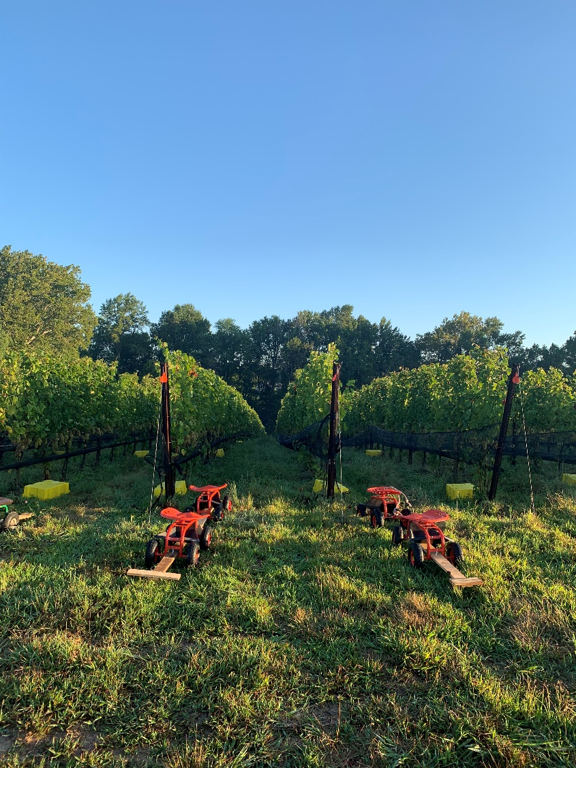

Club events were equally agreeable. The dry ground meant we could use the new parking area without preparing for towing duty. Dodon ‘til Dusk wasn’t canceled for rain, and Alley and her mostly new service team did a remarkable job learning their roles, revising procedures to enhance the DtD experience, and making all of us feel at home.
But underlying the triumphs were hidden challenges. The 2018 growing season - with its heavy precipitation, saturated soil, early defoliation, and poor nutrient storage - had lingering effects. In 2019, canes, buds, and the vineyard floor still contained high levels of residual fungal pathogens. Average low temperatures were higher than normal, limiting the number of “chill hours” (the number of hours the vines are exposed to temperatures between 32 degrees and 45 degrees F) that are required to break dormancy. The consequences were bud failure, excessive shatter (when the new seeds are not fertilized), and isolated bunch rot in the period before harvest, despite the near-perfect weather.
Still, the vintage proved exceptional. Although yields were low, about 20% less than usual, the quality of the harvested fruit was outstanding. The wines are continuing their annual trend toward greater depth and complexity, consistent with the increasing age of the vines. These characteristics were enhanced by long maceration times, allowing us to extract the full range of flavors. The Sauvignon Blanc and Rosé will soon be bottled; we are thrilled with them.
Lessons Going Forward
For the past year and a half, we’ve focused on understanding why 2018 was so damaging and on how we can be better prepared for the future. Our path to greater resilience involves two courses of action. First, we need to become more flexible in our harvest and winemaking strategies, such as when to pick early and make Rosé, when to alter our usual extraction processes, and what to do when we get caught with less than perfect fruit. We now have written protocols with criteria for their use for each of these situations.
We are also making fundamental changes to our vineyard practices. Because of my background in medicine and immunology, as I read more about the underlying science, the central concepts have emerged with clarity. While our farming has always been at the forefront of sustainability, 2019 is the year we hastened the pace of Dodon’s ecological approach to farming.
Throughout the vintage, we invested heavily in a set of practices that focus on improving soil, enhancing biodiversity and ecosystem services, and enriching the health, vitality, and resilience of the plants. Many of the techniques that we’ve adopted are the natural extension of our past effort to mimic natural processes, but our new focus centers primarily on soil and soil biology.
Soil with structural integrity, a diverse microbiome, and high levels of organic matter carries out many vital functions. It provides essential support for plants, protects against both drought and flood, removes environmental toxins, and improves water quality. Particularly important in today’s world, soil stores large quantities of carbon – more than twice the amount found in the atmosphere. Putting more carbon in soil will play a crucial role in addressing the underlying cause of climate change.
Healthy soil is the result of the biological interaction between plants and microbes. Just like the microvilli of the human intestine, roots are the mechanism that plants use to take in nutrients. As in humans, a balanced diet is essential for plant health. The best diets come from rich topsoil with good nutrient and water holding capacity, characteristics that allow the plants to produce complex phytochemicals that improve their structural integrity and strength, promote disease resistance, and enhance flavor.
Microbes – protozoa, fungus, bacteria, and archea – play several crucial roles in healthy soil. First, they decompose organic matter and secrete organic acids that breakdown rocks, releasing nitrogen, phosphorous, sulfur, and other nutrients that can be absorbed by plants, and they enhance water regulation by producing glycoproteins that improve soil aggregates.

Roberto and Tom construct a Johnson-Su bioreactor, a type of static, aerobic composter.
Second, beneficial microbes compete with pathogens for nutrients, secrete antimicrobial compounds and lytic enzymes that inhibit pathogen growth, and boost plant systemic host defense by stimulating production of phytochemicals. The result is an environment known as disease-suppressive soil that protects plants from pathogens.
The devil, of course, is in the details. There isn’t a textbook on ecological vineyard systems that translates these concepts into methods to create healthy soil, and only a few peers in the industry have taken this approach. The closest techniques are those used in biodynamics, but the supporting science for this very specific set of practices isn’t yet well-developed. As a result, we looked instead to other agricultural, natural, and scientific systems – everything from forestry to paleopedology (the study of soils from past geological eras) – and to our own property, where native grape vines live and thrive in the woods, not the pastures.

Turnips have a deep taproot that breaks up compaction.
Reasoning that grape vines would likely be healthiest in a forest-like setting supported by nutrients and microbes that are common in that ecosystem, we decided to emphasize growth of diverse fungal species that prefer woody food sources. Our compost program now emphasizes wood chips, and we’ve constructed a static, aerobic composter inoculated with soil from the woods just outside the vineyard. We hope that this compost will contain native mycorrhizal fungus species that will interact with the vines to produces better soil, healthier plants, and better fruit.
Because different plants provide diverse nutrients to soil microbes, we’re also working to enhance plant diversity within the vineyard. One method is to use highly heterogeneous cover crops. Our mix this year included eleven different species of grasses and forbs. A custom-made roller crimper has helped as well. When perennial grasses are mowed, hormonal signals stimulate regrowth. In contrast, crimping tall grasses terminates their growth and allows other plant species to flourish. Crimping also provides a mulch layer, cooling the soil to provide a better environment for fungal growth.

Crimping enhances plant diversity and cools soil.
Will these methods work? The conventional wisdom that vines need to struggle to produce the best wine gives pause to many of our colleagues, but it does not convince me. It’s true that overly vigorous vines with abundant foliage produce wines that lack structure and taste “green” from too many methoxypyrazines. The question is whether this vigor is produced by healthy soil with high levels of organic matter, or whether it is more likely to occur in unhealthy soil exposed to excess mineral nitrogen and phosphorous from fertilization, tillage, or excess rain.
Recent research from Germany suggests that vines raised in healthy, microbially active soils have smaller shoots, lower pruning weights, and fewer leaf layers, all signs of reduced vigor, as compared to conventionally grown grapevines. Perhaps in this context, “struggling” refers to the appearance of small, contained vines focused on reproduction and not vines struggling to feed a depleted microbiome by producing excess foliage.
Our practices are supported by research published over the past decade in scientific journals like Cell, Science, and Nature. They are based on cutting edge research and represent a significant departure from standard viticulture. After 30 years away from the lab, it’s fun to again read journals that formed the foundation of my scientific career.
But the reality is that the methods we are adopting are not new at all. Nature had a pretty good system before Thomas Jefferson invented the moldboard plow, Robert Koch developed germ theory, and Norman Borlaug initiated the green revolution. While these innovations resulted in robust increases in food production and saved billions of lives, they are also associated with degraded soil, reductions in nutrient density, and increasing input intensity. By looking to the past, new science that reintegrates ecology into the toolbox may move agriculture into a safer, more resilient, and healthful future.
We do not yet know which specific practices will be the most effective in the vineyard, but it would be folly to keep doing the same things as in the past. We are heartened by the support of our wine club members and a few leaders of the wine industry. It is indeed both exciting and daunting to be redirecting our growing strategies, and we welcome your feedback.
The final story of 2019 vintage is thus a tale of two vintages. The first – simple, unchallenging, straightforward – reminds me of an Ignaz Pleyel flute concerto, extraordinarily popular during Pleyel’s lifetime but which have become obscure with time. The second vintage - more scientifically and intellectually demanding - is reminiscent of Mozart’s Flute Concerto No. 1 in G major. Composed shortly after he had been dismissed from the Viennese court, this concerto represents the rebellious defiance of defeat that eventually thrust Mozart to the pinnacle of classical music.
The challenges of the 2018 vintage proved to us that simply sustaining the status quo would not be enough to withstand the consequences of the rising temperatures and extreme weather events that scientists predict for the future. Rather, we are convinced that restoring a functional ecosystem represents the best path forward in terms of wine quality, as well as environmental stewardship. Stay tuned as 2020 unfolds, and we learn more.

In praise of farmworkers (and all food workers)
As I reflect from the comfort of an air-conditioned office, the vineyard team is hedging for the third time this year. Usually, we only hedge twice, but the excess foliage that resulted from last year’s heavy rainfall is creating too much shade. The temperature will soon be 90 degrees Fahrenheit for the 27th time this season. The high humidity, now 97% according to the weather station, means that neither the vines nor those who tend them get much benefit from evaporative cooling.
As I reflect from the comfort of an air-conditioned office, the vineyard team is hedging for the third time this year. Usually, we only hedge twice, but the excess foliage that resulted from last year’s heavy rainfall is creating too much shade. The temperature will soon be 90 degrees Fahrenheit for the 27th time this season. The high humidity, now 97% according to the weather station, means that neither the vines nor those who tend them get much benefit from evaporative cooling.

The Dodon vineyard team stacks lugs of Chardonnay for transport to the winery for pressing.
Such moments of contemplation leave me eternally grateful for our vineyard team. They are dedicated to the hard work and perspiration that enhances the environment and produces the best wine. And they are part of a larger group of food and agricultural professionals who feed the nation. We owe them a great deal.
It takes considerable effort by many people in a complex system to get food on your table. Think for a moment about where your next meal will come from. If your answer is the supermarket, you’ve missed something.
Farm workers till soil, plant seeds, apply soil amendments, weed and water, raise honeybees, mow fields, feed animals and remove their waste, milk, gather eggs, pick vegetables and fruit, and clean equipment.
If your meal includes meat, meat packers slaughter, butcher, and wrap. Throughout the food system, a complex network of packers, forklift operators, and truck drivers distribute food from farm to market. Food service workers purchase ingredients; set tables; prepare, cook, plate, and serve meals; bus plates; and wash dishes and put them away.

Collectively, food workers make up 9% of the American workforce. These are people who should have the training and experience to carry out their function efficiently and effectively and to ensure that food is safely delivered to your table. And they should be able to advance in their careers, support their families, and pursue their interests.
And yet, despite the importance of the work that they perform, food workers at every level of the system are, as often as not, inadequately paid, treated, and trained to perform their jobs effectively. Farm work ranks among the 25 lowest paid occupations in America. Food service occupations - cooks, servers, bus people, and dishwashers – are in the bottom 10. And because these workers are often women and immigrants with fewer legal protections than other workers, they are frequently abused and exploited.
In his powerful book Fast Food Nation, Eric Schlosser tells the story of the erosion of meat packing as an occupation. According to Schlosser, meat packers in 1970 were considered skilled workers who enjoyed middle class wages and long-term employment. Now, according to the Occupational Safety and Health Administration, meat packing has become the most dangerous occupation in America, with largely unskilled workers using hand-held knives to process meat at rates twice those of other countries.
Moreover, surveys find that more than a third of all women in the food service sector, especially those making minimum wage (currently $3.63 per hour for tipped workers in Maryland), have experienced some form of unwanted sexual harassment, making this the single largest source of sexual harassment claims reported to the Equal Employment Opportunity Commission.
The current system may keep food prices low, but I wonder about its true costs. Given the abuse, low wages, and degree of manual labor, Enlightenment Now author Steven Pinker wonders why anyone would want to be a farm worker, suggesting that vertical farming and synthetic food offer better alternatives. (There may even be synthetic wine in the future.)
Technology-based solutions may have a role in the future of our food system, but whether food is grown in soil, laboratories, or factories, its increasing complexity will require skilled workers. These are, after all, the people who feed us. Much as we should value the work of teachers, nurses, and public safety officers, we should appreciate the passion, dedication, knowledge, and ownership that farm and other food workers bring to their jobs.

Tom teaches the team how to scout for fungal disease.
Education is one way to recognize the skilled nature of food work. For example, while most small farms make significant effort to train their workers, plentiful off-farm opportunities for basic training in soil science, horticulture and plant pathology, entomology, pesticide safety and stewardship, mechanics, and other subjects would both acknowledge the importance of workers and enhance their value.
Maryland’s seventeen community colleges have the infrastructure to provide this education, but of these, only Chesapeake College in Wye Mills, offers an agriculture track. Paid apprenticeships, such as those supported by the Department of Labor, also offer important opportunities for training. Unfortunately, these are currently ill-defined, making them difficult for farmers to access.
The Governor’s Workforce Development Board, along with its twelve local partners, has the responsibility to assess workforce needs in the state and to create policies and programs to address them. Agriculture should become a priority for the Board.
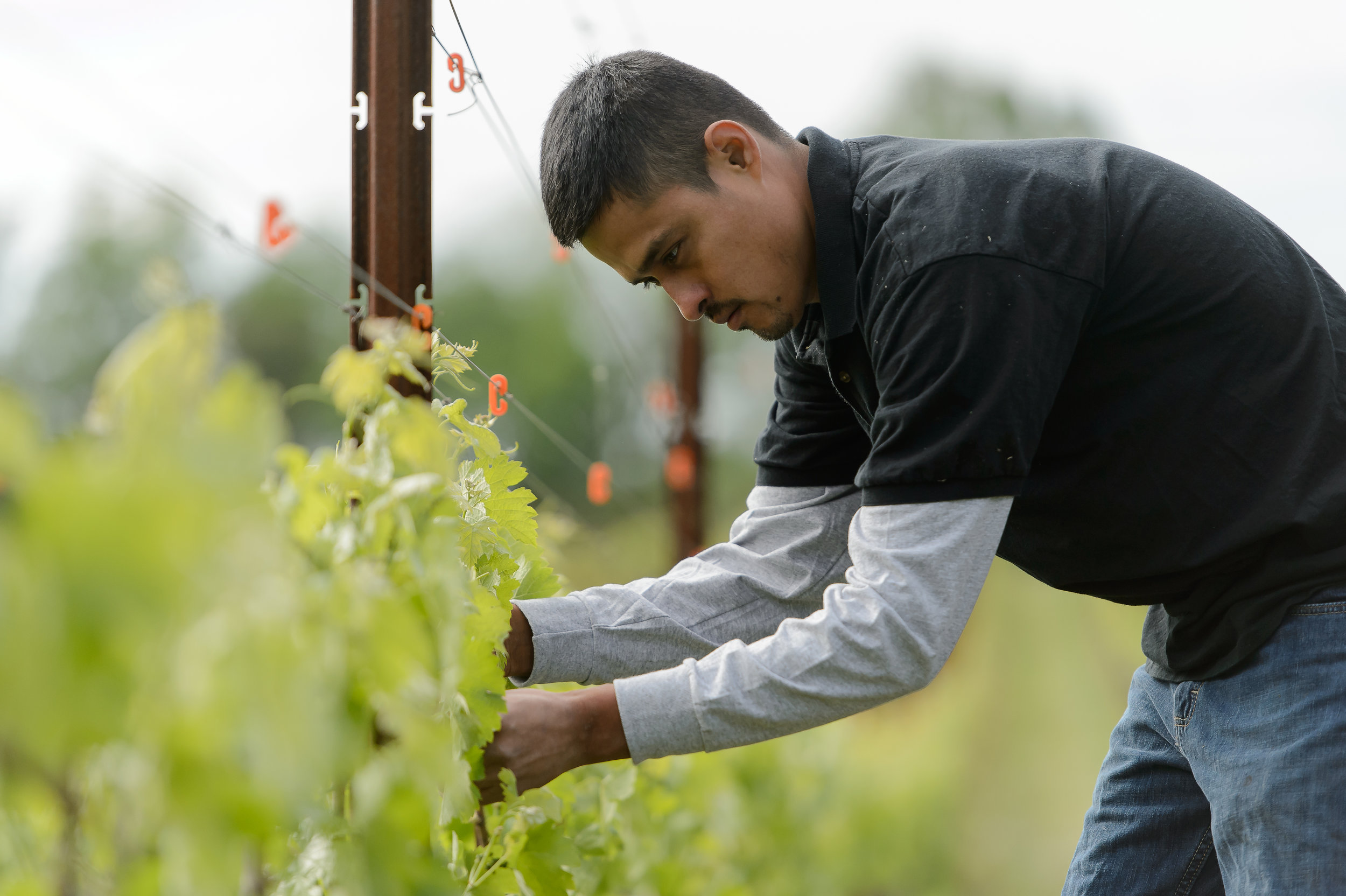
As the climate warms, farm worker training and education will likely pay larger, societal dividends. When the appropriate methods are used, agriculture represents an important way to sequester carbon and address climate change. Skilled, educated workers will implement these methods and adapt them to local conditions more effectively than those that aren’t adequately trained.
In addition to technical training, farm and food work, like many other skilled occupations, also requires soft skills, such careful observation, attention to detail, critical thinking, and problem-solving, activities that are best done when workers are close to the product and those who consume it. And the workers deserve ongoing career pathways so that these are not seen as “dead-end” jobs to be avoided when, like now, alternatives are plentiful.
And simply recognizing the contributions of workers throughout the food system is the most important way we have to say thanks for a job well-done.