
2025 Vintage Summary: Resilience Takes Center Stage
I usually prepare an annual vintage summary in December, but life and competing demands got in the way. After an extended holiday filled with family visits, we watched the U.S. government invade Venezuela and Minneapolis and threaten Greenland. Suddenly, the operations of a small farm in Davidsonville seem insignificant.
But times like these also remind us of the importance of strong, resilient communities, whether they are based in nature, semi-natural like our vineyard, or centered on human connections.
Nature has much to teach us about how communities of organisms work together to mitigate the impacts of natural disasters, pollution, and invasive species. We learned a lot about resilience in 2025; here is my vintage report.
Extreme Drought and then Rain Start the Season
The 2025 vintage was marked by winter drought, months of heavy spring rain, then drought again, equipment failures, the Spotted Lanternfly invasion, and ongoing learning from our experiences.
On April 10, just around budbreak, the U.S. Department of Agriculture declared Anne Arundel County a federal disaster area due to several years of drought. The aquifer was lower than ever recorded.
Almost on cue, the drought started to ease. We were happy to get some rain, which increased nutrient turnover as the vines and cover crops emerged from winter dormancy.
By May, however, the rainfall became excessive, with 11.5 inches that month, 10 inches in June, and 6 more in the first half of July. On Friday, June 13, alone, an incredible 5 inches fell in just an hour and fifteen minutes.
Several effects are anticipated from this heavy rainfall during the first half of the growing season. First, the soil would become waterlogged, with mud puddles forming in low spots throughout the vineyard and heavy compaction from tractor passes. The vines' roots would become starved for oxygen, reducing their ability to absorb nutrients, resist pests, and set fruit, which limits the harvest size and quality. Additionally, the excessive water would create ideal conditions for fungal diseases, including bunch rot and downy mildew.
Yet, here at Dodon, none of this occurred. There were no puddles. The vines kept growing, even as many of our colleagues across the region reported yields 50-80% below normal at harvest. In fact, we experienced our second-largest harvest ever. Despite the tough conditions, we even managed to reduce pesticide applications compared to the 2024 vintage, which had much better conditions.
While I can’t prove it, I like to believe that the resilience seen in the vineyard comes from our farming practices-practices that rebuild soil health and restore functioning ecosystems. This experience aligns with emerging science that shows an extraordinary connection between biodiversity and resistance to extreme weather events.
The mechanism behind these benefits is straightforward. Different plants with varying root depths break up “plow-pan,” compacted soil that blocks rainwater infiltration, and create pathways that improve infiltration. Years of building a diverse soil microbiome create disease-suppressive soils that act as the vineyard's immune system, a function that now extends to control of insect pests.
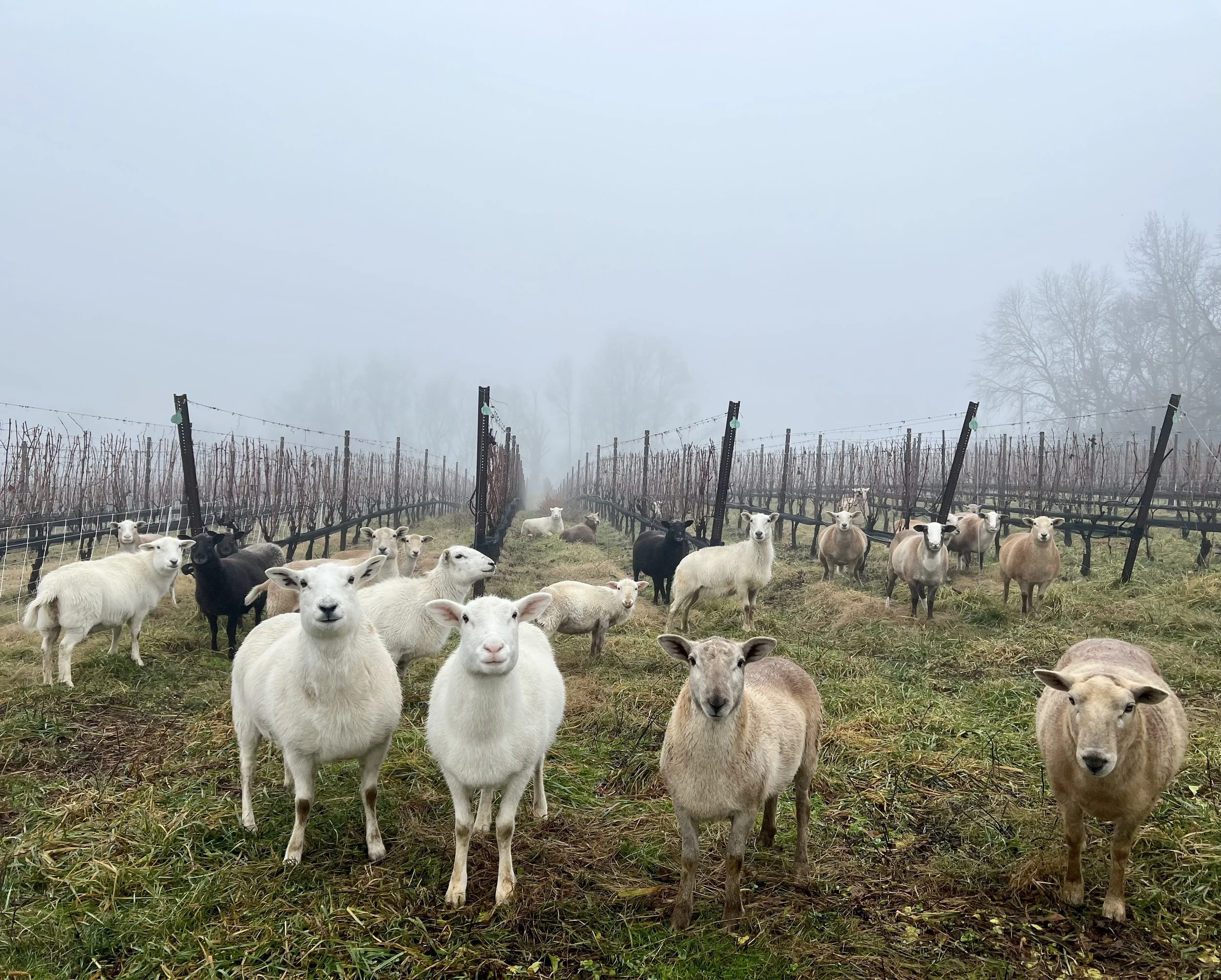
Simply put, we’ve confirmed that a healthy environment—one with diverse plant, insect, mammalian, and microbial life—helps create strong, vibrant, and resilient vines that resist all but the most extreme conditions.
Nature Heals Itself, But Can It Also Fix the Tractor?
In late April, we arrived to find the glass on a tractor door had shattered. To this day, we don’t know how or why this happened. Vandalism seems like the most likely cause, but we simply don’t know.
Replacing the glass was a quick and easy process, causing only a few days of inconvenience. However, a few weeks later, the engine of the other tractor caught fire while Kurtis was spraying. Roberto and Kurtis quickly took control of a truly dangerous situation, putting out the fire and stopping the engine by pulling the battery cable.
This time, the disruption was more severe. It took months to get the required parts. Our mechanic is also a busy farmer who needed to put up hay before the next rain. We quickly fell behind on essential vineyard chores, including crimping, tilling, and hedging. Being without one tractor meant hours spent changing implements and counterweights whenever we needed to finish a specific task. The vineyard team eagerly stepped in, working extra hours and doing as much as possible by hand.
The apparent cause of the fire can be linked to biodiversity loss, climate change, and malfunctioning ecosystems. Mice chewing on the wiring harness caused overheating, which was likely the main reason for the fire. This isn’t a new problem.
Over the past few years, we’ve had more rodents than usual around the farm. A year ago, they chewed through the truck's fuel line. An increase in rodents in the meadows has also led to more ticks than we’re used to.
The rise in mouse populations, as it turns out, is caused by changes in the ecosystem. You’ve probably heard the phrase “follow the money," but in nature, we “follow the food.” Bird populations, including raptors that keep rodent numbers in check, have decreased significantly over the past century. Warming temperatures, habitat destruction, and the reintroduction of coyotes have disrupted food chains, migration patterns, and reproduction, leading to a surge in rodent numbers.
At the same time, we’ve enhanced plant and insect diversity in and around the vineyards, providing more food and habitat for rodents. Essentially, we’ve increased the availability of rodent food while removing their natural predators, a clear example of a trophic cascade in action.
Tractor fires, fuel line leaks, and more ticks around the meadows are the result. For now, our response is to add more bat and hawk boxes, which we hope will help rebalance the ecosystem and keep the tractor running smoothly.
Redundancy to the Rescue
Narrow escapes marked the first part of the season. We endured the rain and still had a full, high-quality crop. We repaired the tractor in time to hedge before hanging the bird nets. Then came the final days of harvest, along with Spotted Lanternfly, a broken motor on the sorting table, and finally, a destemmer that wouldn’t start.
Broken equipment at the end of the growing season is common on a farm, but we work hard to ensure that the crush goes smoothly. Forty-two tons of ripe fruit need to be processed quickly and efficiently. Every tool, from the snips to the press, is serviced, checked, cleaned, and regularly inspected.
Yet just a few tons into the red crush, the sorting table started to wobble. One of the two vibrating motors had shut down. We checked the wiring, getting shocked a few times as we found that a ground wire was connected in the wrong spot. We tried to order a new motor, but it would take months to arrive from Italy. In the end, we jury-rigged the table to run on one motor — a little awkward and slow, but still workable.
The last day of the crush was expected to be lighter, with only three tons more, so we took an extra half-hour to sleep in. Everything appeared normal, and the team was relaxed and happy, until I flipped the destemmer switch. Nothing. After two hours of troubleshooting and several calls to the manufacturer, still nothing.
Fortunately, we had our old destemmer in storage. Out it came, and soon cleaned, sanitized, and ready to use. It runs at about a quarter of the speed of the broken one, but at least it runs.
Just like with the tractor, having a spare showed that redundancy can be a crucial part of resilience. When I shared this story with a Navy submarine commander several months later, he immediately understood what I meant. On a submarine, where broken parts can mean life or death, they keep as many as eighteen replacement parts for each system.
SLF Finally Arrives
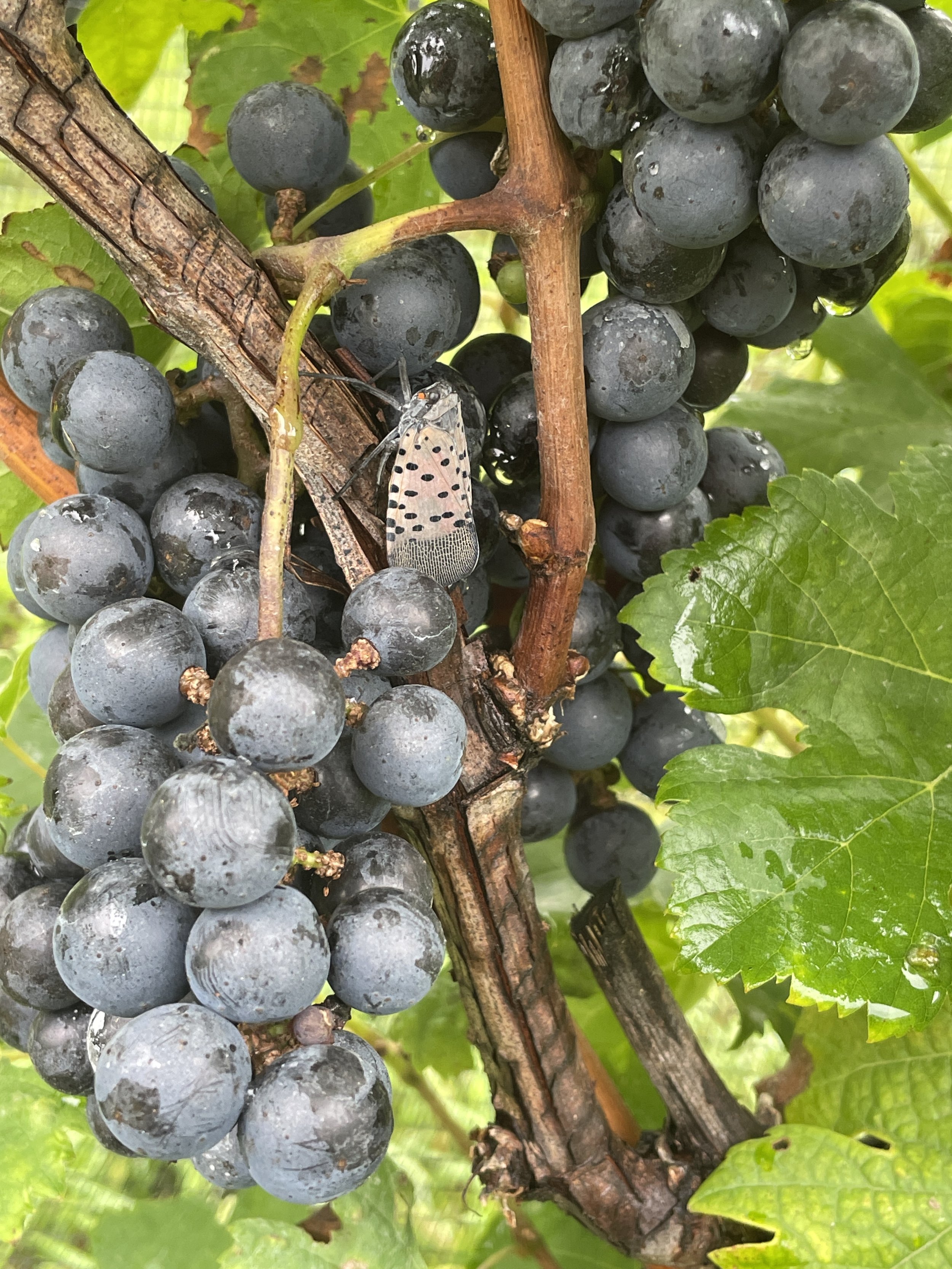
We have known for years that the Spotted Lanternfly (SLF) would arrive. We prepared by removing hundreds of Ailanthus altissima, also known as the Tree of Heaven (TOH), which attracts SLF and enhances its reproductive ability and lifespan. We also installed songbird and bat boxes to attract natural predators. These efforts yielded only limited success.
By mid-summer, many of the Ailanthus we killed a year ago had grown vigorous new shoots. These sprouts had attracted large numbers of SLF. At this point, I felt we had no choice but to use pesticides—an herbicide to eliminate the Ailanthus and a long-lasting insecticide to reduce the SLF population. Like in medicine and public health, sometimes targeted treatments are necessary when cultural practices fall short.
We hoped that reducing the number of SLF near the vineyard would decrease their population within the vineyard. However, we started noticing adult SLF in the vineyard in early August, though there were very few until Regina spotted three on a single shoot in Row 3 of Block 40, the first red block to be harvested. The next day, the first three rows were covered. Since the fruit had already been harvested, we decided to apply a long-acting insecticide by hand to these rows alone. The number of SLF per vine we observed would likely weaken their ability to survive the winter.
And so, the rest of the fall passed. An infestation would appear—some large, some small, but almost always on the outer edges of the vineyard—that we would treat. We had two goals: first, to prevent excessive feeding that would weaken the vines enough to prevent them from surviving the winter; second, to reduce egg laying in the vineyard.
We don’t yet know the results of our efforts. It seems likely that the insecticide reduced their numbers, but many egg masses remained in early November. When I surveyed areas with a high concentration of Ailanthus in nearby woods, I found very few SLF, suggesting that the insects probably flew into the vineyard from elsewhere. In other words, while adding bat boxes and birdhouses may help, unless they are used throughout the community and unless host trees for miles around are removed, we are likely to continue seeing SLF in the vineyard. These measures will only have a major impact if implemented community-wide.
Team Updates
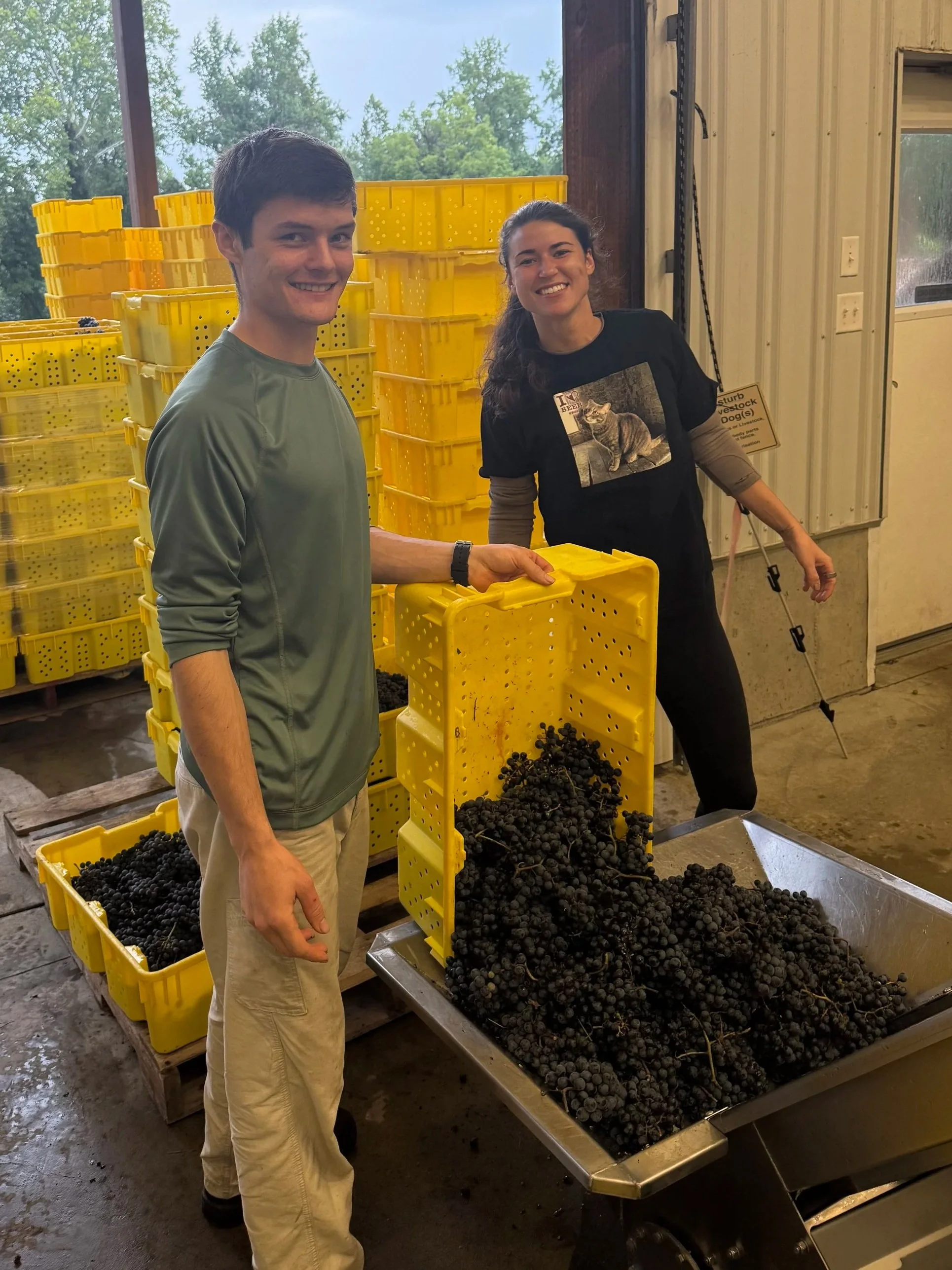
Some moments are bittersweet. After years of a long-distance relationship, Operations Manager Katie Sircovics will join her husband, JJ, at Fort Bragg later this month. It’s been wonderful to watch her grow both personally and professionally, and we’re glad to celebrate this joyful milestone in her life.
I have so many great things to say about Katie – her practical solutions when we overcomplicate things, her willingness to take on any task to be helpful, and her dedication to Dodon’s mission. But mostly, I’ll miss her delightful presence.
Fortunately, Katie will continue as Dodon’s operations manager, working remotely except during harvest, when she’ll return to the crush pad to assist Kurtis in the cellar and support the front-of-house team during the busiest part of the season.
We’re excited to welcome Jen Daszczyszak (pronounced datz-a-shock) to the full-time team as the wine club manager. Jen joins us from the Clarice Smith Performing Arts Center at the University of Maryland, where she managed the costume shop and was recognized in 2024 for new ideas that embody the spirit of moving Fearlessly Forward with innovative and creative thinking. Jen is also a self-described “wine nerd.” Many of you will recognize Jen as a wonderful host and tour guide, having served on Dodon’s part-time team for several years.
New Activities
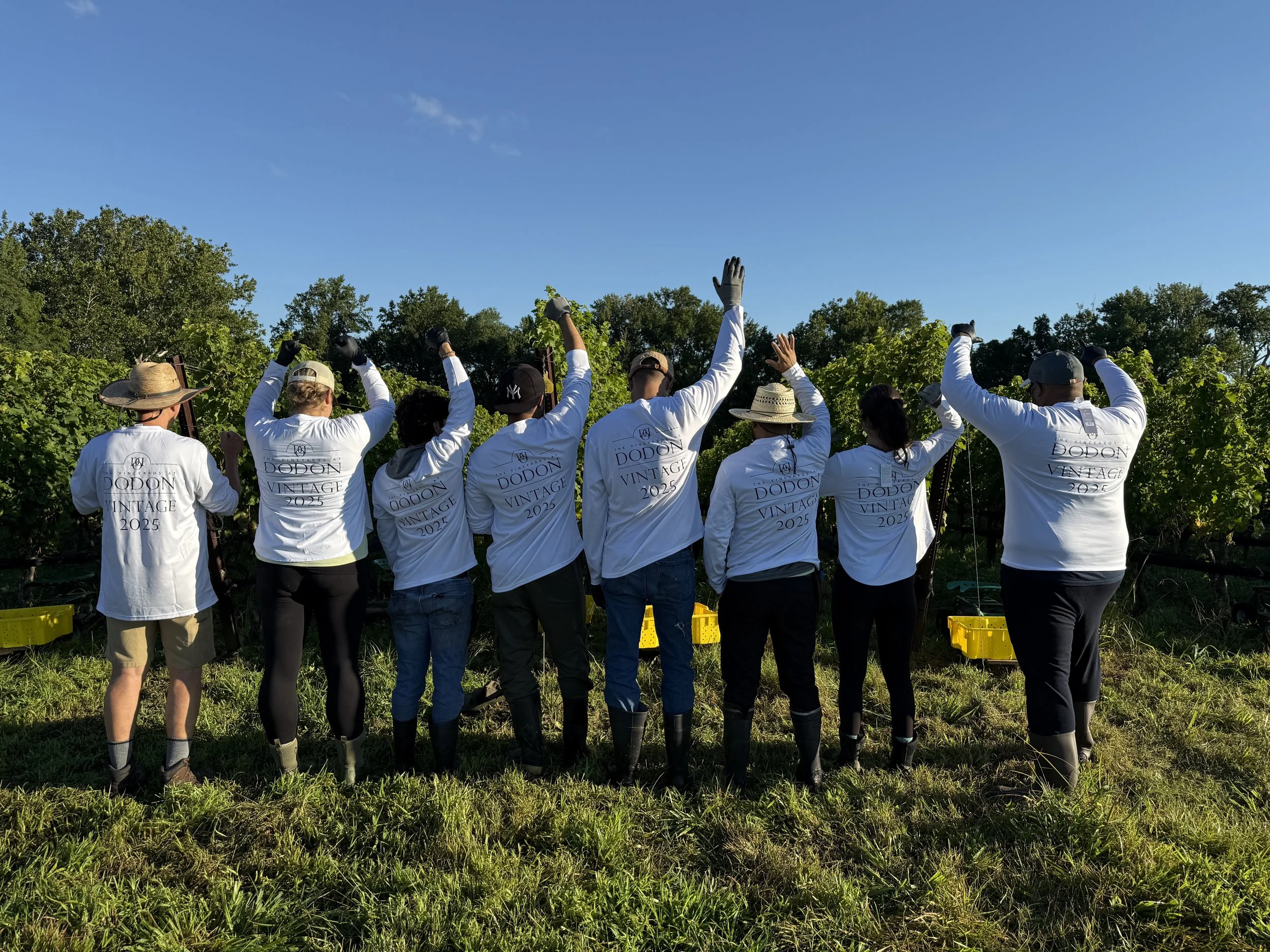
The new farming operations, which we call “The Gardens at Dodon,” are underway, with new fencing, clearing invasive species for the food forest, and apple trees growing in the nursery. We appreciate receiving a planning grant from the U.S. Department of Agriculture to explore the feasibility of the food forest, expanded silvopasture, apple orchard, and vegetable projects. Our goals are complex, balancing the financial sustainability of historically low-margin businesses with our community, environmental, and justice objectives, so that a robust business plan will be crucial.
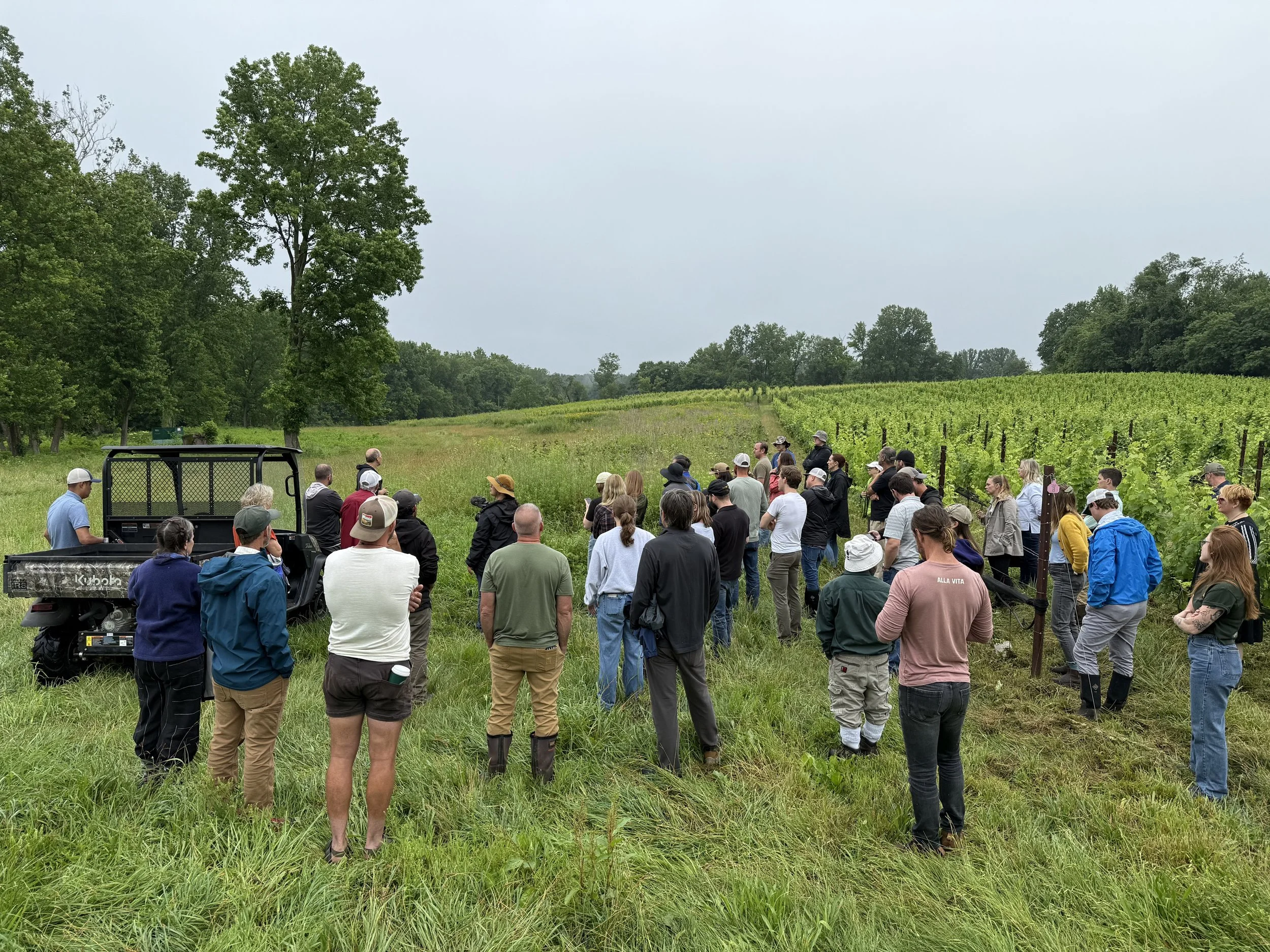
Polly and I are especially excited about the Dodon Center for Ecological Farming. We held a very successful “soft” start in June with a workshop on regenerative viticulture with our partners Kelly Mulville and Elaine Patrini from Paicines Ranch in California. In July, we convened the Board of Directors, which approved the Center's Mission and Vision statements and offered strategic input on several ambitious projects, including a workshop for congressional staff in collaboration with the Climate Farm School, now scheduled for May 2027.
What Nature Teaches Us
I began this essay reflecting on how nature can teach us about resilience, symbiosis, and functioning communities. Even plants, which we often see as passive because they are anchored in one place, are active members of their ecosystems. For example, when a pollinator approaches, plants sense the vibrations of fluttering wings and release just the right amount of pollen. In a sense, they anticipate the upcoming visit, just as we might prepare for a dinner party.
Plants also distinguish between the friendly sounds of a butterfly and the threatening noises of a pest. When a sharpshooter, a type of leafhopper that spreads Pierce’s Disease, gets close, grapevines release chemical distress signals. Some of these signals travel through the plant’s vascular system to the roots, where interaction with microbes greatly enhances the plant's defenses. The plant also releases volatile chemicals into the air, alerting its neighbors about the impending threat and attracting natural predators of the sharpshooter.
Walking down a vineyard row, whether we perceive it or not, we are immersed in this sea of plant volatiles. The vines are communicating their emotions to us, too. If only we could train our senses to listen to their signals, it might change our understanding of life and our role in nature. As author Zoe Schlanger asks in her remarkable book, The Light Eaters, “What if the lovely aroma of a freshly mown lawn represents the screams of grass?”
Of course, not all plants, even those of the same species, respond to threats in exactly the same way. Some react strongly, releasing large quantities of volatile chemicals, while others are more subdued. It’s as if the plants have unique personalities, all of which are necessary for the health of the population. Since they all play a role, if one of the personality types is removed from the environment, the entire population collapses. It turns out that in nature, life relies on diversity, a lesson that our human leaders would do well to learn.
And Finally, a Musical Theme for the Season
As always, I offer a musical theme for the vintage. Composed during the Gilded Age, Mahler’s Symphony No. 2, known as The Resurrection Symphony, takes us from a funeral through various stages of grief in the first four movements to a sense of eternal renewal in the fifth, where Mahler reproduces a portion of Klopstock’s poem, "Die Auferstehung."
Rise again, yes, rise again,
Will you, my dust, after a brief rest!
Immortal life! Immortal life
Will he who called you, give you.
The Gilded Age bears striking similarities to today. It was a time of rapid technological change, wealth accumulation, and political power by the rich, but it was also marked by rising income inequality, environmental damage, and worker unrest, eventually giving way to the Progressive Era. Mahler’s symphony reminds me that whether the ecosystem is damaged environmentally or socially, the future can be hopeful if we have a clear vision of what it could become. I hope that Dodon will serve as this visible example of what a just, ecological future can look like, if, as Ayana Elizabeth Johnson reminds us, “we get it right.”