
An Update on the April 21 Frost
I’ve been getting a lot of questions about the effects of last week’s devastating frost at Dodon, when no vine was left untouched, despite improved cold-air drainage in the low spots and the fans running in a futile attempt to bring warm air into the vineyard.
Many of our colleagues took even more desperate measures, such as scalping the ground with mowers, applying nutrients to disrupt nucleation and alter intracellular osmolarity, and using helicopters, open fires, and smudge pots, all of which can create air circulation. None of this worked. There was simply too much cold air. Only the vineyards along the Chesapeake and at 6-800 feet above a valley floor survived unscathed.
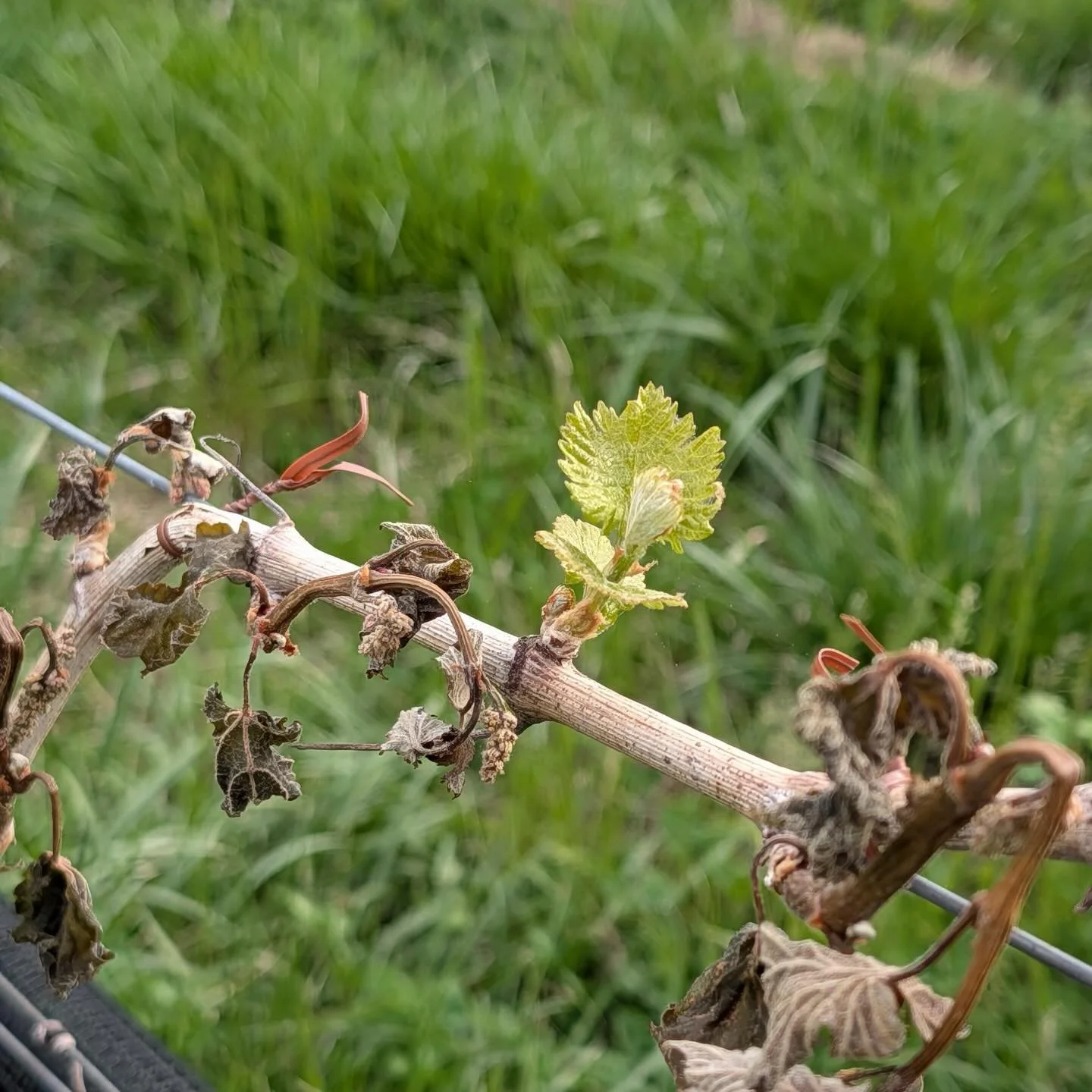
It was worse than it looked. As the highest and warmest spot in the vineyard, the Merlot in the first few rows of Block 41 along the driveway was the least affected, but even these vines showed signs of damage. We lost almost all the primary buds in the Chardonnay, Cabernet Franc, and Sauvignon. The Merlot, Petit Verdot, and Cabernet Sauvignon were not quite as far along, so a few primary buds had yet to break, but even these sustained severe damage.
Fortunately, grapevines have compound buds. Usually, only the primary buds emerge. These are the most vigorous and fruitful, producing shoots that bear two or more clusters. If the primary buds fail to break or are damaged by frost or other injury, secondary buds emerge within hours or days. Much of the green tissue in the vineyard now is the result of these buds. Sadly, they are much less fruitful than the primary buds, producing at most a single cluster.
It's much too early to know the full extent of the damage to the vintage. We won’t know this until fruit set in mid-June at the earliest, and even then, the growing season will bring many challenges. My best guess is that we can reasonably expect a crop of 30-40% of normal, about 12 to 15 tons of fruit or 700 to 900 cases of wine, most of which will likely go to white and rosé production. Some of our industry colleagues have already declared the vintage a complete loss, laying off workers in the process.
Because it takes vines several years to fully recover from an injury of this magnitude, the losses are likely to continue beyond 2026. The white vines first frosted in 2020 and again in 2021 and 2022 still haven’t returned to full productivity. We don’t know whether the ecological practices we use will alter this course, though it makes sense that healthy, well-nourished vines in a functioning ecosystem will heal faster than unhealthy vines planted in poor soil.
Fortunately, our business plan anticipates these events, so we’re likely to be fine in the long run, at least this time around. But the longer term is still unclear. We had never experienced a killing spring frost until 2020. They are now annual occurrences, adequately addressed by the cold drains, at least until now.
The underlying challenge is warming driven by fossil fuel combustion and outdated agricultural practices. Hotter winter temperatures trigger earlier bud break, extending the risk period. At the same time, atmospheric warming disrupts the polar vortex, allowing cold Arctic air to dip into temperate regions later in the season. The slowdown of the Atlantic Meridional Overturning Circulation (AMOC) compounds this cooling. These problems are worsening.
Members of the global wine industry have responded vigorously to the harmful effects of climate change and environmental degradation through global organizations such as the Porto Protocol Foundation, the Regenerative Viticulture Foundation, the International Wineries for Climate Action, and locally through the Dodon Center for Ecological Farming, which Polly and I established last year. We hope you will join us by becoming informed about the challenges of climate change, supporting these and many other climate-focused groups, talking with your neighbors about what you learn, and taking other practical steps. The wine industry may be among the first to experience the full effects of climate change, but it will not be the last.