
Farming in Service of Nature
Loss of biodiversity may be humanity’s greatest threat, even more than climate change. Food production is the primary cause. At Dodon, we seek to reverse this trend and thus enhance the ecosystem services that will allow us to reduce our physical and chemical footprint…
written by: Tom Croghan, co-owner and winemaker
When we planned the first vineyard field trials in 2007, Polly and I aimed to produce high-quality wine with a light environmental footprint. And from the beginning, our viticulture received high marks for sustainability.
Sadly, our farming at the time was misguided. The landscape had been devastated by centuries of conventional agriculture. Our “sustainable” practices reduced the rate of harm, but they did not reverse it. Instead, we were unintentionally perpetuating a methodical march to environmental degradation.
Over the last decade, we have drawn from many sources outside of viticulture to learn methods consistent with our values, including the traditional methods of Cuban farmers who fed a nation following the collapse of the iron curtain, novel science that explains the inner workings of ancient ecosystems, and the inspiration of our colleagues at Future Harvest.
Rather than preserve the destructive cycles of our early years, our farming practices now focus on regenerating soil health, restoring biodiversity, and enriching ecosystem function. We aim to create a wholesome environment for the vines and those who work with them by reducing chemical, plastic, and nutrient pollution while enhancing biological activity.
Regenerating Soil Health

Healthy soil is a complex ecosystem composed of living organisms (microbes, invertebrates, and roots), organic matter (the remains of these once-living things), rocks, water, and air-filled pores. Winemakers like to talk about the unique minerals that produce all the fine qualities of the wine they make. But soil’s real value is in the living part and its detritus.
The Chesapeake Bay’s western shore soil in the 17th century likely contained about 5% organic matter. It was less than 0.3% by the time we first planted grapevines. The structure and composition of the soil had significantly shifted from its native configuration.
A few dominant bacterial species replaced the diverse microbes that maintain woodland ecosystems. None of the nematodes, arthropods, or earthworms crucial for nutrient cycling, soil structure, and fertility remained.
At Dodon, we rely heavily on the tools of agroecology to regenerate the soil. Our goal now is to accelerate, as much as possible, the natural soil-building processes that once dominated the region.

We start by limiting tillage to the area under the vines and cultivating diverse cover crops in and around the vineyard. After experimenting with non-native cover crops like mustard, radishes, and annual ryegrass, we’ve learned that spontaneously growing, perennial grasses and forbs adapted to the local environment are best.
Our recent surveys reveal up to thirty different species per square meter. This extraordinary plant diversity is associated with improved soil structure, diverse microbial populations, large below-ground invertebrate populations, excellent water infiltration and storage, and high soil oxygen content.
Second, we apply organic amendments that add carbon and other essential nutrients to the soil. Using a foundation of ramial woodchips, we balance the compost with azolla. This rapidly growing aquatic plant scavenges the nutrients in the runoff from Dodon’s horse pastures. We also add the byproducts of our winemaking – spent yeast, stems, and skins. These practices both build soil and reduce the eutrophication that results in the Bay’s dead zones.

We incorporate indigenous microorganisms into the compost using soil from the surrounding forest. These bacteria, fungi, and archaea suppress disease by improving vine nutritional status, activating plant defense mechanisms, secreting antimicrobial substances, and increasing tolerance to injury. They also produce complex macromolecules, such as ascorbic acid, terpenes, and polyphenols, that defend the plants and make flavorful wine.
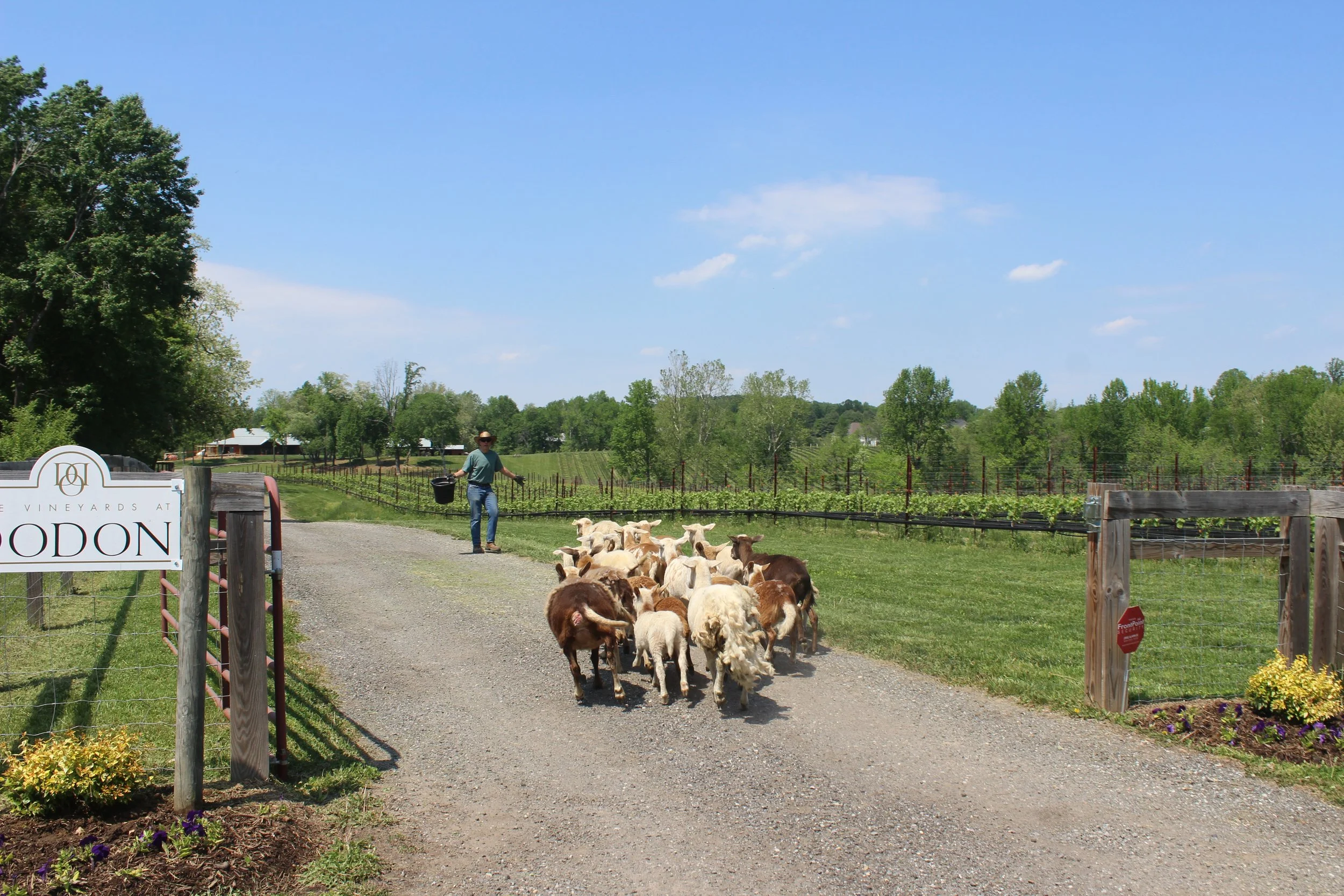
Finally, we integrate herbivorous grazing animals, or ruminants, into the system, supplying the new populations of microbial detritivores necessary for carbon, nitrogen, and phosphorus cycling. Our pasturing method, formally known as adaptive multi-paddock grazing but more commonly called “MOB” grazing, reproduces the evolutionary patterns of early grazers that may have allowed the earth to cool following the mid-Miocene climatic optimum.

Restoring Biodiversity
Loss of biodiversity may be humanity’s greatest threat, even more than climate change. Food production is the primary cause. At Dodon, we seek to reverse this trend and thus enhance the ecosystem services that will allow us to reduce our physical and chemical footprint.
Diverse vegetation in and around the vineyard – between the vine rows and in surrounding meadows, hedgerows, and woodlands – creates a habitat for mixed populations of vertebrate, invertebrate, and microbial life. Beneficial insects, in turn, reduce pest populations, enhance soil structure, and support microbiomes. In addition, highly diverse agricultural systems result in better yield, less pest damage and pesticide use, more carbon sequestration, and higher nutrient density.
Enhancing insect diversity may also benefit grape yield and wine flavor considerably. For example, Nicole Sierra-Rolet, also a member of The Porto Protocol, reports a 30% increase in yield at Chêne Bleu in southeastern France, which she attributes to larger bee populations.
Another colleague, Nuno Gaspar de Oliveira of Natural Business Intelligence, has demonstrated the transfer of native yeasts by butterflies from the surrounding landscape onto the developing grapes during vine bloom. These yeasts can later be found in the fermentations, contributing to the complexity of wine flavor.

To achieve these goals, we encourage native, low-growing grasses and forbs between vine rows by crimping tall grasses that out-compete other desirable species. In addition to their benefits on soil health, terminating these cover crops at bloom releases nutrients from decomposing roots and adds a mulch layer that cools the soil and prevents the spread of soil-borne fungal pathogens.
Pollinator meadows, hedgerows, and other natural areas offer beneficial insects and wildlife food, shelter, and places to breed and raise their young. In 2018, we installed three acres of meadows with 28 native grass and forb species, including Rudbeckia, Asclepias, Solidago, and Heliopsis spp., contributing to ecosystem benefits and season-long beauty. Remarkably, vineyard blocks adjacent to the meadows no longer require treatment for Japanese beetles, a significant insect pest in our region.
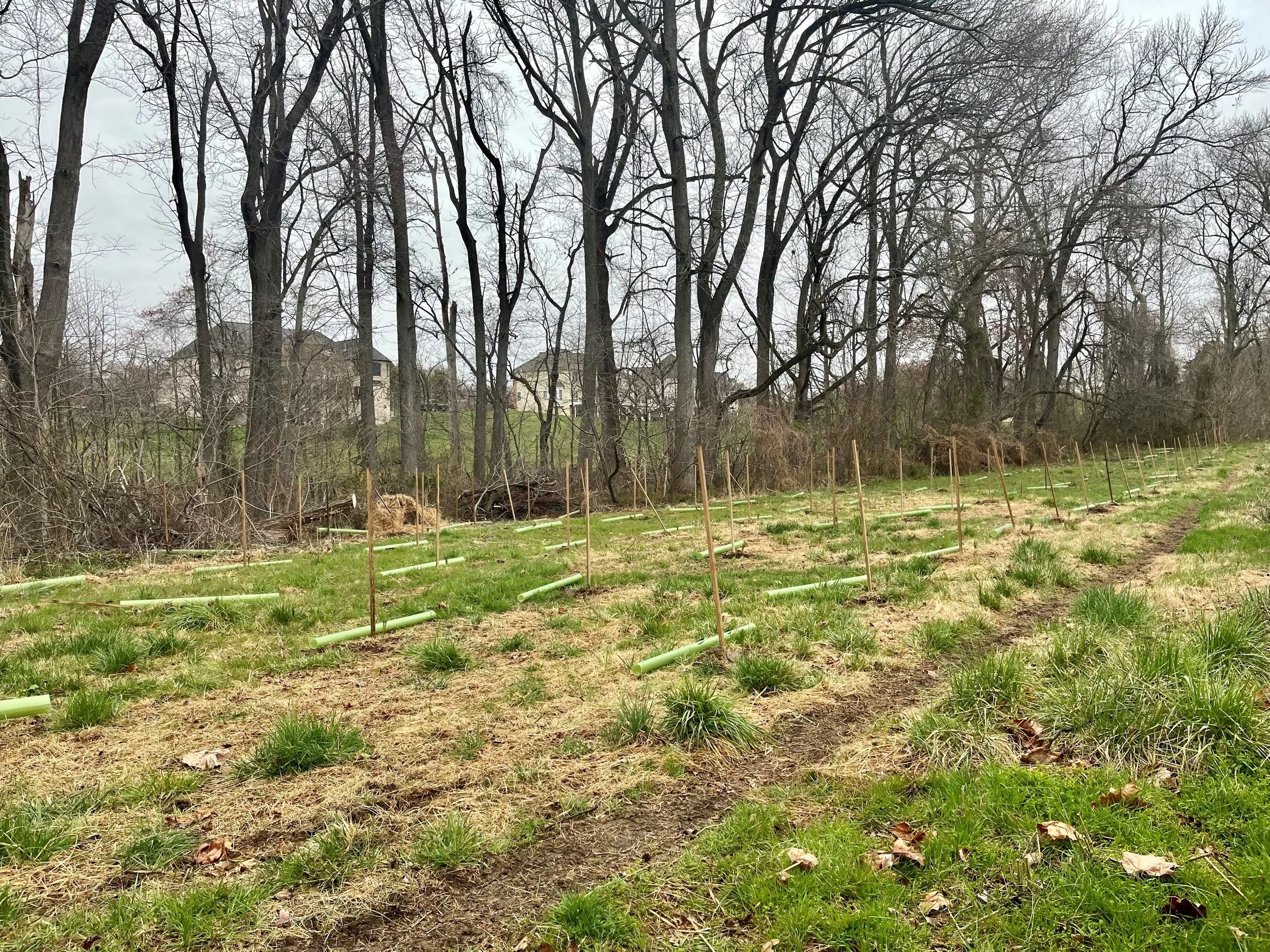
To extend these benefits, we contracted with the Maryland Department of Natural Resources to plant 1600 trees and shrubs as hedgerows this spring. Several species, such as Corylus americana (American hazelnut), Prunus angustifolia (Chickasaw plum), and Castanea pumila (dwarf chestnut), were once essential food sources for the first peoples of our region.
Enhancing Ecosystem Function
During the first meeting of Maryland’s Healthy Soils Advisory Committee, one of the members, an experienced and highly regarded farmer, was surprised to learn that he might have a soil health problem. He had become so accustomed to using fertilizer, pesticides, cultivation, and irrigation that it hadn’t occurred to him that a fully functioning soil ecosystem might reduce or eliminate the need for these inputs.
While we often think of agricultural landscapes solely in terms of food production, they are multifunctional. Farm ecosystems provide a habitat for microbes, insects, and birds that suppress diseases and pests, purify water, and store carbon. In addition, they offer opportunities for recreation and aesthetic beauty. In other words, farm landscapes play an essential role in our well-being.
Restoring these ecosystem functions is not straightforward, however. Returning to the past is neither possible nor desirable. Humans arrived in our region about 8-10,000 years ago when a much colder climate sustained the nomadic hunter-gatherer population. The area remained woodland until European settlers brought plows, smallpox, and novel plants and animals, changing the landscape forever. The pre-European ecosystems would support neither modern human needs nor a vineyard of wine grapes.
Neither will the current agricultural system that is dependent on chemical, plastic, and carbon pollution. So, what to do? We are in uncharted territory without a clear roadmap. Rather than following a prescribed recipe, we observe nature for lessons. How are similar invasive species managed in natural settings? Why have carbon dioxide levels declined in other epochs? How do animals graze in the wild, and what are the consequences?

We believe we are on the right path in choosing the holistic process evoked by Orgel’s Second Rule, “Evolution is cleverer than you are.” It’s a deliberate route, dependent on trial and error at the generational timescales of microbes, insects, plants, soil, humans, and geology. It considers the well-being of people and the organisms with which we share the planet.
Given these constraints, the process is remarkably swift. And it appears less prone to unanticipated consequences than quick technical fixes, the latest trend, or magical thinking.
When planting, we tend to focus on native species of plants that support native insects. Defining native, however, is complex. Take narrow-leaf plantain, for example. This naturalized “weed” is native to Great Britain. Unlike more invasive species like Johnsongrass and multiflora rose, it has integrated well, providing diversity, nutrients for butterflies and bunnies, and medicine for people without overwhelming the landscape.
Most people consider narrow-leaf plantain a native, recalling hours of shooting the seed heads during childhood. Immigrants – plants, insects, and people - can add wonderfully to our lives, a lesson in reciprocity we would do well to understand.
We planted the oldest vineyard blocks in the east vineyard fourteen years ago. From the beginning, we confined tillage to the area under the vines, eliminated herbicides, and planted several species of tall fescue as a cover crop. Following the difficult 2018 vintage, we intensified the effort by adding multispecies cover crops, initiating the compost program, and integrating sheep.
As a result of our effort, we’ve observed better soil structure and water infiltration during increasingly frequent extreme rain events. Soil organic matter has increased 10-fold, representing about 2500 tons of sequestered carbon dioxide. We reduced insecticide use by 70% and fungicide use by a third. Meanwhile, increased plant phytochemical levels, such as ascorbic acid, produced resistance to pest pressure and better wine.
Looking Forward
While our early results are promising, the long-term is not assured. Globally, the challenges associated with greenhouse gas emissions, loss of biodiversity, chemical and plastic pollution, and eutrophication are compounding. Our methods may help us temporarily adapt to a changing climate. Still, they will only reverse the underlying trend if applied broadly and combined with dramatic changes in how we produce energy and use land.
The most recent report from the Intergovernmental Panel on Climate Change makes clear that the climate crisis has resulted in crop failures, food shortages, and hunger, even as conventional solutions worsen the problem. The report calls for the radical transformation of agriculture using the agroecological tools we employ at Dodon.
The lesson of the Dodon story is that while these methods often deviate from established practice, they are feasible and seem to help. We’ve learned to discard an either/or mentality to find values-driven, integrated solutions that benefit the environment, the community, and the company. It tells us to farm with intention, purpose, and gratitude. Our obligation, and our privilege, is to tell this story.


2022 Vintage Update: Doing Our Part
Every season, I’m dazzled that the buds break, shoots grow, inflorescences bloom, and fruit sets and ripens. It’s a bit like the sun coming up in the morning. Who can complain after that miracle? But some vintages are more successful than others. And despite the challenges, 2022 was more triumphant than most.
Sometimes the challenges around the vineyard seem insurmountable. In 2022, it started before bud break when the glass for our mid-March bottling was stuck on a ship in the Atlantic with no available port space. As a result, bottle costs nearly doubled as we scrambled to find replacements.
Shipping challenges also prevented the arrival of the new frost machines from California in time for bud break. The ensuing late spring frost killed half the primary buds on the Sauvignon and Chardonnay. Production of these wines was correspondingly reduced.
The warm winter disrupted vine phenology and ecological interdependencies. A foot of rain in August and Hurricane Ian heightened mildew pressure and diluted the wines. The precision electrostatic sprayer broke three times. We had powdery mildew in the Chardonnay blocks for the first time. Veraison was late, but harvest arrived quickly, with little time for sampling. Titratable acidity, a routine preharvest test, wasn’t measured. Neither was the yeast assimilable nitrogen, crucial to managing yeast nutrition during fermentation.
Disrupted supply chains remain a headache. We scheduled delivery of parts for the new destemmer to arrive in Baltimore in June. The ship reached the Chesapeake Bay in late October, long after harvest. Even then, it was redirected to Freeport, the Bahamas, again for lack of dock space. Our old destemmer, the one we, fortunately, hadn’t sold yet, didn’t start when I recommissioned it. Two members of the team had to isolate because of Covid-19 during harvest.
I was on edge throughout the season.
There Are No Bad Vintages
Every season, I’m dazzled that the buds break, shoots grow, inflorescences bloom, and fruit sets and ripens. It’s a bit like the sun coming up in the morning. Who can complain after that miracle? But some vintages are more successful than others. And despite the challenges, 2022 was more triumphant than most.

Some of the success was dumb luck. Red fruit yields were significantly larger than usual across the Mid-Atlantic region. Dodon was no exception. We picked more Merlot than we had tank space for, an excellent problem but one that required some ingenuity. The superb weather we had Memorial Day weekend resulted in high levels of fruit set. It made up for losing half the Sauvignon and Chardonnay to frost.
But preparation, planning, and hard work also contributed. July’s foot of rain reduced the phenolic levels below average, but the fruit was fully ripe and clean. The stormwater quickly infiltrated the vineyard floor. Despite the unusual occurrence of powdery mildew, we had very little downy mildew. While the good weather after veraison contributed, the benefits of our ecological farming practices are apparent.
And, of course, this success occurred with the tremendous effort of Dodon’s vineyard manager, Roberto Gomez, and his vineyard team. Facing the arrival of Hurricane Ian, the team regularly picked four and a half tons or more in the days preceding the storm, including 5.4 tons on the day Ian arrived. It was a truly heroic effort.
Transitions
Those of you who have been members of the wine club through the pandemic know the degree to which it forced us to change how we interact with you. As much as we enjoyed getting to know a broader slice of the community when we opened the vineyard to the public, it wasn’t us. We have neither the right place nor the disposition to be a raucous bar or restaurant. Instead, Dodon is a tranquil place to linger, converse, and enjoy nature.
We began transitioning back to tours, indoor seated tastings, dinners, and indoor and outdoor club member hours in 2022. It will hit full stride in 2023. Regina and the hospitality team will soon announce an exciting new year’s schedule, with more opportunities for private events and partnerships with wine shops, restaurants, and clubs.

Dodon’s hospitality manager, Katie Luscher, has successfully created a new food program that features offerings from some of our favorite local creameries, charcuterie makers, bakers, and other food artisans. You can look forward to enjoying this menu during wine club hours all year long.
We start the new year with some important staff changes. First, all of you in the Dodon Wine Club will be thrilled to hear that Regina has been promoted to General Manager. Simply put, she has earned our trust, respect, and admiration. Regina brings extraordinary commitment, thoughtfulness, and humanity to Dodon every day.
We welcome Kurtis Flaherty back to Dodon as Assistant Winemaker. A graduate of the Culinary Institute of America, Kurtis excelled as an intern at Dodon during the 2020 vintage. He then successfully honed his skills at The Wine Collective in Baltimore over the past two harvests. His dream has been to oversee an integrated vineyard and winery operation. Kurtis’ intellectual curiosity, executive skills, and attention to detail will ensure his success.
Of course, we are all sorry to see former Assistant Winemaker Seth McCombs leave Dodon for new ventures. His kindness, quick smile, and friendship taught us to be better people. We wish Seth and his family all the best in their next chapter.
Looking forward to 2023
Our challenges reflect the state of the world in which we live. Covid-19 continues to cause misery and, all too frequently, death here and abroad. The senseless, unprovoked war in Ukraine prolongs suffering and despair in that country, hunger in east Africa, and economic hardship here and in Europe. These problems also created the supply chain problems that were always around the corner in 2022.
Greed and an extractive economy degrade soil, destroy ecosystems, and accelerate the climate crisis that affects us in many ways. Hatred, intolerance, and exploitation prolong unnecessary prejudice, gun violence, poverty, and poor health. A dysfunctional political system delays meaningful progress in solving these and other problems, even when we know what to do. A healthy planet seems idealistic and naïve. Cataclysm has become plausible.
Doing Our Part
In many ways, I am fortunate to be a winemaker and thus on the front lines of some of world’s greatest challenges. The essential partners of our trade, the vines, sequester carbon and create healthy soil. The vines become healthier and yield more when they are part of a diverse, functioning ecosystem. Unlike most in our community, we have the opportunity, indeed the obligation, to reduce atmospheric carbon dioxide, not just slow emissions.
The extreme weather events and changing pest patterns, annual occurrences at Dodon, directly result from a rapidly changing climate. We could respond to them quickly by boosting the intensity and frequency of pesticide applications. But this short-term solution would also require tractor passes and more diesel fuel, kill beneficial insects, and reduce the diversity of the vineyard microbiome. In other words, farming in a conventional manner would contribute to the very problems that adversely affect us the most.
Instead, we look to nature for solutions. We seek healthy plants in a self-regulating system. Using the tools of agroecology, we build healthy soil, enhance biodiversity, and restore ecosystem function. Blending indigenous and traditional knowledge, we use diverse native cover crops to improve soil structure and create channels that allow stormwater to infiltrate deep into the subsoil. The sheep help build a diverse microbiome and enhance nutrient cycling. Adding crab meal to their winter ration reduces powdery mildew and eliminates tractor passes.
While we cannot solve the world’s problems alone, the Dodon team is determined to be a force for good in our community and the world. As we guide our small business through the zeitgeist of climate change, ecological degradation, economic disruption, and systemic racism, we promise to do our part to advance meaningful solutions and a more just, inclusive world.
So despite the trials of our operation, like many others, I’m entering 2023 remarkably upbeat, almost like a fog has lifted. It’s a toe-tapping type of optimism, the kind inspired by Aaron Copland’s “Hoe Down” from his ballet Rodeo. The challenges in the vineyard are daunting. Those faced by our species seem insurmountable. But there is a clear path to a bright future if we grab it.
As always, we thank you for being part of the Dodon community and wish you a happy and prosperous new year!

2020 Vintage Check-in
The year started normally enough. The autumn had been good to us. Warm weather, absent the extreme rain of 2018, meant healthy vines entered dormancy. We enthusiastically embraced new cover crops, created a novel composting program designed to stimulate mycorrhizal fungi, and bought a flail mower to mulch vine pruning wood in the vineyard.
The year started normally enough. The autumn had been good to us. Warm weather, absent the extreme rain of 2018, meant healthy vines entered dormancy. We enthusiastically embraced new cover crops, created a novel composting program designed to stimulate mycorrhizal fungi, and bought a flail mower to mulch vine pruning wood in the vineyard.

The front of house team was equally buoyant. We established new partnerships with restaurants throughout the region, negotiated with distributors who could expand our reach beyond the Baltimore/Washington/Annapolis triangle, and looked forward to enhancing our onsite hospitality.
We had even managed to find an exciting solution to the challenging 2018 red wines, partnering with our friends at McClintock Distilling to produce an interesting fortified wine that will, after aging in barrel for a few years, offer a delightful after-dinner alternative from Dodon.
The concerns for the upcoming vintage were either familiar – the winter was too warm - or seemingly distant – the expanding infestation of spotted lanternfly. We have learned to mitigate the detrimental effects of these threats. We were also poised to turn our first-ever profitable year. Even climate change and reports of a new viral pneumonia in China looked remote.
A Different World
The optimism that propelled us into 2020 now feels like a different world from the one we now inhabit.
The pandemic-related challenges that we face - revenue loss, higher expenses, the health of our employees and their families - across all segments of the operation are the same as those that face many similar small businesses. Despite these challenges, and sometimes because of them, there have been many rewarding moments.
Curbside pick-up, drive-through, and home delivery have been very popular. The largest source of revenue, about half, comes from these direct-to-consumer sales for off-premise consumption. It is enormously rewarding to think that the wines bring you pleasure, satisfaction, and fond memories. The entire team is very grateful for the response of our club members, which will allow us to make payroll and purchase essential supplies through the summer.
Our other sources of revenue – club hours, Dodon ‘til Dusk and other events, tours and tastings, and sales to restaurants and shops - have vanished. Although wine shops are still open, their sales tend to “big box” brands at the expense of small-production wineries like Dodon. After brisk sales in January and February, we have sold just three cases of wine to shops since then.

On the production side, we replanted 1,500 vines to replace those that have died over the past 10 years. The slow start to the season has given us extra time for under vine weed control, and we have added new native plant gardens around the winery. Two significant frost events have required additional shoot management. We do not yet know the full effects of the frost, but I estimate that white wine production will be a little less than half of what we projected. Red production, however, looks like it will be only slightly reduced.
Of late, there have been some darker burdens, apparently based on the mistaken belief that Polly’s brother, currently the Anne Arundel County Executive, owns the winery (he does not) or has made policy decisions to benefit us (he has not). Hoping that county businesses will open faster, a few people made hostile comments on a private Facebook page - threatening the vineyard with “a case of the roundup,” to “burn his [expletive] down,” to “turn [Annapolis] harbor into red wine,” and even “a dirt nap” - that frightened us. These comments also caught the attention of the police who have enhanced security for the farm.

Looking Forward, Staying Well
We do not know exactly what the future will hold. Drawing on my public health experience, Regina, Alley, Polly, and I conducted a “table-top” exercise to understand alternative scenarios and determine how the vineyard operation can keep going over the next few years no matter which occurs.
The least likely scenario - that the pandemic will end quickly, either spontaneously or from a medical magic bullet – would allow a return to business as usual sometime soon. All other scenarios involve some degree, large or small, of risk that will require careful planning. Above all else, we want our visitors to stay well and to feel safe when they visit. My disposition is to be overly cautious, not cavalier, this season.
Because the plants and animals continue to need tending, we first focused on the safety of Dodon’s production and front-of-house staff by updating our standard operating procedures with information on personal health and hygiene, maintaining a clean workplace, physical distancing, and shared tools and equipment. We have also hired additional vineyard staff to mitigate concerns that several of us could become ill or require quarantine or extended isolation.
Our next task is to meet the needs of club members. We plan to continue curbside operations, home delivery, and enhanced club discounts for the foreseeable future. Because we have plentiful outdoor space, our reopening plan has started there. Regina is finalizing procedures for extended club hours when we can have them.

While we have spent many hours reading and attending webinars to understand the appropriate safety procedures, we would be very grateful for your input on what you believe will give you confidence that you will be safe when you visit us. Please leave your ideas in the comment section or send an email to Regina. We will be publishing these plans very soon as it seems likely that outdoor dining and related activities will soon be allowed.
It is unlikely that Dodon will host this year any indoor events, including tours and tastings, dinners, or private gatherings, and we doubt that restaurants will fully recover quickly. In the long run, we will thus need to increase direct to consumer sales to keep going.
To accomplish this goal, we have set up a small studio in the Collectors Room for virtual tastings. Those who have participated in these seem to have enjoyed them tremendously. It is a wonderful way for friends and colleagues to gather and spend some time together, and it will help introduce Dodon to those who do not know us.
Beyond our own needs, Dodon is part of a larger community, one that has largely pulled together in mutual support during the pandemic. We recognize that while it has created challenges for us, many are having a much harder time than we are. We have thus offered to serve as a pick-up location for local farms that have also lost their restaurant markets, established a donation program, and extended club benefits to the hospital and food workers that have supported us.
How we interact with each other may be different this year, but the essence of the Dodon experience – warmth, rustic elegance, and impeccable service – will, we hope, be familiar to you when you visit. Like our annual dances with nature in the vineyard, curiosity, critical thinking, redundant systems, planning, and humility will sustain us.
From all of us, please be safe and stay well.
2019 Vintage Summary: Tranquility and Transformation
Things may have seemed simple in 2019, but they were not.
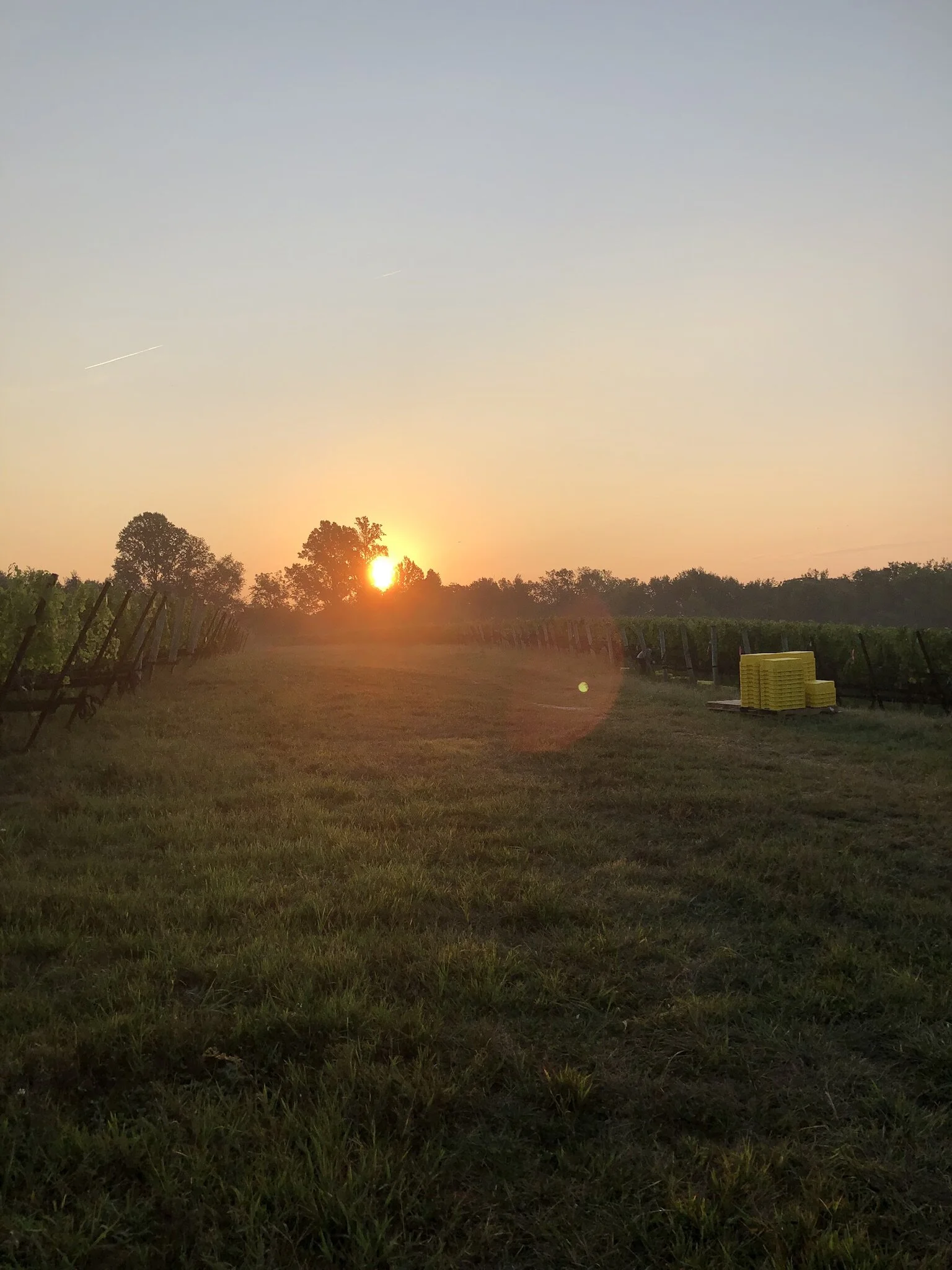
After the rains of 2018, the 2019 vintage brought welcomed change. Unusually dry weather that started in mid-July helped make the harvest, at first blush, delightfully simple. The vines politely stopped growing at veraison, focusing their energy on ripening the fruit. The vineyard team was, well, in the vineyard, the work progressing quickly and efficiently. Picking, sorting, and processing seemed almost effortless. The wines made themselves.
Things may have seemed simple in 2019, but they were not.
After the rains of 2018, the 2019 vintage brought welcomed change. Unusually dry weather that started in mid-July helped make the harvest, at first blush, delightfully simple. The vines politely stopped growing at veraison, focusing their energy on ripening the fruit. The vineyard team was, well, in the vineyard, the work progressing quickly and efficiently. Picking, sorting, and processing seemed almost effortless. The wines made themselves.

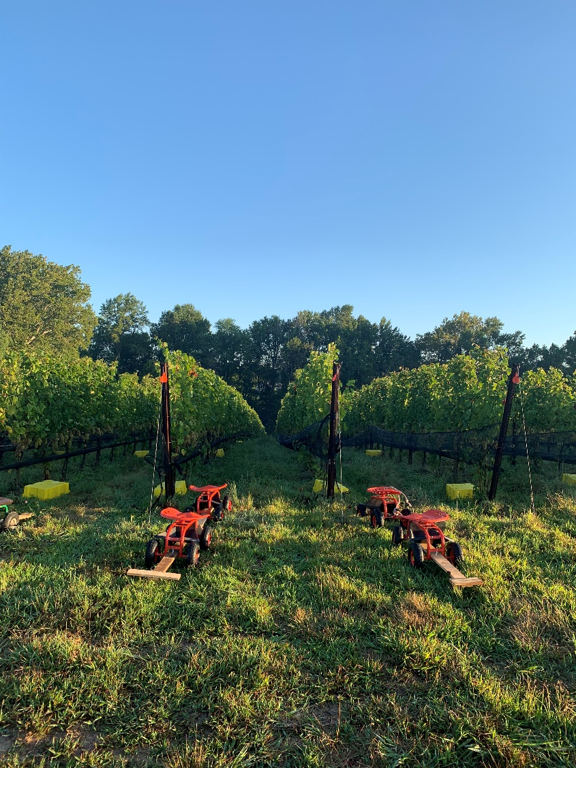

Club events were equally agreeable. The dry ground meant we could use the new parking area without preparing for towing duty. Dodon ‘til Dusk wasn’t canceled for rain, and Alley and her mostly new service team did a remarkable job learning their roles, revising procedures to enhance the DtD experience, and making all of us feel at home.
But underlying the triumphs were hidden challenges. The 2018 growing season - with its heavy precipitation, saturated soil, early defoliation, and poor nutrient storage - had lingering effects. In 2019, canes, buds, and the vineyard floor still contained high levels of residual fungal pathogens. Average low temperatures were higher than normal, limiting the number of “chill hours” (the number of hours the vines are exposed to temperatures between 32 degrees and 45 degrees F) that are required to break dormancy. The consequences were bud failure, excessive shatter (when the new seeds are not fertilized), and isolated bunch rot in the period before harvest, despite the near-perfect weather.
Still, the vintage proved exceptional. Although yields were low, about 20% less than usual, the quality of the harvested fruit was outstanding. The wines are continuing their annual trend toward greater depth and complexity, consistent with the increasing age of the vines. These characteristics were enhanced by long maceration times, allowing us to extract the full range of flavors. The Sauvignon Blanc and Rosé will soon be bottled; we are thrilled with them.
Lessons Going Forward
For the past year and a half, we’ve focused on understanding why 2018 was so damaging and on how we can be better prepared for the future. Our path to greater resilience involves two courses of action. First, we need to become more flexible in our harvest and winemaking strategies, such as when to pick early and make Rosé, when to alter our usual extraction processes, and what to do when we get caught with less than perfect fruit. We now have written protocols with criteria for their use for each of these situations.
We are also making fundamental changes to our vineyard practices. Because of my background in medicine and immunology, as I read more about the underlying science, the central concepts have emerged with clarity. While our farming has always been at the forefront of sustainability, 2019 is the year we hastened the pace of Dodon’s ecological approach to farming.
Throughout the vintage, we invested heavily in a set of practices that focus on improving soil, enhancing biodiversity and ecosystem services, and enriching the health, vitality, and resilience of the plants. Many of the techniques that we’ve adopted are the natural extension of our past effort to mimic natural processes, but our new focus centers primarily on soil and soil biology.
Soil with structural integrity, a diverse microbiome, and high levels of organic matter carries out many vital functions. It provides essential support for plants, protects against both drought and flood, removes environmental toxins, and improves water quality. Particularly important in today’s world, soil stores large quantities of carbon – more than twice the amount found in the atmosphere. Putting more carbon in soil will play a crucial role in addressing the underlying cause of climate change.
Healthy soil is the result of the biological interaction between plants and microbes. Just like the microvilli of the human intestine, roots are the mechanism that plants use to take in nutrients. As in humans, a balanced diet is essential for plant health. The best diets come from rich topsoil with good nutrient and water holding capacity, characteristics that allow the plants to produce complex phytochemicals that improve their structural integrity and strength, promote disease resistance, and enhance flavor.
Microbes – protozoa, fungus, bacteria, and archea – play several crucial roles in healthy soil. First, they decompose organic matter and secrete organic acids that breakdown rocks, releasing nitrogen, phosphorous, sulfur, and other nutrients that can be absorbed by plants, and they enhance water regulation by producing glycoproteins that improve soil aggregates.

Roberto and Tom construct a Johnson-Su bioreactor, a type of static, aerobic composter.
Second, beneficial microbes compete with pathogens for nutrients, secrete antimicrobial compounds and lytic enzymes that inhibit pathogen growth, and boost plant systemic host defense by stimulating production of phytochemicals. The result is an environment known as disease-suppressive soil that protects plants from pathogens.
The devil, of course, is in the details. There isn’t a textbook on ecological vineyard systems that translates these concepts into methods to create healthy soil, and only a few peers in the industry have taken this approach. The closest techniques are those used in biodynamics, but the supporting science for this very specific set of practices isn’t yet well-developed. As a result, we looked instead to other agricultural, natural, and scientific systems – everything from forestry to paleopedology (the study of soils from past geological eras) – and to our own property, where native grape vines live and thrive in the woods, not the pastures.

Turnips have a deep taproot that breaks up compaction.
Reasoning that grape vines would likely be healthiest in a forest-like setting supported by nutrients and microbes that are common in that ecosystem, we decided to emphasize growth of diverse fungal species that prefer woody food sources. Our compost program now emphasizes wood chips, and we’ve constructed a static, aerobic composter inoculated with soil from the woods just outside the vineyard. We hope that this compost will contain native mycorrhizal fungus species that will interact with the vines to produces better soil, healthier plants, and better fruit.
Because different plants provide diverse nutrients to soil microbes, we’re also working to enhance plant diversity within the vineyard. One method is to use highly heterogeneous cover crops. Our mix this year included eleven different species of grasses and forbs. A custom-made roller crimper has helped as well. When perennial grasses are mowed, hormonal signals stimulate regrowth. In contrast, crimping tall grasses terminates their growth and allows other plant species to flourish. Crimping also provides a mulch layer, cooling the soil to provide a better environment for fungal growth.

Crimping enhances plant diversity and cools soil.
Will these methods work? The conventional wisdom that vines need to struggle to produce the best wine gives pause to many of our colleagues, but it does not convince me. It’s true that overly vigorous vines with abundant foliage produce wines that lack structure and taste “green” from too many methoxypyrazines. The question is whether this vigor is produced by healthy soil with high levels of organic matter, or whether it is more likely to occur in unhealthy soil exposed to excess mineral nitrogen and phosphorous from fertilization, tillage, or excess rain.
Recent research from Germany suggests that vines raised in healthy, microbially active soils have smaller shoots, lower pruning weights, and fewer leaf layers, all signs of reduced vigor, as compared to conventionally grown grapevines. Perhaps in this context, “struggling” refers to the appearance of small, contained vines focused on reproduction and not vines struggling to feed a depleted microbiome by producing excess foliage.
Our practices are supported by research published over the past decade in scientific journals like Cell, Science, and Nature. They are based on cutting edge research and represent a significant departure from standard viticulture. After 30 years away from the lab, it’s fun to again read journals that formed the foundation of my scientific career.
But the reality is that the methods we are adopting are not new at all. Nature had a pretty good system before Thomas Jefferson invented the moldboard plow, Robert Koch developed germ theory, and Norman Borlaug initiated the green revolution. While these innovations resulted in robust increases in food production and saved billions of lives, they are also associated with degraded soil, reductions in nutrient density, and increasing input intensity. By looking to the past, new science that reintegrates ecology into the toolbox may move agriculture into a safer, more resilient, and healthful future.
We do not yet know which specific practices will be the most effective in the vineyard, but it would be folly to keep doing the same things as in the past. We are heartened by the support of our wine club members and a few leaders of the wine industry. It is indeed both exciting and daunting to be redirecting our growing strategies, and we welcome your feedback.
The final story of 2019 vintage is thus a tale of two vintages. The first – simple, unchallenging, straightforward – reminds me of an Ignaz Pleyel flute concerto, extraordinarily popular during Pleyel’s lifetime but which have become obscure with time. The second vintage - more scientifically and intellectually demanding - is reminiscent of Mozart’s Flute Concerto No. 1 in G major. Composed shortly after he had been dismissed from the Viennese court, this concerto represents the rebellious defiance of defeat that eventually thrust Mozart to the pinnacle of classical music.
The challenges of the 2018 vintage proved to us that simply sustaining the status quo would not be enough to withstand the consequences of the rising temperatures and extreme weather events that scientists predict for the future. Rather, we are convinced that restoring a functional ecosystem represents the best path forward in terms of wine quality, as well as environmental stewardship. Stay tuned as 2020 unfolds, and we learn more.

America's Farmers Can Fight Climate Change
Maryland farmers are confronting the challenges of changing weather patterns that are the result of carbon pollution and warmer temperatures. Following heavy rain last September, more than in the previous five Septembers combined, red wine production in 2018 from our vineyard in Davidsonville was less than half the amount it had been the year before.
The following post was published in the Baltimore Sun on May 24, 2019
Maryland farmers are confronting the challenges of changing weather patterns that are the result of carbon pollution and warmer temperatures. Following heavy rain last September, more than in the previous five Septembers combined, red wine production in 2018 from our vineyard in Davidsonville was less than half the amount it had been the year before.
Others in agriculture fared even worse. Some Maryland vineyards produced no red wine at all. Vegetable production at one local farm was a quarter of the usual yield. Several neighbors who grow soybeans simply didn’t harvest them.
It doesn’t have to be this way. New agricultural practices can make our farms more resilient and help address climate change. The key is capturing atmospheric carbon and storing it in soil. These regenerative practices are already used in many parts of the country and are ready for large-scale deployment at relatively low cost. The challenge now is to encourage farmers to adopt these new methods.
Historically, changes in land use — such as conversion of woodland to cropland — and common agricultural practices like tillage (prepping the land for crops) have resulted in significant net loss of soil carbon. One quarter of all anthropogenic carbon in the atmosphere, about 450 billion metric tons emitted over 8,000 years, can be attributed to these harmful land use practices.
Enhanced soil management can reverse this trend by reducing agricultural emissions and, in many cases, resulting in net draw down of greenhouse gases. Because soil stores three times more carbon than the atmosphere, increasing soil carbon content by even a small percentage represents a substantial mechanism to reduce atmospheric carbon dioxide and reverse global warming.
Soil carbon can be increased through plant assimilation of carbon dioxide from the atmosphere and reducing losses associated with decomposition of soil organic matter. Returning agricultural land to native ecosystems is probably the best way to increase levels of stored carbon over time, but this is not always an option. Improved cropping systems, conversion to perennial crops, agroforestry and novel grazing methods are also very effective.
The National Academy of Sciences has conservatively estimated that improved agricultural land management could result in removal of 250 million metric tons of carbon dioxide per year in the United States, nearly 20 percent of the total greenhouse gas emissions each year. Achieving this level of carbon dioxide removal from the atmosphere will require active participation by America’s 750,000 farmers.
In addition to their benefits on the climate, practices that sequester carbon can also boost agricultural yields, increase soil nutrient retention and enhance soil water infiltration and holding capacity. In other words, investing in regenerative agriculture will not only reduce carbon dioxide in the atmosphere, it will also benefit farmers and rural communities and improve global resilience to climate change.
Even with these direct benefits to farmers, additional incentives and education will be required. First, many small farmers face a great deal of risk and are reluctant to change from time-tested methods. Second, soil enhancing methods must be adapted to specific places and crops, and this need for customization complicates implementation. Third, many farmers believe that they should be compensated for removing atmospheric carbon that came from non-agricultural settings, suggesting that financing these changes must also be considered.
There are several mechanisms already being used throughout the country to engage farmers in this process of change. Carbon offset markets, which directly compensate farmers for achieving quantifiable emission goals, represent the most ambitious approach. The California Air Resources Board protocol that allows rice farmers to sell offsets into the state’s cap and trade market is one example.
Other methods to finance farmer incentives include direct subsidies, such as those used by the Natural Resources Conservation Service to achieve conservation and water quality goals, and certifications or labeling based on sustainability-based performance standards established by agricultural distributors and retailers like the Field to Farm Alliance.
Now is the time for policy makers to engage farmers on climate change. First, the state should fund the Maryland Healthy Soil Initiative that was created to develop agricultural responses to climate change. Second, it should establish a carbon offset market that would allow electric companies to meet their renewable energy requirement by purchasing credits from farmers who adopt the necessary practices. Third, Maryland Sen. Chris Van Hollen’s proposed carbon cap and dividend program should be modified to allow revenues to be used to purchase “carbon farming” services.
Maryland farmers lead the nation in adopting conservation measures that improve water quality. Engaging them to put carbon back in soil is an obvious and potentially powerful way to reverse climate change while enhancing global food security.
Climate Change, Part 1: A Christmas Wish
Polly and I are spending the holidays with our granddaughter, Juana Magdalena, in a little town called City Bell, just east of Buenos Aires. Polly’s three daughters are all here too, almost as much fun as Juana. As the summer solstice passes, our days are filled with family, exercise, asados, newspapers, a bit of sightseeing, and, for me, Spanish lessons. There is a fruit and vegetable farm within walking distance, and freshly butchered meat and chickens on the way, with none of the planting, weeding, feeding, watering, and picking chores of farm life.

Polly and I are spending the holidays with our granddaughter, Juana Magdalena, in a little town called City Bell, just east of Buenos Aires. Polly’s three daughters are all here too, almost as much fun as Juana. As the summer solstice passes, our days are filled with family, exercise, asados, newspapers, a bit of sightseeing, and, for me, Spanish lessons. There is a fruit and vegetable farm within walking distance, and freshly butchered meat and chickens on the way, with none of the planting, weeding, feeding, watering, and picking chores of farm life.
The family time also allows us to reflect on this new grandparenting stage of life. We intensely appreciate the diverse beauty and richness of the world as we experience the munificence of family, friends, and colleagues. Building on the knowledge of a hundred thousand years of evolution and the gifts of our parents and grandparents, we can learn and debate, try to understand the universe and our place in it, and create beauty through art, literature, music, and winemaking. As at the farm, I awaken each morning profoundly grateful for these gifts.
And yet, I wonder, as all grandparents must, what kind of a world Juana will inherit.
The world has changed a great deal in my lifetime, mostly for the better. In his recent book, Enlightenment Now, Steven Pinker has documented the extraordinary progress we humans have made to improve health, safety, family incomes, and life expectancy; expand democracy, education, and equal rights; and reduce poverty, hunger, and violence.
This progress extends to many environmental challenges, especially those that are visible to the naked eye. The Chesapeake Bay is (slowly) getting cleaner, acid rain has declined, and bald eagles have returned. Deforestation of the Amazon has slowed, the amount of protected terrestrial and marine habitat has increased, tankers spill less oil, and the ozone hole is getting smaller. This progress, Pinker argues, is the result of activism, legislation, regulation, technological innovation, and global cooperation, and it leads Pinker to be optimistic about the future.
Yet there are enormous challenges ahead. For most of the past 420,000 years, atmospheric carbon dioxide levels remained below 300 parts per million (ppm). They started climbing during the industrial revolution, reached 315 ppm when I was born and now exceed 400 ppm. The average temperature in Anne Arundel County has climbed from 55.4 degrees F to 56.9 degrees in my lifetime. Multiple reports, including those from the Fourth National Climate Assessment and United Nations Intergovernmental Panel on Climate Change describe the expected rise in temperature and sea level, destructive storms and fires, increases in mosquito and tick-borne diseases, and declining agricultural output. Our experience during the 2018 vintage is perhaps an ominous preview.
But these challenges, as significant (and devastating) as they might be, don’t reflect all the vitality and beauty of the ecosystem in which we live and the danger it faces from climate change. In Yellowstone Park, native plant species are being replaced by invasive cheatgrass, reducing forage for wildlife. On the Galapagos Islands, increasingly frequent El Niño conditions block the flow of nutrients that feed plankton, threatening penguins, marine iguanas, and even Darwin’s finches. The number of insects has declined, at least in some parts of world, by more than 75% because of habitat loss and intensive use of pesticides.

The rapid loss of plant and animal species is frightening. For example, what would happen if there were no pollinators? It turns out that life without them can endure, but it may not flourish. After overuse of pesticides eliminated bee populations decades ago, growers in the Maoxian Valley of Himalayan China hand-pollinate hundreds of thousands of apple and pear trees. Because fewer pollen-donor trees are required and humans effectively pollinate 100% of the flowers (bees only pollinate about 30%), yield per acre increases. Because they don’t need to worry about killing beneficial insects, these growers can use more insecticides to produce the unblemished fruit that brings high prices.
If efficiency, defined by higher yields and prices per unit of input, is the goal, then hand-pollination is the way to go when human labor is cheap and plentiful. Moreover, the image of an entire village turning out every spring to pollinate the region’s crop, each person brushing the flowers on 10-12 trees each day, conveys a certain sense of nobility and identity. Despite these advantages, this world seems sterile, lacking complexity, balance, depth, interest, and resilience, and our experience growing wine suggests it does not result in the best fruit. Likewise, most apple producing areas of the Himalayan region have chosen to reestablish pollinator populations and have not followed the path taken in the Maoxian Valley.
As humans, we cultivate our own welfare, and hopefully produce the best wine, by enhancing the health, diversity, and abundance of life around us, and not by disrupting ecosystems, destroying large sections of habitat, or raising animals in confinement, methods that might have more immediate financial return but don’t reflect their true economic costs. My Christmas wish is that Juana will find the beauty and strength that comes from being part of an interconnected whole, sheltered and nourished by nature, and that she will use her compassion, ingenuity, and knowledge to enrich the ensemble of the soil, water, air, plants, animals, and people that surround us.