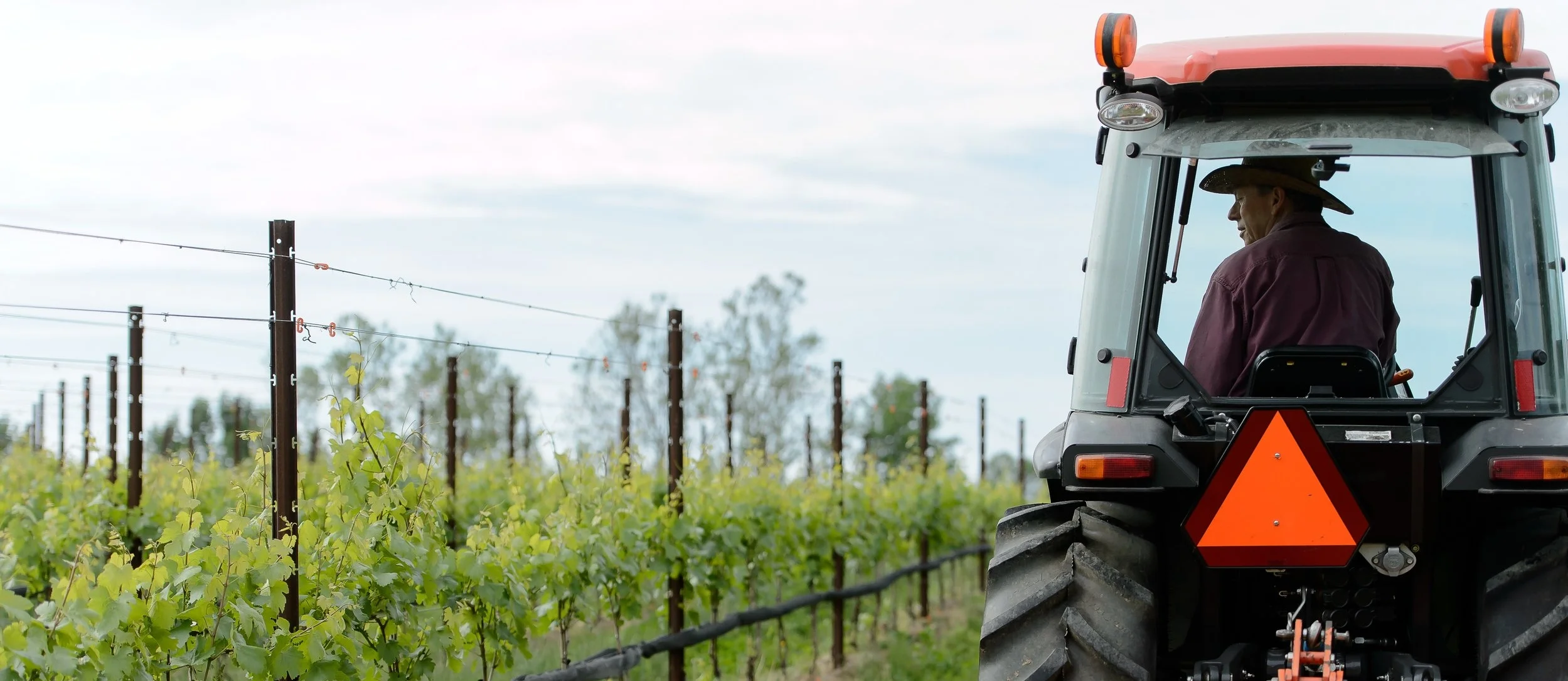

What is the origin of “Dodon” soils?
If you take a tour with a winemaker, the topic will frequently turn to soil. Depending on where you are, you might hear about the kimmeridgian limestone of Burgundy, the montmorillonite (aka blue) clay of Pomerol, or the alluvial gravel, clay, and sand of the Rutherford Bench. In many winemakers’ minds, the soil defines the wine, trumping both climate and human influences. To hear a winemaker tell it, the soil of their region or vineyard is unlike the soil anywhere in the world, and without doubt the very best for growing wine grapes. I’m as guilty as anybody of this hyperbole, and to support my case, or perhaps to atone for boastfulness, I set out to understand the origin and implications of the soil at Dodon.
If you take a tour with a winemaker, the topic will frequently turn to soil. Depending on where you are, you might hear about the kimmeridgian limestone of Chablis, the montmorillonite (aka blue) clay of Pomerol, or the alluvial gravel, clay, and sand of the Rutherford Bench. In many winemakers’ minds, the soil defines the wine, trumping both climate and human influences. To hear a winemaker tell it, the soil of their region or vineyard is unlike the soil anywhere in the world, and without doubt the very best for growing wine grapes. I’m as guilty as anybody of this hyperbole, and to support my case, or perhaps to atone for boastfulness, I set out to understand the origin and implications of the soil at Dodon.

Geologist Bubba Beasley profiles Dodon soils before planting Block 40 in 2015.
Most of what follows traces the geological history of Dodon soils. If you just want the bottom line, you can skip to the last section, Viticulture and Carbon. If you want to learn more, you can listen to Levi Dalton’s excellent interview with geologist Brenna Quigley.
In the Beginning
Much of what farmers think of as soil, something that will support a plant root, is filled with air and water that is constantly exchanged with the atmosphere. Another large portion is composed of living organisms – roots, microbes, arthropods, earthworms, and small mammals – and other organic matter that come and go with the seasons. The solid bits of soil – rocks and minerals - are the most stable and have complex origins that go back about 14.5 billion years to the origin of the universe.
The earliest subatomic particles that make up soil minerals – electrons and quarks – appeared a fraction of a second after the Big Bang. These particles in turn created the protons and neutrons that combined to form hydrogen and helium. Over the next half billion years, these elements joined to produce stars, within which arose the first twenty-six elements of the periodic table, including carbon, oxygen, magnesium, silicon, sulfur, iron, and so on.
Under the right conditions, especially in the cooling aftermath of supernova, the remaining elements appeared, and minerals formed by combining elements into crystals. Because they have gravity, minerals organized into new stars, nebula, planets, and galaxies.
The earth itself formed 4.5 billion years ago out of the debris of exploding stars, so all the mineral components of soil can be said to have cosmic origins. What we see now is merely the result of chemistry, biology, and plate tectonics that recycle the elements over unimaginably long time frames.
It’s a spellbinding story vividly told by George Mason University Professor Robert Hazen in The Story of Earth.
Moving Continents, Building Mountains
The story of Dodon soils starts about a billion years ago with formation of the supercontinent Rodinia. The eastern margins of Laurentia (the geological ancestor of North America) collided with continents that now make up the Baltics and Eastern Europe (called Baltica), the Amazon, and West Africa. When continents collide, the earth’s crust tends to uplift to form tall mountains, a process known as an orogeny. In the case of the eastern portions of Laurentia, the event is known as the Grenville orogeny.
In the 400 million years of Rodinia’s life, weathering and erosion flattened the Grenville mountains, leaving only their innermost cores of metamorphic rock, the type of rock that is created when minerals are subjected to intense pressure. While most of the Grenville rocks remaining today are covered by much newer formations, exposures of these billion year old rocks are found where newer ones have been worn away, including areas north of Interstate 95 in parts of Montgomery, Howard, Carroll, and Baltimore counties, as well as other states throughout the mid-Atlantic and northeast. Much of the Blue Ridge Mountain range of central Virginia has its origins in the Grenville orogeny.
When the tectonic plates reversed direction, Rodinia separated into two large landmasses, Laurentia and Gondwana (the forerunner of Africa, India, South America, Antarctica, and much of southern Asia), and several smaller islands, including Baltica. During this period, Laurentia straddled the equator, with the current east coast facing south. At least one analysis suggests that the land mass on which Dodon now resides was part of Gondwana, located about where the Canary Islands are today.
Oceans Emerge
The rift that split Rodinia began with basaltic lava flows that lasted several hundred million years, creating the Iapetan ocean. Sediments from the eroding Grenville mountain range accumulated along the shoreline, and toward the end of this period, shells from rapidly emerging mollusk populations added carbonates such as calcite to a mix that would eventually be transported to the mid-Atlantic coastal plain that makes up the area east of Interstate 95.
The Taconic Orogeny
The second chapter of Dodon soils begins about 540 million years ago when the continental drifts again changed direction. As Laurentia, Baltica, and a microcontinent known as Avalonia began to drift toward one another, the denser ocean crust was forced under Baltica’s lighter continental crust, creating a zone of subduction, an area much like the current Ring of Fire in the Pacific. The resulting volcanoes and uplift of coastal Baltica, known as the Taconic Orogeny, were separated from Laurentia by a shallow sea basin that contained Grenville sediments and carbonates.
Pangea
The third phase, the Acadian and Alleghenian orogeny, began about 300 million years ago when Laurentia, Baltica, and Gondwana collided to form the supercontinent Pangea, forming the Central Pangean Mountains that eventually became what are now the Appalachian Mountains, Morocco’s Little Atlas Mountains, and the Scottish Highlands. Because it involved two continental plates, this event involved uplift with rock forming by metamorphosis as one continent rolled, like an ocean wave, over the other. The result is layers of diverse rock with a beautiful rolling form, called a syncline, that can be seen at the Sideling Hill road cut on Interstate 68.

Polly and Tom inside the mid-Atlantic rift in Iceland’s Þingvellir National Park
Pangea lasted for about 100 million years, but the direction of plate movement shifted over time. Seven continents began to drift apart to create the earth form that is familiar to us today, leaving Dodon in North America. The breakup of Pangea continues today with lava flows from the Mid-Atlantic Ridge, a rift in the earth’s surface that can be seen in Iceland’s Þingvellir National Park. As a result, the Atlantic Ocean widens by an inch or two each year.
Erosion and Sedimentation
The next 175 million years of the story of Dodon soil is one of erosion and sedimentation. As the continents separated, unconsolidated and partially consolidated sediments deposited along a coastline that is not significantly different from that which exists today. These coastal plain sediments in cross section look like a wedge, thick to the east and thinning to a feather edge at the “fall line” that demarcates a region of hard crystalline basement rock from one with softer, sedimentary and transported rock. Interstate 95 follows the Atlantic seaboard fall line, connecting major cities that mark the end of navigable rivers.
Dramatic Heating and Cooling
The period known as the Mid Miocene Climatic Optimum (MMCO), from 17 to 14 million years ago, was characterized by rising carbon dioxide levels, going from 400 to 500 ppm, and higher temperatures, as much as 22 degrees above those of the preceding 10 million years. The proximal cause of the rising carbon dioxide is believed to be significant tectonic (formation of the Himalayas) and volcanic (formation of the Cascade Mountain range and the subsequent the Columbia River basalt lava flows) activity.
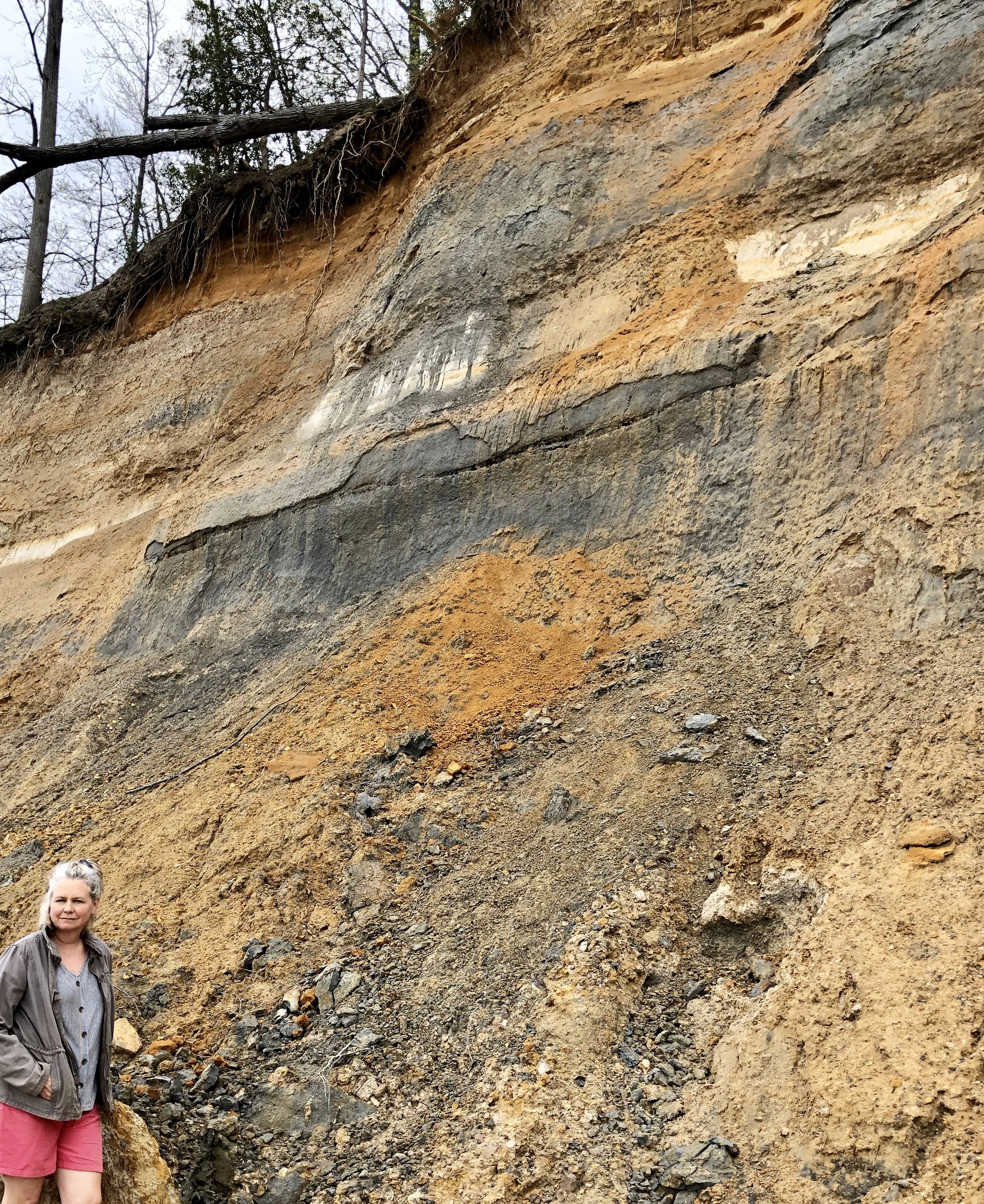
Calvert Cliffs State Park is a good place to see the soil strata left by the third marine transgression during the mid-Miocene. The gray (clay) layers contain a great deal of shell and fossil sediments that may contribute minerality to Dodon wine.
Following the MMCO, the earth dramatically cooled over about 10 million years. Warm season grasses (for example, sorghum and corn) that assimilate carbon dioxide and water more efficiently than cool season grasses (rye and fescue) expanded to become ecologically significant near the end of this period. The resulting high soil organic matter content and water retention capacity of grassland soils that characterized the late Miocene produced a carbon and water vapor sink that, combined with the lower evapotranspiration of grassland, contributed to lower carbon dioxide levels and the cooler, drier climate that has characterized human history.
Sea levels were unusually dynamic during the MMCO and the cooling period that followed. Along the Atlantic seaboard, three marine transgression and regression events left distinct sedimentary strata characterized by coarse-grained rock and mineral fragments such as sandstone, deposited during periods of rapidly moving water, and fine-grained silts or marls (a combination of limestone sediments and silt) deposited in slower moving, estuary environments. Fossilized remains of sea life add to the complexity of these sedimentary soils. The Calvert Formation, which makes up the exposed soil of a large portion of southern Maryland, including Dodon, was deposited during the last of these events.
As the climate cooled, the oceans receded, leaving a final layer of shells and other sea deposits. Additional soils were transported from the west by wind, erosion, and rivers. These soils are the result of weathering mountains that had been compressed, folded, rolled, and telescoped so that most of the rocks moved great distances from their site of origin and were then stacked like a shuffled deck of cards over hundreds of millions of years. Fine, silty particles from weathering of these diverse rocks arrived by wind and slow moving delta waters. Larger particles and gravel arrived by faster moving river flows.
Animals and Agriculture
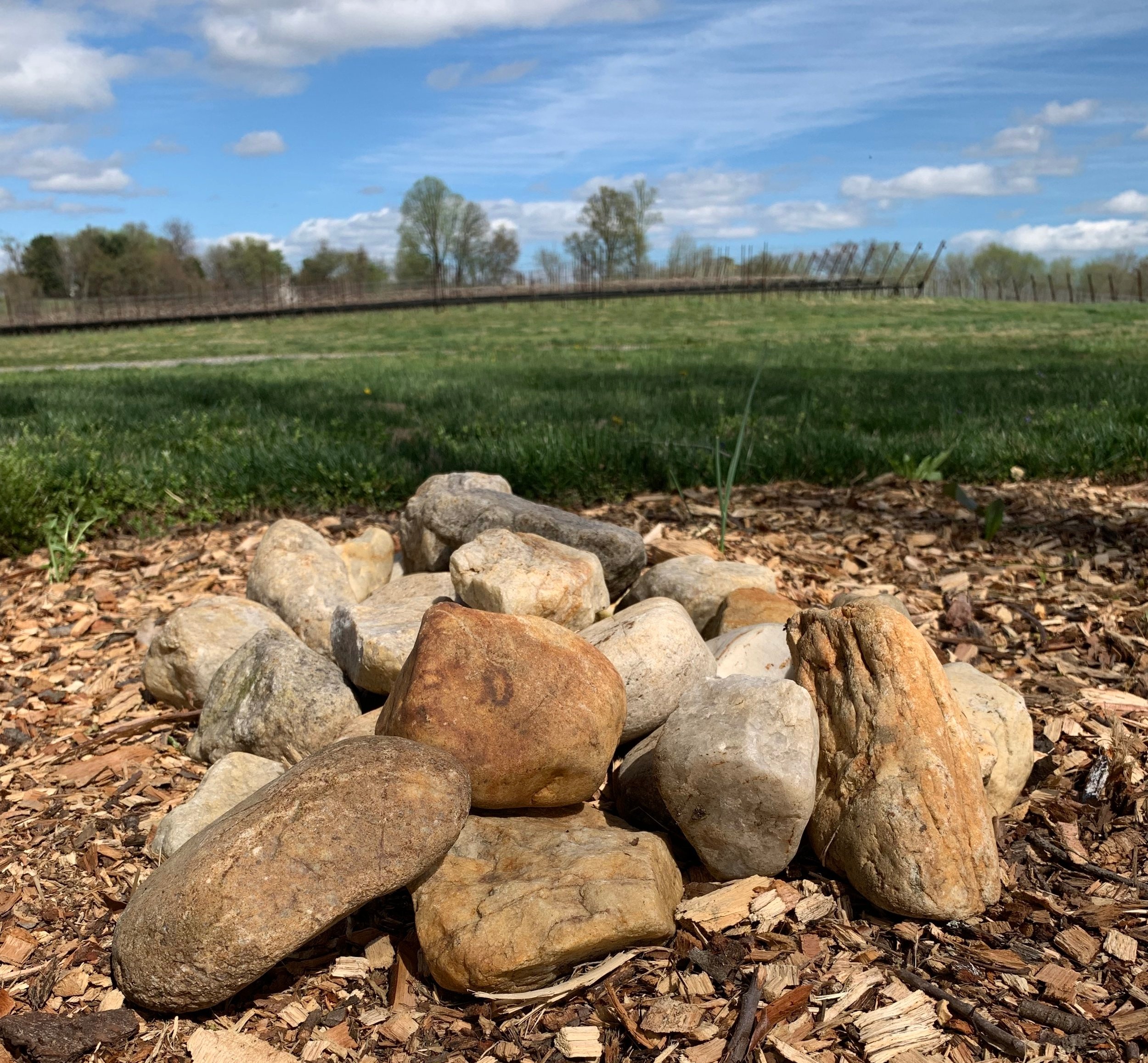
Rocks from diverse origins transported during the Pleistocene to Dodon by nature.
The earth continued to cool until the Pleistocene, about 3.5 million years ago, when carbon dioxide levels stabilized into an oscillating pattern, ranging from about 150 ppm to 275 ppm that persisted until about 1950. This period has been dominated by repeated glaciation (at the lower bounds of atmospheric carbon dioxide) that reached the 40th parallel, about the Mason-Dixon line, with permafrost likely covering most of southern Maryland. While in some areas there is a thin layer of soil transported largely by wind, most of the exposed soil at Dodon is characterized by erosion-prone Calvert sand and clay deposited during the Miocene. In a few areas, including the outcrop in the Cabernet Sauvignon blocks of Dodon’s east vineyard, there is a sheet of erosion resistant sand and gravel deposited by a river during the Pleistocene, about 2.5 million years ago.
Viticulture and Carbon
Although the parent material has been reasonably constant since the Miocene, soil, even its mineral component, is constantly changing as a result of the biological and physical forces around it. Trees and grasses sequester carbon and add organic matter. Bacteria, fungi, and protozoa secrete enzymes that change soil chemistry, erode rocks into minerals, and release carbon into the atmosphere. Wind and rain add to this weathering, and they transport minerals into streams where they wash or blow into the Chesapeake Bay. Humans also modify the soil, starting with Native Americans who burned the underbrush of the native forests to facilitate hunting. Later European settlers cut down trees, built houses and roads, and cultivated crops, adding another powerful force for change.
What can we learn from the story of Dodon soils? The first lesson is that soil is not a static object. Rather it is in constant flux, so there is no single origin for the soil here. That said, several themes relevant to viticulture at Dodon emerge from the history.
Until European settlers arrived in North America, our region was largely forest, suggesting that the soil (and climate) here may provide better habitat for trees than grassland. We believe that this soil will also be good for grapevines, which grow naturally in forested environments. Viewed from this perspective, a vineyard that mimics a forest is likely to be healthier and more resilient than one that resembles pasture. Because they are replenished by woody material - fallen trees and leaf litter, forest topsoils differ significantly in their organic and microbial content from grassland. I’ll have more on the implications of this conclusion in a subsequent post.
The complex nature of the soil at Dodon provides an interesting context in which to grow grapes. Flavors in wine are in part derived from minerals in soil, which as we’ve seen vary considerably based on the source of the parent material and subsequent environmental influences. These minerals create the environment in which the mycorrhiza (fungi that live in symbiotic ways with vine roots) breakdown nutrients and supply them to the vine. At Dodon, because the parent material comes from extremely heterogeneous origins that in some cases formed more than a billion years ago, flavors of wine grown here are likely to differ from regions with more homogeneous mineral components.
A final lesson may be crucial to our collective future, not just our young vineyard. Although the cause of rising carbon dioxide levels is different, the middle and late Miocene were, like our own time, characterized by rising temperature, melting glaciers, and encroaching seas. The subsequent cooling climate was partly, if not mostly, the result of carbon sequestration in rangelands and mineralization into carbonates in deep oceans, technologies that are available to us today as we search for solutions to climate change.

Climate Change, Part 2: A New Year’s Resolution
As a farmer and grape grower, the effects of climate change are hard to miss, and the news is getting worse. Even the best-case projections regarding temperature, sea level rise, floods, fire, disease, and agricultural output are frightening. Partly due to changes in the climate, extinction rates among all species are about 1,000 times greater than they would be in the absence of human activity. Pulitzer prize winning author Elizabeth Kolbert has called this phenomenon The Sixth Extinction.
As a farmer and grape grower, the effects of climate change are hard to miss, and the news is getting worse. Even the best-case projections regarding temperature, sea level rise, floods, fire, disease, and agricultural output are frightening. Partly due to changes in the climate, extinction rates among all species are about 1,000 times greater than they would be in the absence of human activity. Pulitzer prize winning author Elizabeth Kolbert has called this phenomenon The Sixth Extinction.
Ecologists and philosophers have started to wonder whether humans will survive the climate change experience, reminding me of a Tom Lehrer tune from the 1960s. Expecting that we will survive, my Christmas wish is that the resulting world will be the kind in which our grandchildren will still want to live.
The immediate cause of changes in the climate is an imbalance between carbon storage in soil and other reservoirs and its release into the atmosphere as carbon dioxide, trapping heat and acidifying the oceans. (You can learn more about the carbon cycle here.) While burning fossil fuels gets most of the attention, modern agriculture, through deforestation, mechanical and chemical disruption of soil, and confined livestock facilities, has contributed as much as 40% of the increase in atmospheric CO2.
It doesn’t have to be this way. Trees, grasses, and other plants carry out photosynthesis that uses the carbon from CO2 to produce sugars that are transported via the roots into the soil, feeding a diverse ecosystem of microbes, insects, earthworms, and even vertebrates. Agricultural approaches may thus be deceptively simple yet practical and potentially powerful methods to extract CO2 from air and store it as organic carbon in the soil. Research suggests that adding 0.4% more organic matter each year to agricultural land across the globe would sequester all the CO2 released by human activity.
Is 0.4% per year additional organic matter achievable? Absolutely. Using cover crops and advanced grazing techniques, North Dakota rancher and farmer Gabe Brown has added organic matter at about twice this rate for 25 years, providing proof of principle. University of California at Berkeley Professor Claire Kremen has done the design work, USDA’s Sustainable Agriculture Research and Education program has done field trials and created educational programs and tools, and organizations such as Future Harvest CASA and county agricultural extension offices offer support, education, and knowledge sharing among farmers and landowners in our region.

Put simply, while building soil organic matter may be only one part of an overall solution to global warming, it is literally “shovel ready.” The challenge now is spreading the word, creating the incentives, and putting on our boots. As we approach the start of the 2019 session of the General Assembly, there are several critical actions to take.
First, we should hold Governor Hogan and the Maryland Department of Agriculture accountable. In 2017, the General Assembly passed the Maryland Healthy Soils Act that requires MDA to provide incentives that would improve soil health, monitor progress, and help the state meet goals set by the Maryland Climate Change Commission. Despite the promise, no new practices or incentives have emerged. To reinvigorate this program and regain climate leadership for the state’s largest industry, Maryland could join California in committing to the Global Soil Health Challenge.
Second, state and county representatives should add a “carbon note” to all legislation. Proposed legislation in Maryland is always accompanied by a “fiscal note,” a brief description of the potential financial consequences of the bill. But fiscal notes don’t include other indirect costs to the taxpayers, such as the cost of global warming. In order to help legislators understand the benefits and risks of legislation on climate change, a similar “carbon note” could be required. The practice would help keep the issue front and center.
Third, we need to modify incentives so that farmers will implement methods that will add carbon to soil. Today’s agricultural methods were developed during the Green Revolution, in the aftermath of the great depression, the dust bowl, and World War II, when energy was cheap and plentiful and people around the world were hungry. Tax policy, agricultural programs, and business practices designed to support these systems now have entrenched interests behind them, making alternatives hard to implement. Difficult as it may be, revising tax policy to account for the climate-related costs of carbon use would accelerate the transition to “carbon farming.”
There are also a few things you can do at home to return carbon to the soil. First, you can let your grass grow. As it grows, the ratio of carbon to nitrogen in the blade increases. In contrast, short cuttings (those that result from weekly lawn mowing) have high levels of nitrogen that, because there is little carbon to hold it, then leaches into ground water and the Bay. Infrequent mowing, annually is best, has other advantages. Less fuel and labor are needed, long roots improve soil structure allowing better water infiltration, and over time a natural meadow of diverse plants, insects, and wildlife will develop.
Second, you can plant an edible landscape on even a small plot of ground. Americans often plant vegetable gardens during times of scarce resources. About 20 million households established victory gardens during World War II, and nearly half of all Americans grew their own vegetables during the early 1980s recession. The personal benefits include reductions in transportation (both from farm to market and market to home), better nutrition, and the sense of community that comes when everyone does their part. There are added benefits of incorporating these herbs and vegetables into the landscape in terms of soil health, reductions in pesticide use, and aesthetics.

Because they sequester twice as much carbon as forestland, vineyards represent an excellent way to add carbon to soil. When we started, average soil carbon was less than 1%, and unmeasurable in some areas. Through cover cropping, reduced soil disturbance, and compost additions, we are up to about 2.5%, about the norm for most vineyards in the world, but we think we should go higher. Although conventional wisdom says that vines should struggle, we believe that additional organic matter will result in healthier, more resilient plants that will resist disease, ripen earlier, and have more flavor. At least this is the experience of some of the best châteaux on the left bank in Bordeaux.
While storing carbon in soil is a simple tool to help solve the current climate challenge, the transition will not be easy. Agriculture is more perspiration than romance, and some of these methods are labor intensive. Farm labor is in short supply, and there will inevitably be a process of trial and error as we determine the right crops and cover crops for our environment and each agricultural product. In the short term, these factors could result in reductions in farm incomes. But long term, reducing CO2 and creating resilient landscapes is the best way to prevent, or at least mitigate, the catastrophes of climate change.And, of course, more carbon in the soil leads to more nutritious, flavorful food and wine, and that will also make our grandchildren’s world a better place to live.
Climate Change, Part 1: A Christmas Wish
Polly and I are spending the holidays with our granddaughter, Juana Magdalena, in a little town called City Bell, just east of Buenos Aires. Polly’s three daughters are all here too, almost as much fun as Juana. As the summer solstice passes, our days are filled with family, exercise, asados, newspapers, a bit of sightseeing, and, for me, Spanish lessons. There is a fruit and vegetable farm within walking distance, and freshly butchered meat and chickens on the way, with none of the planting, weeding, feeding, watering, and picking chores of farm life.

Polly and I are spending the holidays with our granddaughter, Juana Magdalena, in a little town called City Bell, just east of Buenos Aires. Polly’s three daughters are all here too, almost as much fun as Juana. As the summer solstice passes, our days are filled with family, exercise, asados, newspapers, a bit of sightseeing, and, for me, Spanish lessons. There is a fruit and vegetable farm within walking distance, and freshly butchered meat and chickens on the way, with none of the planting, weeding, feeding, watering, and picking chores of farm life.
The family time also allows us to reflect on this new grandparenting stage of life. We intensely appreciate the diverse beauty and richness of the world as we experience the munificence of family, friends, and colleagues. Building on the knowledge of a hundred thousand years of evolution and the gifts of our parents and grandparents, we can learn and debate, try to understand the universe and our place in it, and create beauty through art, literature, music, and winemaking. As at the farm, I awaken each morning profoundly grateful for these gifts.
And yet, I wonder, as all grandparents must, what kind of a world Juana will inherit.
The world has changed a great deal in my lifetime, mostly for the better. In his recent book, Enlightenment Now, Steven Pinker has documented the extraordinary progress we humans have made to improve health, safety, family incomes, and life expectancy; expand democracy, education, and equal rights; and reduce poverty, hunger, and violence.
This progress extends to many environmental challenges, especially those that are visible to the naked eye. The Chesapeake Bay is (slowly) getting cleaner, acid rain has declined, and bald eagles have returned. Deforestation of the Amazon has slowed, the amount of protected terrestrial and marine habitat has increased, tankers spill less oil, and the ozone hole is getting smaller. This progress, Pinker argues, is the result of activism, legislation, regulation, technological innovation, and global cooperation, and it leads Pinker to be optimistic about the future.
Yet there are enormous challenges ahead. For most of the past 420,000 years, atmospheric carbon dioxide levels remained below 300 parts per million (ppm). They started climbing during the industrial revolution, reached 315 ppm when I was born and now exceed 400 ppm. The average temperature in Anne Arundel County has climbed from 55.4 degrees F to 56.9 degrees in my lifetime. Multiple reports, including those from the Fourth National Climate Assessment and United Nations Intergovernmental Panel on Climate Change describe the expected rise in temperature and sea level, destructive storms and fires, increases in mosquito and tick-borne diseases, and declining agricultural output. Our experience during the 2018 vintage is perhaps an ominous preview.
But these challenges, as significant (and devastating) as they might be, don’t reflect all the vitality and beauty of the ecosystem in which we live and the danger it faces from climate change. In Yellowstone Park, native plant species are being replaced by invasive cheatgrass, reducing forage for wildlife. On the Galapagos Islands, increasingly frequent El Niño conditions block the flow of nutrients that feed plankton, threatening penguins, marine iguanas, and even Darwin’s finches. The number of insects has declined, at least in some parts of world, by more than 75% because of habitat loss and intensive use of pesticides.

The rapid loss of plant and animal species is frightening. For example, what would happen if there were no pollinators? It turns out that life without them can endure, but it may not flourish. After overuse of pesticides eliminated bee populations decades ago, growers in the Maoxian Valley of Himalayan China hand-pollinate hundreds of thousands of apple and pear trees. Because fewer pollen-donor trees are required and humans effectively pollinate 100% of the flowers (bees only pollinate about 30%), yield per acre increases. Because they don’t need to worry about killing beneficial insects, these growers can use more insecticides to produce the unblemished fruit that brings high prices.
If efficiency, defined by higher yields and prices per unit of input, is the goal, then hand-pollination is the way to go when human labor is cheap and plentiful. Moreover, the image of an entire village turning out every spring to pollinate the region’s crop, each person brushing the flowers on 10-12 trees each day, conveys a certain sense of nobility and identity. Despite these advantages, this world seems sterile, lacking complexity, balance, depth, interest, and resilience, and our experience growing wine suggests it does not result in the best fruit. Likewise, most apple producing areas of the Himalayan region have chosen to reestablish pollinator populations and have not followed the path taken in the Maoxian Valley.
As humans, we cultivate our own welfare, and hopefully produce the best wine, by enhancing the health, diversity, and abundance of life around us, and not by disrupting ecosystems, destroying large sections of habitat, or raising animals in confinement, methods that might have more immediate financial return but don’t reflect their true economic costs. My Christmas wish is that Juana will find the beauty and strength that comes from being part of an interconnected whole, sheltered and nourished by nature, and that she will use her compassion, ingenuity, and knowledge to enrich the ensemble of the soil, water, air, plants, animals, and people that surround us.
2018 Vintage Summary
Tuesday, October 2 was a beautiful, if somewhat warm, autumn day – the kind of day that we hope for in early October, when we are typically just starting to pick the black grapes. But this, the final day of picking in 2018, signaled the perplexing character of the vintage. The image of Dodon’s weather vanes pointing toward each other on an otherwise lovely morning is its lasting symbol.
Tuesday, October 2 was a beautiful, if somewhat warm, autumn day – the kind of day that we hope for in early October, when we are typically just starting to pick the black grapes. But this, the final day of picking in 2018, signaled the perplexing character of the vintage. The image of Dodon’s weather vanes pointing toward each other on an otherwise lovely morning is its lasting symbol.

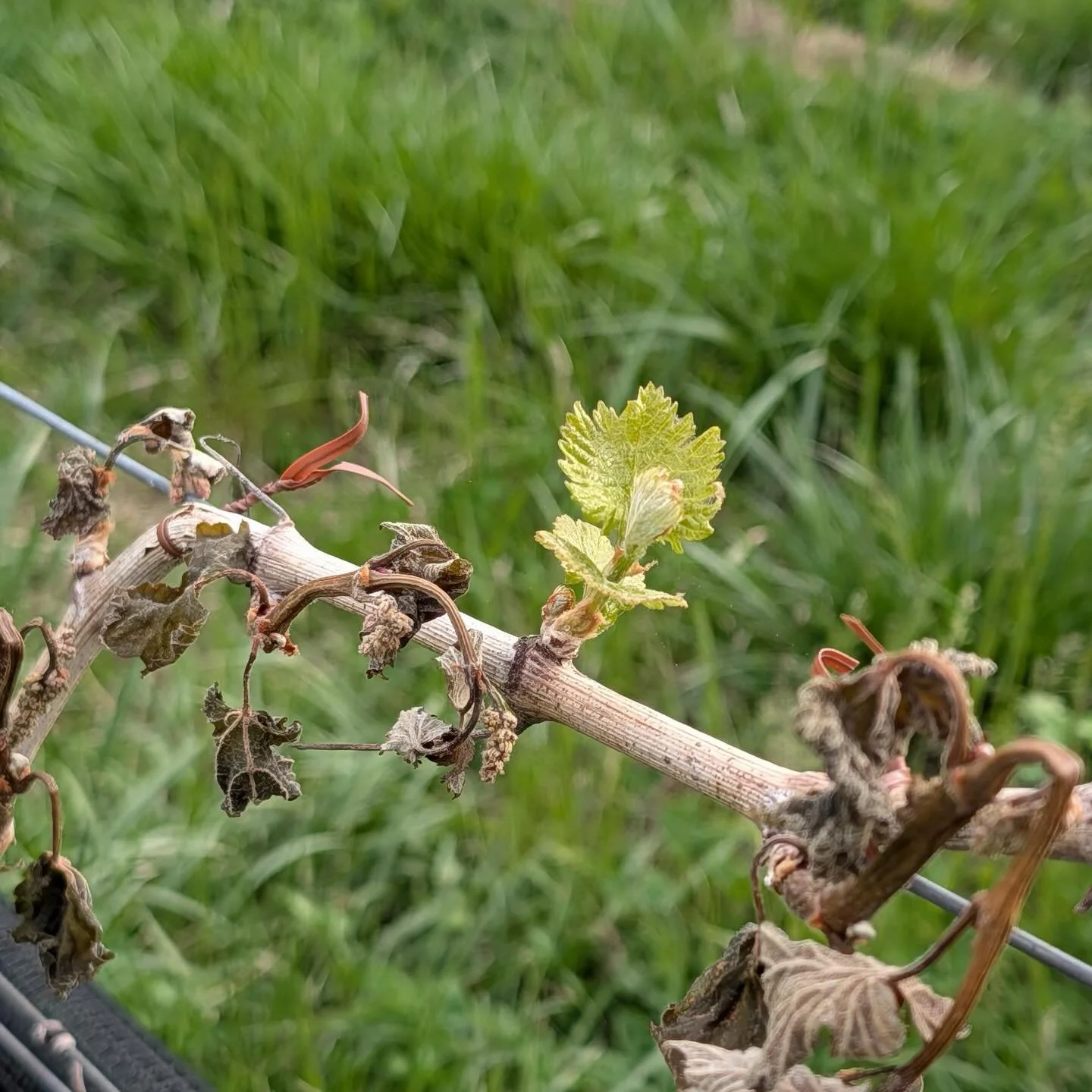
The year started with brutally cold temperatures, as low as two degrees below zero (Fahrenheit) on the morning of January 7. While a few weeks of very cold temperatures has many benefits in the vineyard, we start to worry about bud viability when temperatures approach zero. In contrast, February was usually warm – speeding vine phenology - but March was cool – slowing the vines. Bud break occurred in the Chardonnay on April 15, about on-schedule, followed by freezing temperatures three days later.
The next variety to bud, the Cabernet Franc, waited until May, indicating that a late year would ensue. Yet this isn’t what happened. Bloom, which typically occurs 45-60 days after bud break, arrived just 24 days later. Suddenly, it was an early year, requiring adjustments to already modified schedules for canopy management and sprays. The vines were confused by the temperature extremes, as were their human partners. Dodon’s vineyard manager, Roberto Gomez, finally thawed from winter pruning, complained of vertigo.
And then it rained. And rained. And rained. The soil at Dodon is made up of about 50% solid matter – rocks, minerals, microbes, insects – and 50% pores, occupied by air and water. When the pores fill completely with water early in the season, the roots don’t have enough oxygen to develop normally. In response, the leaves produce more stomata (the structures responsible for evapotranspiration) than they would otherwise. The effect is to make the vines more susceptible to drought.
So of course, drought came in early July, and the vines became stressed. As we finished irrigating the south slope, it started raining again, this time lots of it. Our colleague Jim Law of Linden Vineyards described it as biblical in its proportions. We had more rain in September than in the previous five Septembers combined. And when it wasn’t raining, it was hot and very humid. Most people correctly associate excess moisture, whether from humidity or rain, with molds and mildews. But by drowning the roots late in the season, excess rain causes the vines to focus on survival by growing roots and foliage, diverting energy from ripening.
Our usual response to excess rain is to let the canopy grow higher, increasing evapotranspiration, and let the grass grow to create competition with the vines. But this year the amount of rainfall overwhelmed these measures. The canopy developed downy mildew, and the grass grew so quickly that we couldn’t keep it out of the fruit zone. The fruit ripened unevenly, with the ripest fruit falling prey to botrytis and other late season bunch rots. We sorted heavily while picking, leaving about half of the black fruit on the vineyard floor.
To say that the vintage was, and remains, puzzling is an understatement. We never quite knew what to expect. The vines remained confused all year, with growing shoot tips appearing around the vineyard throughout September. This atypical behavior also occurred in other plants, particularly crab apples and magnolias that could be seen blooming throughout southern Maryland this fall.
Decisions about picking were particularly uncertain. In mid-August, I told the team that I didn’t think we would begin picking for at least two weeks. Four days later, we picked the first of the Sauvignon Blanc followed by the Chardonnay, both from the east vineyard. We waited a week to pick the Sauvignon from the west vineyard.
We also picked the black fruit earlier, and thus less ripe, than in the past. In the cellar, we extracted less aggressively, leaving behind the unripe tannins that cause bitterness. With less structure, the wines will need less oak and more stirring to achieve their potential. As a result, the 2018 red wines promise to be more accessible early in their life, and less age-worthy, than is typical for Dodon wines.
Despite the challenges, or maybe because of them, I’m left feeling extraordinarily grateful for this vintage and the lessons that it brought. There were many bright spots. Our effort to create a balanced ecosystem seems to be working. The increasing diversity of insect life around the vineyard is stunning, and except for the occasional spot treatment, we didn’t use any insecticides this year. A mantid even joined us on the sorting table this year.
While there was a bit of mold in the Sauvignon clusters, the white wines turned out beautifully. I’m especially excited about the Chardonnay, which has the depth, range, and vitality that we seek from this classic variety.
The main lesson, though, is that the climate is changing rapidly. Over the last three years, old weather patterns have given way to prolonged periods of drought and rainfall. It has tested our farming and winemaking skills, the front of house team who rearranged plans daily, and even club members who had hoped to attend one of the seven rained-out Dodon ‘til Dusk gatherings. (Thank you for your patience.) These challenges will continue, especially in the mid-Atlantic where temperatures and rainfall are predicted to rise faster than in other parts of the world.

In response to these changes, we need to think critically about how we can adapt and become more resilient. It’s crazy to irrigate in a year of record setting rainfall, but that’s what we needed to do. Fortunately there are solutions, some that we are already working on. Soil with good structure allows excess water to pass through quickly to the aquafers below. Soil rich in organic matter holds on to some of the water until it is needed by the plants. In the pastures, we can create this healthy soil using a technique called MOB grazing; in the vineyard, we can create it using appropriate cover crops with deep roots and plenty of residual biomass.
As the year comes to an end, the 2018 vintage reminds me of Bach’s six suites for solo cello, performed wonderfully by Yo-Yo Ma. Each suite is based on a different French dance, and each is composed of six movements that span the range human emotion, none the same but all very beautiful. The same might be said of the variation that occurs between vintages, and in 2018, variation within the vintage. Like Bach’s cello suites, some vintages are deep and soulful, some sad and mournful, others light and lively, but all with their own exquisite charm. The lesson of this vintage is that we can succeed by dancing together as a community to nature’s varied tunes.
Raise a Glass to Polly
Polly is the inspirational leader of the Dodon team. She keeps all of us going in the right direction, gets her hands dirty when needed, and looks out for the human side of the vineyard and cellar. She brings these same qualities to her career in public health policy where she has recently been recognized as an Honorary Fellow of the American Academy of Nursing. It’s a rare honor, conferred on only a few non-nurses each year. The formal announcement can be found here.

Polly is the inspirational leader of the Dodon team. She keeps all of us going in the right direction, gets her hands dirty when needed, and looks out for the human side of the vineyard and cellar. She brings these same qualities to her career in public health policy where she has recently been recognized as an Honorary Fellow of the American Academy of Nursing. It’s a rare honor, conferred on only a few non-nurses each year. The formal announcement can be found here.

Some Frequently Asked Questions about Dodon: A Conversation with Polly and Tom
Why is the winery open by appointment only?
Tom. Dodon is home to three generations of our family, a fact that shapes all activities at the farm. When visitors come to the vineyard and winery, they are visiting our home, and as in our home, the space and the events that we host reflect our tastes and preferences – simple, yet refined and textured; modern, yet pastoral and hospitable; elegant, yet warm and intimate. And, as in our home, we plan gatherings at which we can be fully present and engaged with each of our guests.
Polly. Because we are only open by appointment, we can organize our schedules to ensure that we can spend time with our guests. We want to share the Dodon story in a calm, comfortable atmosphere. The seated tasting format also emphasizes the role of the person hosting the tastings, who is not only knowledgeable about wine, but also an integral part of Dodon’s vineyard and winemaking.
Why is the winery open by appointment only?
Tom. Dodon is home to three generations of our family, a fact that shapes all activities at the farm. When visitors come to the vineyard and winery, they are visiting our home, and as in our home, the space and the events that we host reflect our tastes and preferences – simple, yet refined and textured; modern, yet pastoral and hospitable; elegant, yet warm and intimate. And, as in our home, we plan gatherings at which we can be fully present and engaged with each of our guests.
Polly. Because we are only open by appointment, we can organize our schedules to ensure that we can spend time with our guests. We want to share the Dodon story in a calm, comfortable atmosphere. The seated tasting format also emphasizes the role of the person hosting the tastings, who is not only knowledgeable about wine, but also an integral part of Dodon’s vineyard and winemaking.
Are children welcome?
Polly. The length of the tours and tastings and most other events at Dodon makes it difficult for children to enjoy themselves; the emphasis is on wine and wine education, and we do not serve refreshments or have activities for those under 21 years. We do, however, hold picnics in the summer, called "Dodon 'til Dusk,” and wine club members are welcome to bring their families to these outdoor evenings.
Tom. As a working farm and winery, we have equipment and materials that can quickly result in serious injury. For their safety, neither children nor adults should enter the vineyards, cellar, or farm buildings unless accompanied by a member of the Dodon staff. Most importantly, children should remain with parents both for their safety and so that other guests can enjoy their time with us.
What about pets?
Polly. Except for service dogs, we cannot accommodate pets on the property.
Which wine is your favorite?
Polly. Oronoco. I love the sweet, soft, silky feminine curves that are unusual in an American Cabernet. If the Cabernet in a given vintage does not offer that kind of richness, we won’t make Oronoco that year.
Tom. It depends. It depends on my mood, the company, and the meal. I get excited about lots of wines, many of which we don’t produce. But when cooking for guests, I often make something that will pair with Dungannon.
Why doesn’t Dodon participate in wine competitions?
Tom. The philosophy at Dodon - in the vineyard, in the cellar, and in the sales and marketing function - is to always ask why we are doing something in the context of our goals. Will an action improve the soil or the environment, result in better wine, or bring value to wine club members? If the answer to at least one of these questions isn’t clearly yes, then it’s unlikely that we’ll move forward. The question for us is, then, “If not essential to achieving our goals, why should we compete?” Moreover, to me at least, competition suggests winners and rankings. At Dodon, however, our goal is not to be considered better than other producers. Rather, we want to make wines that best express this site, the climate, and our approach to farming. This is why I enjoy tasting wines from producers across our region and around the world, always with an eye to understanding the why and how behind each wine.
Polly. I would add that our decision not to participate in wine competitions at this point in our project is in no way a criticism of the sponsors or the wineries that participate. As Jancis Robinson has written, it is a very real accomplishment to satisfy any panel of judges and to be awarded a medal.
How do you set your prices?
Tom. We try to be as objective as we can by systematically comparing each Dodon wine with those of similar style. For example, when pricing Dodon Collectors wines, we typically purchase bottles from different producers in Margaux, St. Julien, and Pauillac on Bordeaux’ left bank and St. Émilion on the right. Using a triplicate format (flights of three wines tasted blindly, sometimes with two of the same wine in the flight), we make multiple comparisons based on structure, depth, balance, and other characteristics of the wine. Once we’ve arrived at a relative order, we price a Dodon wine well below the price of the bottle that we rated just after the Dodon.
Polly. Dodon brand wines (varietal Sauvignon and Chardonnay, Rosé, and South Slope) are made to be accessible without prolonged cellaring, so these are priced accordingly. We want to have a range of prices, so hopefully everyone can find a Dodon wine that they love at a price that is affordable.
Do you have any plans to expand or to make new wines?

Tom. For the time being, our emphasis is on learning to make age-worthy wines that are characterized by depth, harmony, and balance from our site. In other words, we plan to concentrate on the quality of what we produce now. This goal requires a singular focus on a few wines, and I don’t expect to get it perfect in my lifetime. There is still much to learn. For example, in 2017 we produced wine from four new clones of Sauvignon Blanc and three new clones of Chardonnay, Cabernet Franc, and Merlot. In the process, we discovered that each clone requires different viticultural methods, such as the amount of sun exposure, to produce the best fruit. That said, by concentrating on fundamentals, I like to think we constantly innovate, especially in the vineyard. We currently have a block devoted solely to experimentation, including our studies of cover crops and compost teas.
Polly. To tell you the truth, if I were deciding by myself I probably would have been open to producing additional wines. But I think Tom is right; he brings a rigor and a discipline to this project. That is what makes it unique, and the deeper we get, the more I realize how necessary that singular focus is.

"Slow" Wine Tastings at Dodon
People are sometimes curious about why wine tastings at Dodon are by appointment and are seated. The short answer is that during our wine journeys, the tastings we have most enjoyed are the “slow” ones, the ones at which we engage in a deep discussion of the “hows and whys” behind the wines with a member of the winery’s team.
People are sometimes curious about why wine tastings at Dodon are by appointment and are seated.
The short answer is that during our wine journeys, the tastings we have most enjoyed are the “slow” ones, the ones at which we engage in a deep discussion of the “hows and whys” behind the wines with a member of the winery’s team.
Wine represents the people who plant, grow, and make it, as well as the people who serve it and join you at the table. The sheer magnitude of the endeavor of growing wine requires a community of dedicated people. Wine reflects not only the life cycle of its vintage, each with its own story of frost, rain, hail, heat waves, drought, and at least in the mid-Atlantic, hurricanes, but also the next life cycle which takes it from fermentation to barrel and then bottle aging.
Our preferred way to enjoy wine is around the dinner table, with thoughtfully prepared food and a large group of family and friends.
The vineyards and the winery at Dodon are an extension of our home, and so when guests visit, we see it as an occasion. We sit down together at a table, ask questions, share stories, and enjoy the wine together.
Dodon's Collectors Tasting begins at 3 pm with an aperitif in the tasting room where we explain how we blend classical farming practices with modern technology to create a diverse, yet balanced ecosystem, and dive into Dodon's history. We then enjoy a seated tasting of the three Collectors wines paired with local cheese and charcuterie. Dungannon 2014 and Oronoco 2014 together with their white wine counterpart, Drum Point 2016, make up Dodon’s tête de cuvée. These are the wines we blend first, from the best barrels, and only in the best vintages. A guided walk through the vineyard is available to those who wish to do so.
Our shorter, Introductory tour and tasting begins at 1 pm and includes a discussion of Dodon's history, farming and winemaking philosophy. This tour concludes with a seated tasting of Dodon Sauvignon Blanc, Chardonnay, and South Slope and a discussion of Dodon's terroir.
We would be delighted to welcome you to Dodon and to offer you a “slow” tasting that includes a conversation about the “hows and whys” behind our wines. But most importantly, we look forward to sitting around the table and getting to know you.

Looking Beyond Organic Agriculture: Part II, Biodynamic Agriculture
In my last post on organic agriculture, I discussed the importance of balance in the vineyard, especially in the soil where microbes play a critical role in creating a healthy environment for plant growth. This notion of ecological balance is central to a form of organic agriculture known as biodynamics.
In my last post on organic agriculture, I discussed the importance of balance in the vineyard, especially in the soil where microbes play a critical role in creating a healthy environment for plant growth. This notion of ecological balance is central to a form of organic agriculture known as biodynamics.
First proposed by German philosopher Rudolf Steiner during a series of five lectures in the 1920s, practitioners of biodynamic agriculture view the farm itself as a self-contained ecosystem that requires balance to function properly. In other words, in optimal circumstances, a farm can function successfully without external inputs.
Biodynamic agriculture is practiced throughout the world in many agricultural systems, including vineyards, and it has long had a certifying organization (Demeter). Many of Burgundy’s most well-known wineries, such as Domaine Leflaive and Domaine Leroy, rely exclusively on these techniques in their vineyards. The practice is also common in Bordeaux (for example, Château Palmer), the Loire (Château de la Roche aux Moines), and Sonoma (Bonterra Organic Vineyards and Benziger Family Wines).
Those who practice biodynamics believe that their fruit is healthier and ripens earlier, and that the resulting wines have more depth and balance than those grown using conventional or standard organic techniques. These winemakers also believe that biodynamic wines are more reflective of the terroir in which they are grown.

Several biodynamic producers tie shoots together and form an arc, tucking the growing end back down into the trellis. Despite the lack of sunshine and absence of hedging or leafing, I didn’t see any mildew, and the wines made from these vines are clearly the product of fully ripe grapes. Something is clearly in balance.
There are many parallels between organic and biodynamic methods, including composting, cover cropping and companion planting, integration of livestock and crops, and avoidance of synthetic pesticides. Indeed, organic certification is a requirement for Demeter’s biodynamic certification. What distinguishes biodynamic from organic agriculture is a set of practices that Steiner believed would harness non-physical “life-forces” that influence biology in desirable ways.
These “dynamic” practices consist of planting, cultivating, and pruning according to phases of the moon, and use of nine “preparations” that include homeopathic doses of specific organic (cow manure seasoned in horns), herbal (for example, tea made from stinging nettles), and mineral (silica) substances that are applied as either soil amendments or foliar sprays.
I’ve been intrigued by biodynamics since we started the vineyard ten years ago. Ideas related to balance and healthy, living soils are consistent with our views at Dodon regarding the best ways to make wine and improve the environment. To explore biodynamic methods in more detail, Polly and I met last summer with biodynamic practitioners in both Burgundy and Bordeaux.
We found that, while many vineyards actively promote the philosophy and tools of biodynamics to improve the quality of wine while reducing environmental impact, there is in practice a very broad range of interpretation and application of these precepts. Indeed, at the practitioner level, the definition of biodynamics is very hard to pin down.
Most of those with whom we spoke endorse applications of the preparations in the hopes of reducing use of synthetic pesticides and fertilizers. For the most part, however, these producers have not identified specific improvements in fruit or wine quality, nor have they noted reductions in their need for organic or synthetic pesticides since they started integrating biodynamic practices. In a difficult vintage, these producers are willing to use non-biodynamic tools as needed.

Eric de Suremain of Château de Monthelie picking stinging nettle used to prepare biodynamic preparation 504. The nettles are buried in wooden boxes or clay pots encased in peat for 1 year and then added to compost. Stinging nettle is said to have a relationship with iron, helps stabilize nitrogen, and promotes formation of humus.
For a small number of producers, however, such as Jean-Michel Comme, technical director at Château Pontet-Canet, and Eric de Suremain, fourth generation owner of Chȃteau de Monthelie and Domaine Eric de Suremain, biodynamics is a way of life. Jean-Michel and Eric have taken extraordinary risks to avoid use of non-organically certified material to maintain balance in their vineyards. Their stories are both interesting and informative.
Jean-Michel and Eric view every aspect of life – the vineyard, the wines, the people, and the broader landscape – in terms of their relationship to nature and balance among the four essential elements of life – earth, air, water, and fire. Their biodynamic practices attempt to integrate these elements to regenerate the land.
Weather, animals, vine varieties, invasive plants, insects and microbial pests, and human activity can all shift this elemental balance from health to disease. Rather than treating disease directly, however, the strategy is to return balance and harmony to the vineyard by feeding the soil. For example, Cabernet Sauvignon, a “fire” variety, usually does not do well in wet areas of a vineyard. In this case, fire and water are in conflict. Jean-Michel, however, has been able to balance these properties to produce stunning Cabernet from low lying areas of his vineyard where water often is in excess.

In the vineyard with Jean-Michel Comme at Château Pontet-Canet. The dip in the background is an area that I would have predicted would have too much water for good Cabernet Sauvignon, but through Jean-Michel’s careful management of weeds and preparations, the fruit is always very high quality.
How does he do it? Jean-Michel scouts his vineyard daily for weeds that are associated with excess water. When found, he might use equisetum (a foliar spray) and silica (a soil amendment). Both are elements with fire-like properties that make up two of the biodynamic preparations. Doing so results in more balanced growth, and the vines are much stronger and have a higher disease resistance.
Jean-Michel also looks for the underlying causes of imbalance and lasting methods to restore it. When he identifies certain plants, bacteria, or animals in the vineyard, he doesn’t necessarily try to change them. Instead he views them as nature’s response to imbalance. In order to form an environment that is both complete and unique, he farms in a way that encourages synergy among the vines and their surroundings. In doing so, he creates a farm with individuality and distinction that ultimately translates into the special wines of Pontet-Canet.
Despite the intuitive appeal of biodynamic agricultural methods, strict adherence comes with considerable risk. During the difficult 2016 vintage in Burgundy, Eric lost more than 90% of his crop, producing just 14 barrels from 40 acres, despite spraying for mildew 28 times, about twice his norm. This level of pesticide, even one that is organic, is likely to intensify imbalance, not reduce it.
And then there is the fundamentally mystical interpretative framework of biodynamics. Despite their natural sources and homeopathic doses, the biodynamic preparations are still chemicals. While they could restore balance in some situations, they could also reduce it if misapplied. We also don’t know with any degree of certainty the benefits of carrying out vineyard tasks according to the phase of the moon, despite the obviously strong gravitational force that it exerts on the earth.
What does all this mean for Dodon? The basic tenets of biodynamic agriculture are very similar to the agroecological methods that we’ve adopted. Both are focused on the relationship of the farm with nature, using biological principles to create balanced, diverse ecosystems characterized by healthy, microbially active soils, beneficial insect populations, and efficient long-term storage of carbon to create productive crop systems. For Dodon, the lessons of Jean-Michel and Eric are to listen carefully to what nature is telling us, and to think critically about our relationship with our surroundings.

A new plot of wildflowers, including astor, buckwheat, coreopsis, dill, and several clovers, in Dodon's experimental vineyard. While the diversity of insect activity was stunning, these crops were too tall to plant under the vines, did not hold up to tractor use, and attracted deer that quickly turned their attention to eating the ripening fruit.
The challenges to creating a balanced ecosystem at Dodon are extraordinary. The property was farmed for nearly a quarter millennium with tobacco, followed by a half century of conventional tillage, synthetic fertilizers and herbicides, and limited crop rotation. Much of the surrounding landscape, farmed in a similar manner, has now transitioned to suburban turf grasses that require synthetic fertilizers and pesticides. All of this most certainly destabilized any natural balance that might have existed prior to the original patent to Frances Stockett in 1658.
It will take time, patience, creativity, intellectual honesty, and perspiration to restore Dodon to a balanced ecosystem. In future posts, I’ll discuss some of the ways, starting with rebuilding the microbial life of the soil, that we are trying to integrate with the surrounding ecosystem and what we’re learning from these experiments
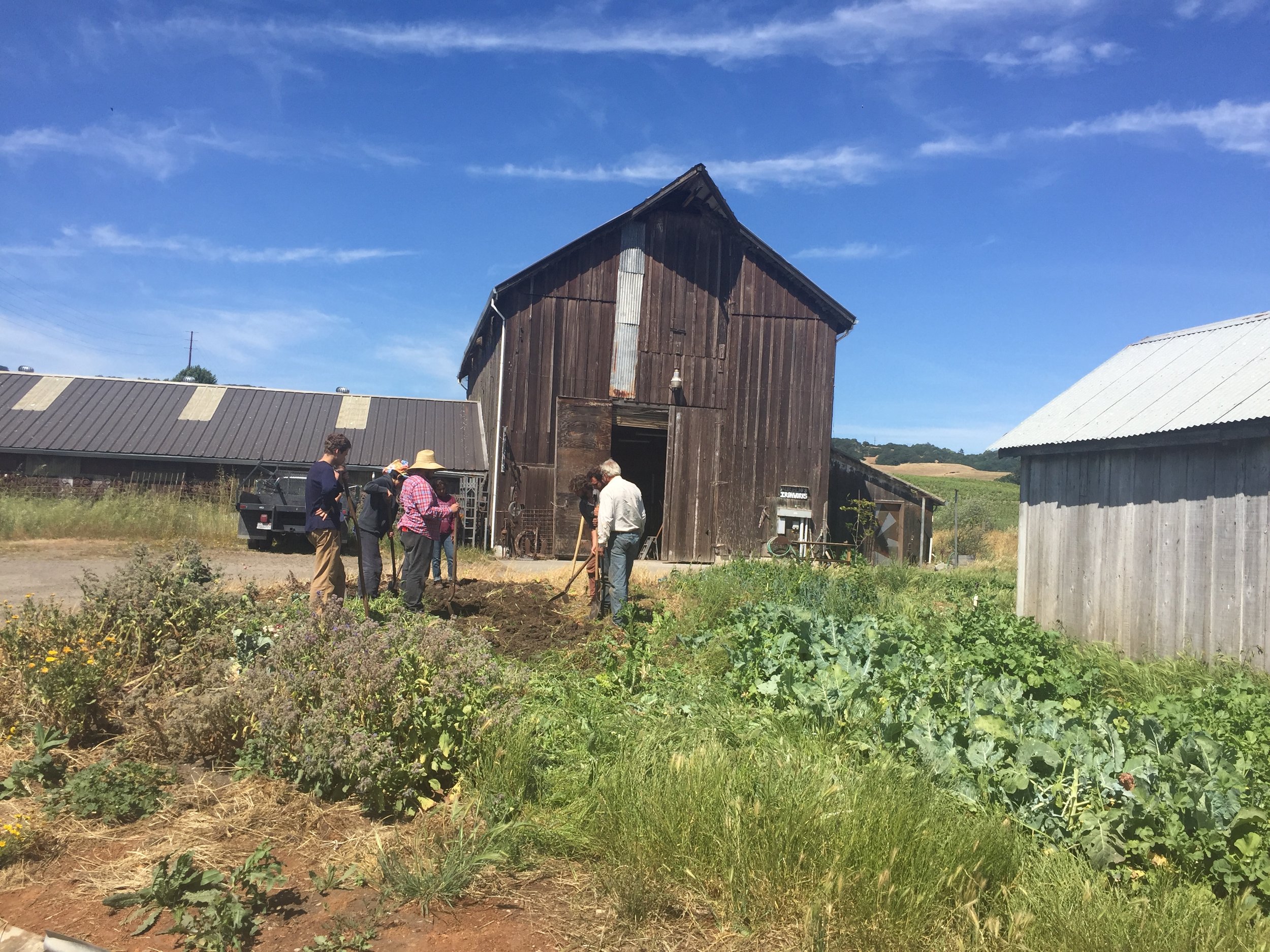
2017 Vintage Summary: A Year of Providence
In what has become a metaphor for the 2017 vintage, a black widow found her way onto the sorting table in the last hours of harvest. We’ve always known that there are lots of black widows in the vineyard, but mostly they keep to themselves, quietly helping rid the vines of unwanted insects. How she got to the table is anyone’s guess. It seems unlikely that she was on a cluster when it was snipped into an unsuspecting hand, so perhaps she crawled into a picking basket that inadvertently landed on her web. In either case, we popped both the spider and her grape into the sorting bin, and off she went to the compost pile. No harm done to either party.
In what has become a metaphor for the 2017 vintage, a black widow found her way onto the sorting table in the last hours of harvest. We’ve always known that there are lots of black widows in the vineyard, but mostly they keep to themselves, quietly helping rid the vines of unwanted insects. How she got to the table is anyone’s guess. It seems unlikely that she was on a cluster when it was snipped into an unsuspecting hand, so perhaps she crawled into a picking basket that inadvertently landed on her web. In either case, we popped both the spider and her grape into the sorting bin, and off she went to the compost pile. No harm done to either party.
For me, it was the last of a long string of “near-miss” reminders that nature is very present, very powerful, and very much in charge. It started with the false spring in late February, with temperatures reaching 79 degrees on March 1. The vines lost their “antifreeze” as the sap started to run, prompting concern about an early bud break. Then came some good fortune as temperatures over the next three weeks rarely rose above 50 degrees. The plants remained dormant, finally emerging in early-April, a bit ahead of schedule, but with much less frost damage than would almost certainly have occurred had bud break been in mid-March.
Our relationship with nature was largely uneventful in May, June, and July. Bloom came and went in 10 days - just what we like to see. June was dry, but July brought needed rain. Veraison (ripening) started early and went quickly. But this period did not go entirely without incident. In late May, we found extensive manmade injury from 2,4-D, a broadleaf herbicide related to dicamba that has caused serious problems in many farming regions this year. The Chardonnay blocks were especially damaged, with loss of about a third of the crop and difficulty ripening because of the damaged leaves.
In mid-July, nature again reminded us of her presence when a black snake found its way into the winery and curled up on Regina’s desk. In this case, it was human intervention - Kenna Musselman, general manager at Grapes Wine Bar - and not providence who guided our visitor to a more appropriate napping place.
Perhaps the snake was a sign of coming threats. August and September brought the hurricane season and cool weather. The cool temperatures were unsettling. Between August 25 and September 12, there were more days with highs under 70 degrees (4) than above 80 degrees (3). Ripening screeched to a halt; nothing progressed as sugars remained frighteningly low. Meanwhile, Harvey, Irma, Jose, and Maria all threatened massive rainstorms. We scrambled to get the vineyard ready for wet weather, picking what we could, and rushing to open the canopy to allow the not yet fully ripe fruit to dry should big rains come. But thankfully Dodon received just 1.3 inches, enough to refresh the vines but not enough to cause problems. Then more good fortune, as a late season heat wave pushed sugars to extraordinary levels and tannins smoothed. Brix of 24 and above (the equivalent of 14.5% alcohol) were the norm.
As harvest approached, we observed several unusual fungal pathogens, perhaps in part because of the extraordinary ripening at season’s end. We now know that this problem occurred throughout the region and have started to work with Lucie, our viticulturist, and fellow growers to find solutions to these challenges. We again had to hustle, picking quickly and sorting heavily in some blocks to get perfect fruit into the fermenters. The black widow was just an exclamation point at the end of the growing season.
Other regions, of course, faced far more significant challenges. Spring frost in Bordeaux, wild fires in California and Provence, earthquakes in Mexico, and hurricanes throughout the Atlantic basin devastated our industry colleagues and the residents of those regions. The human costs leave me speechless. Polly and I, and the rest of the Dodon team, are all thankful to have been spared and for the opportunity to help others where and when we can.
The story of the vintage reminds me of another story of divine providence. In 1795, Joseph Haydn conducted the debut of his 102nd Symphony in London. The music itself skillfully blends symphonic conventions into a piece that can be felt intuitively, almost without the music. Like great wine, it offers surprise upon surprise upon surprise as the music evolves, each note fresh with inspiration. But it’s the story of the debut of the 102nd that describes the miracle of the 2017 vintage. Eager to watch Haydn himself direct the symphony from close range, the audience crowded around him, fortuitously clearing an area beneath the balcony just before a chandelier fell on the empty chairs below. There were a few bruises but no serious injuries.
Like Haydn’s performance, the 2017 vintage was not without bruises, but overall it produced exhilaration and relief. Now, with the wines in barrel and the approach of the Thanksgiving holiday, I am extraordinarily grateful for this vintage and those who worked it. The crop itself was our largest ever, as the 2015 plantings came into production. The new clones of Sauvignon, each distinct in their own way, have me giddy, almost childlike in my excitement to learn their final expression. The Merlots show increasing depth and intensity, the tannins smoother and silkier than ever at the start of the élevage. And of course, this vintage reminded, once again, of the centrality of our relationship with nature in all that we do.

Thoughts from the Barrel Room
With the red harvest complete, and extended macerations underway, I’m starting to think more concretely about how barrel aging will affect the wine and how we can use this understanding to enhance quality. It goes without saying that barrels are not neutral vessels. Aromatic substances in oak quickly diffuse into wine, and some of these combine with or react with substances in the wine to create new flavors. It’s a bit like using spices while cooking. A little bit can enhance the natural flavor of the ingredients, adding complexity and depth. Too much can hide great ingredients, and faulty ones. Oak also contains tannins that have both beneficial and detrimental effects on wine.
With the red harvest complete, and extended macerations underway, I’m starting to think more concretely about how barrel aging will affect the wine and how we can use this understanding to enhance quality. It goes without saying that barrels are not neutral vessels. Aromatic substances in oak quickly diffuse into wine, and some of these combine with or react with substances in the wine to create new flavors. It’s a bit like using spices while cooking. A little bit can enhance the natural flavor of the ingredients, adding complexity and depth. Too much can hide great ingredients, and faulty ones. Oak also contains tannins that have both beneficial and detrimental effects on wine.
Each of the 40 or so coopers in France have developed their own style that starts with tree selection. The final characteristics of a barrel are related to the species of oak (for example, sessile oak adds depth to fruit flavors), the terroir of the forest where the trees grow (for example, wetter regions tend to grow faster and have looser grain), and the portion of the tree that each stave comes from (for example, staves from the outer portion of the tree tend to have finer grain). Only trees of a certain width will be large enough to make both inner and outer staves from the heartwood, so a cooper that wants to make very fine grain barrels needs to buy larger trees, all else equal. Then each cooper adds its own differentiating touches. Some only cut trees during a waning moon from October to January when the amount of sap is lower than it is at other times. Sap provides nutrients for spoilage microbes and attracts insects, and expansion of sap when it freezes can result in cracks in the wood.
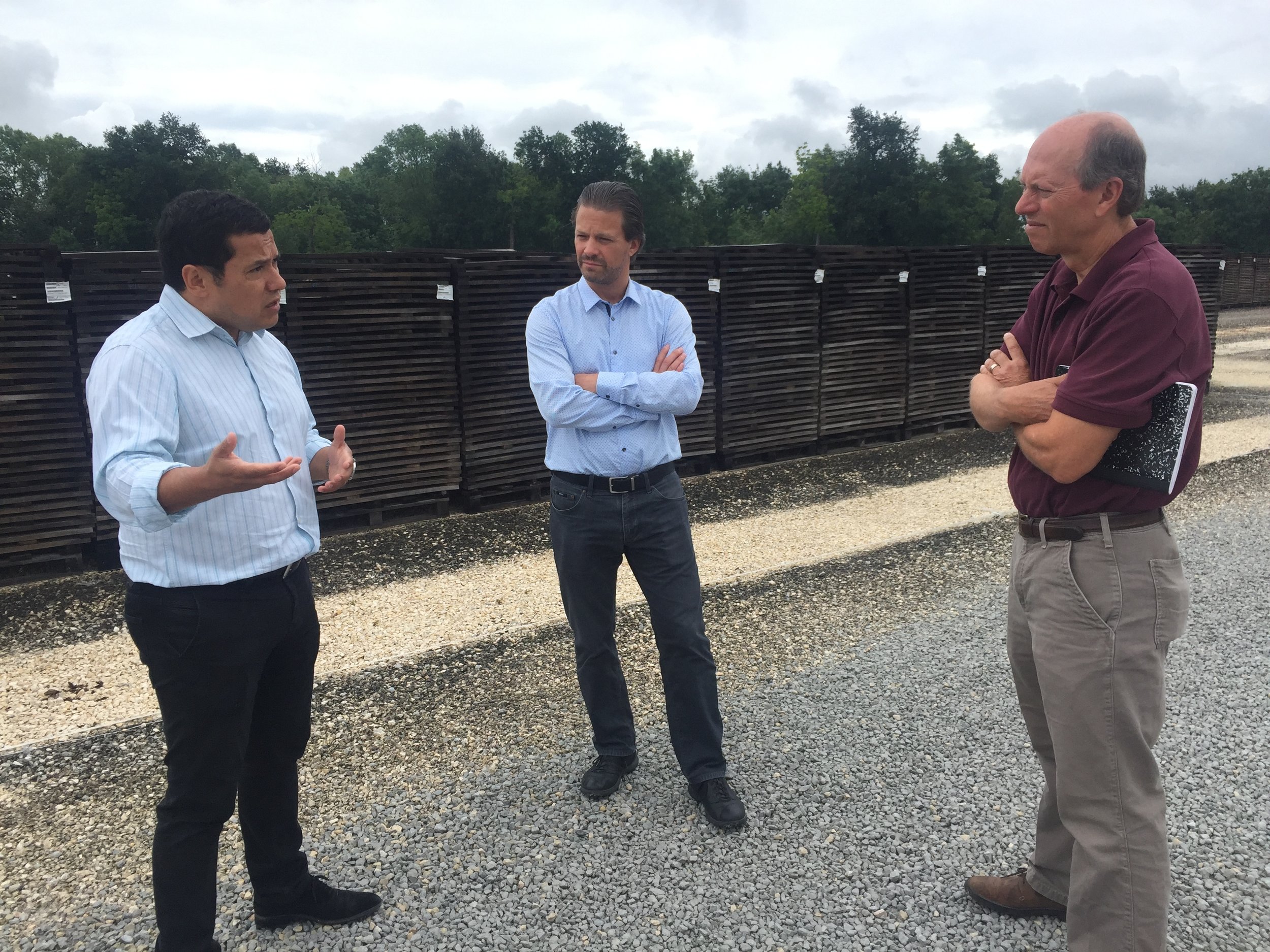
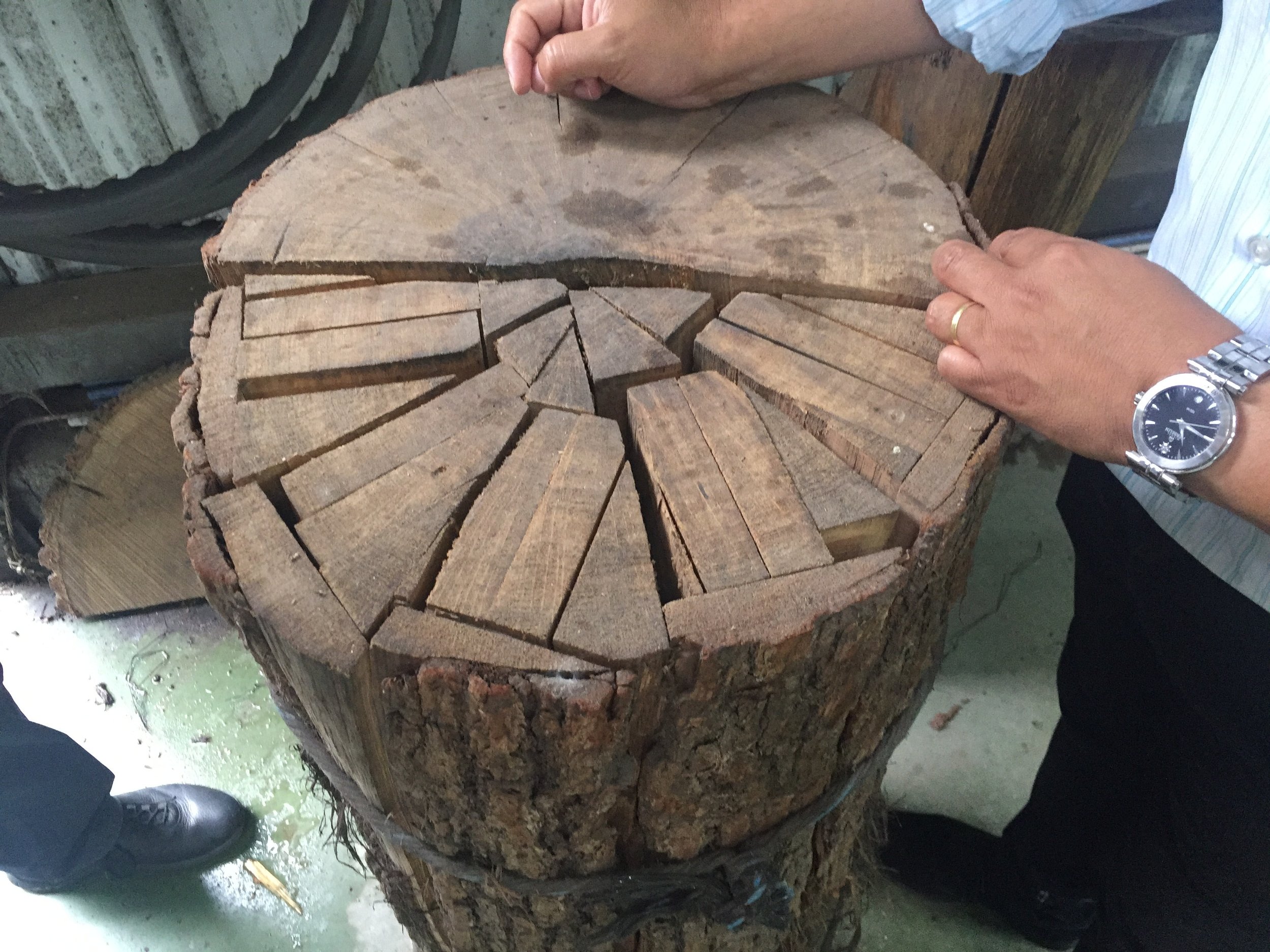
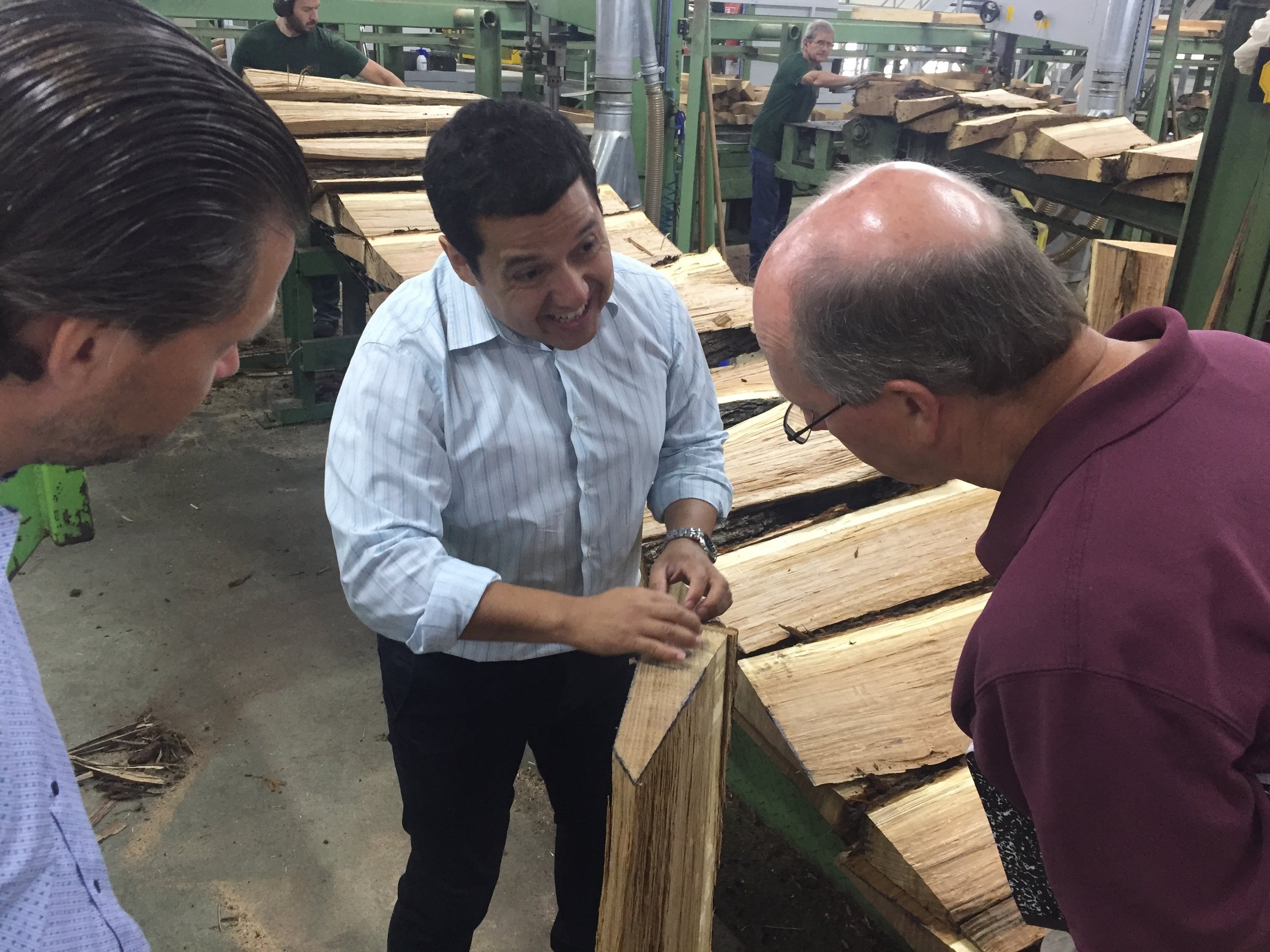
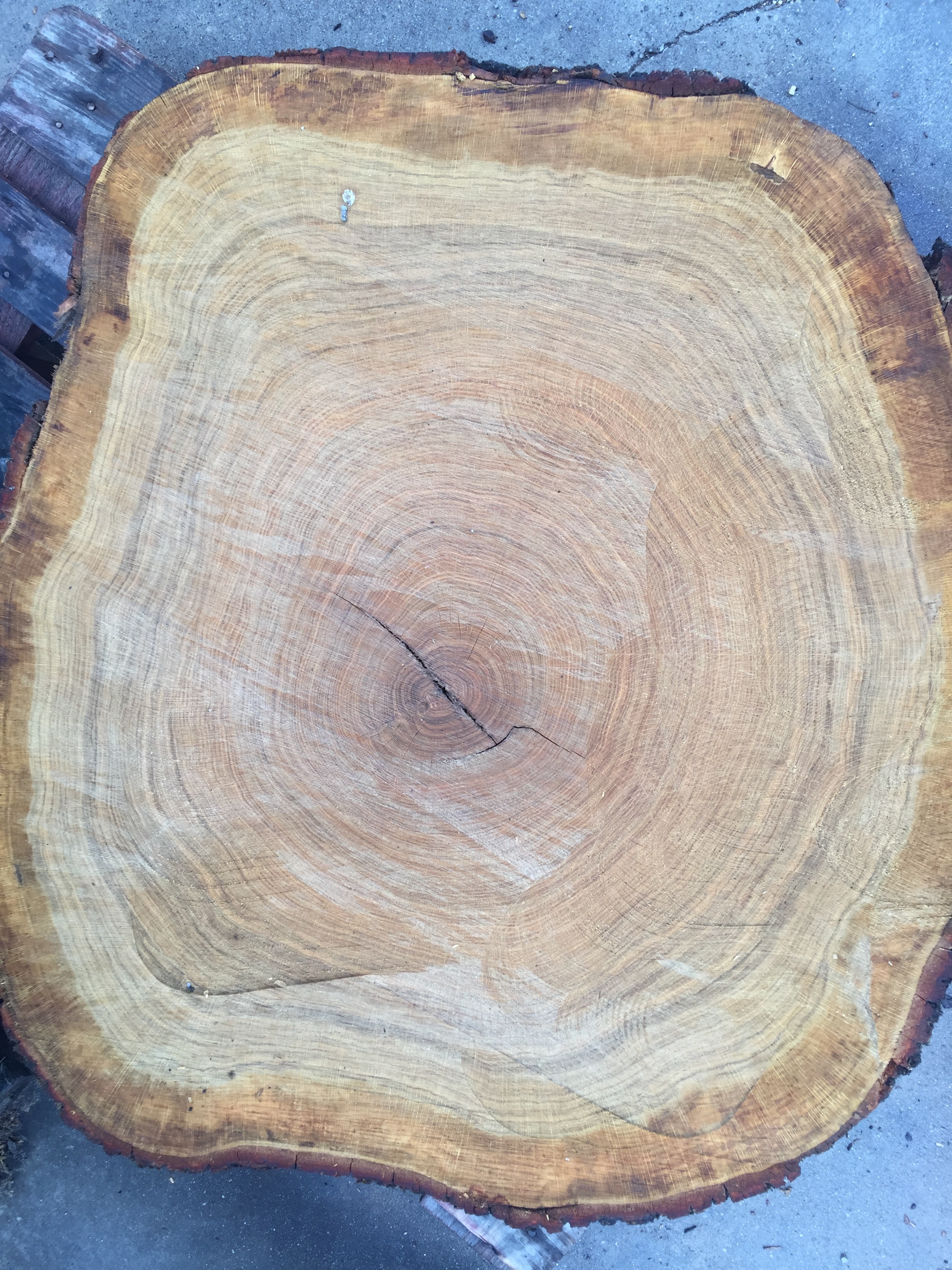
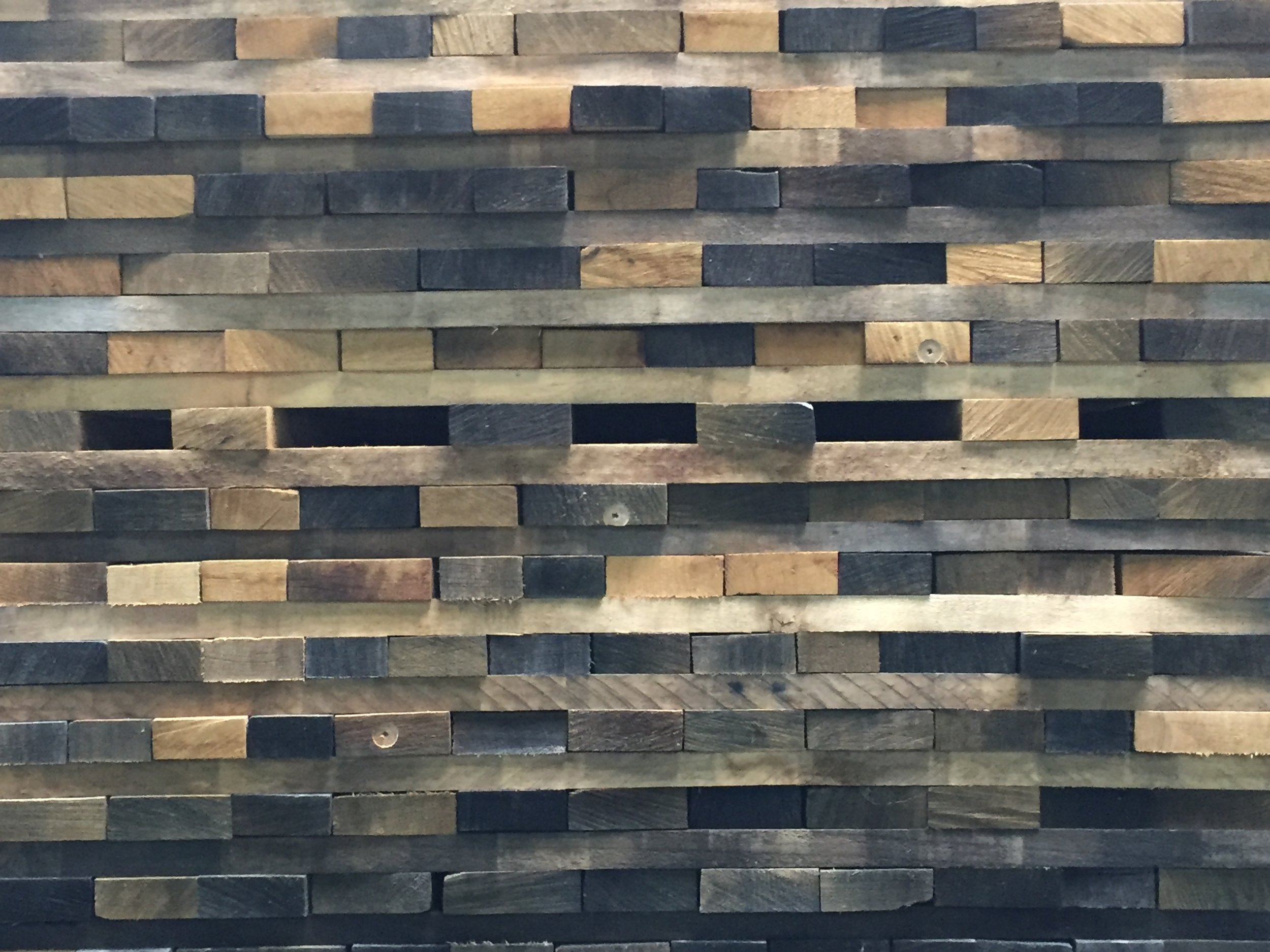
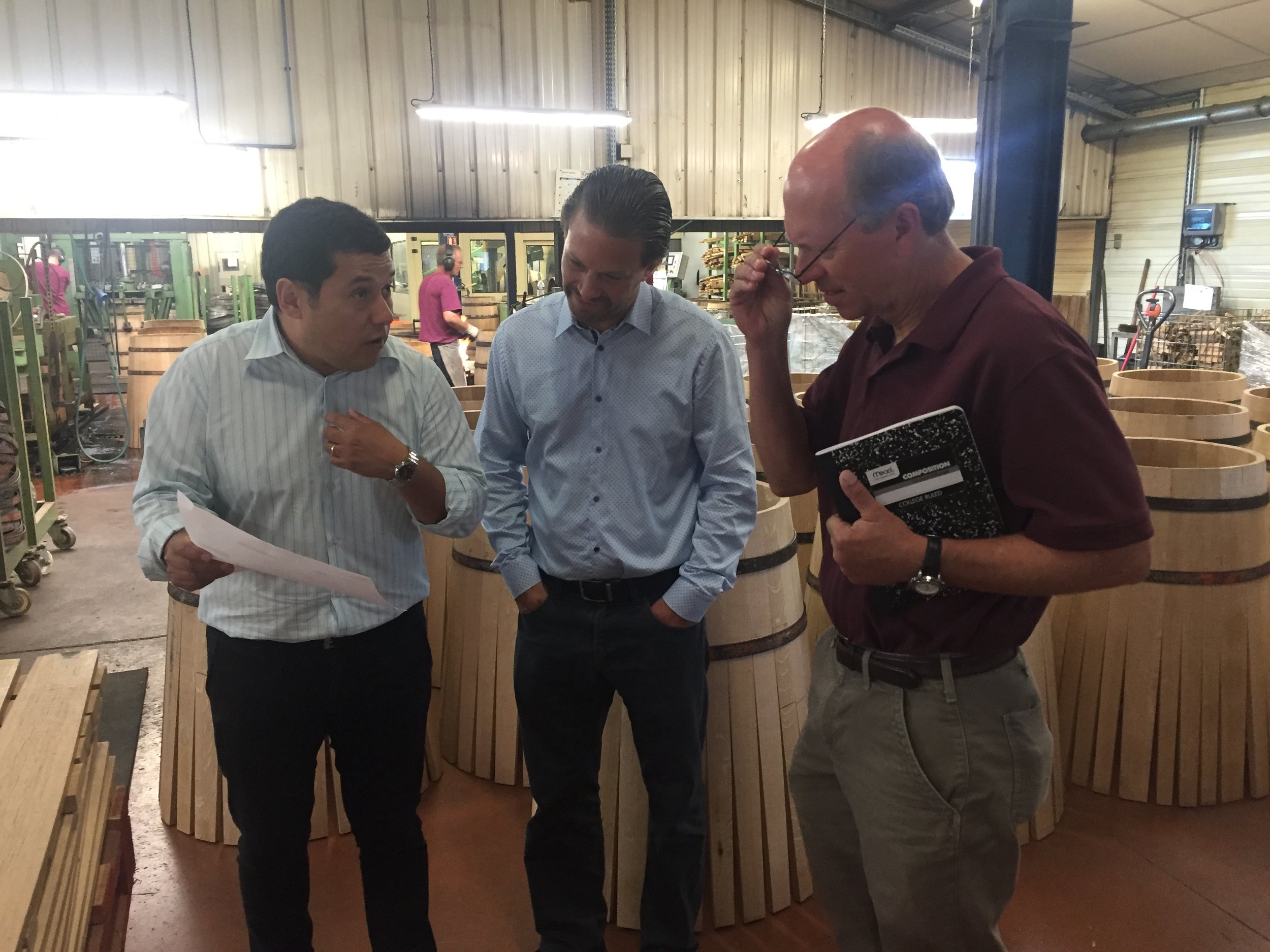
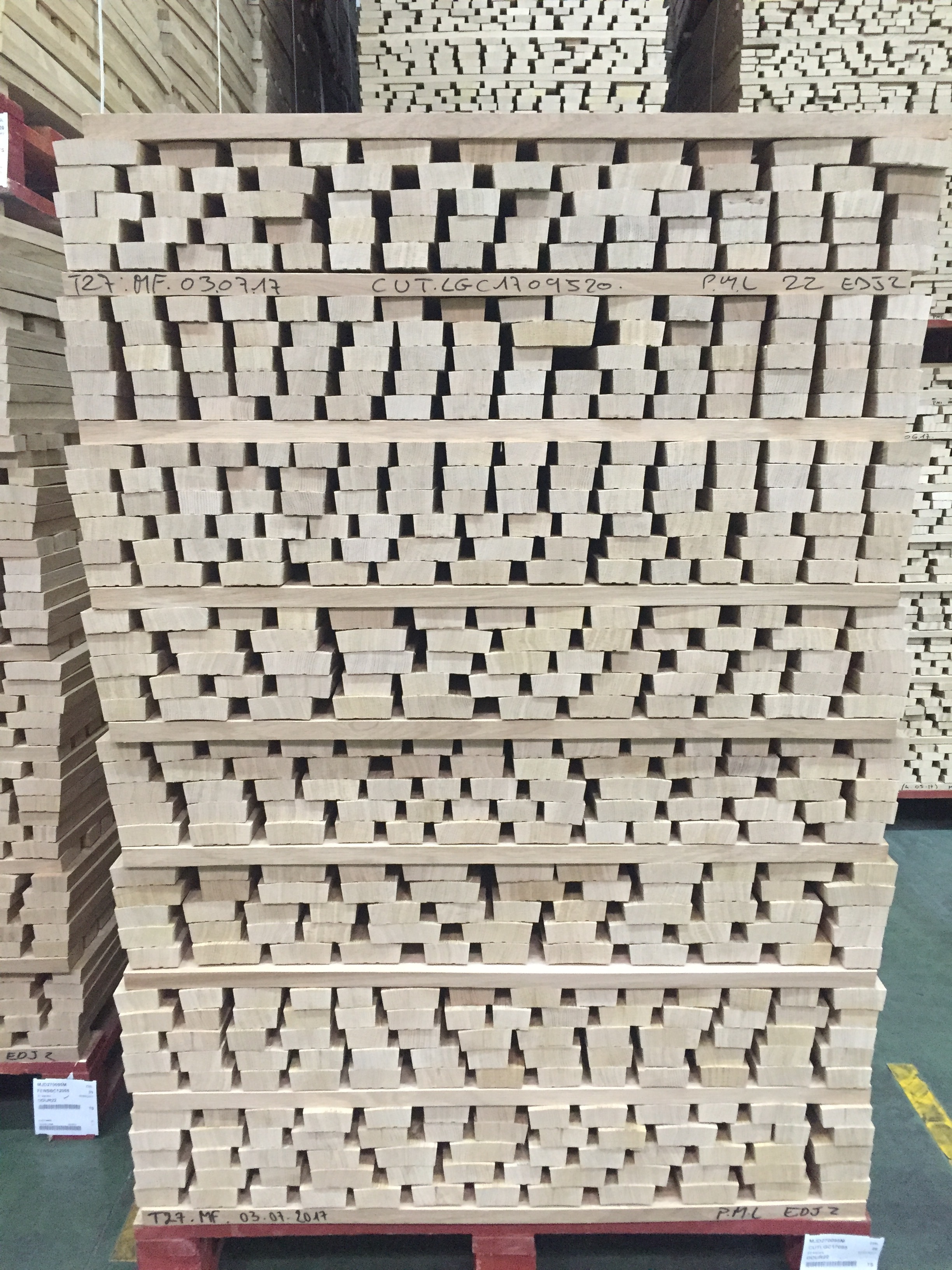
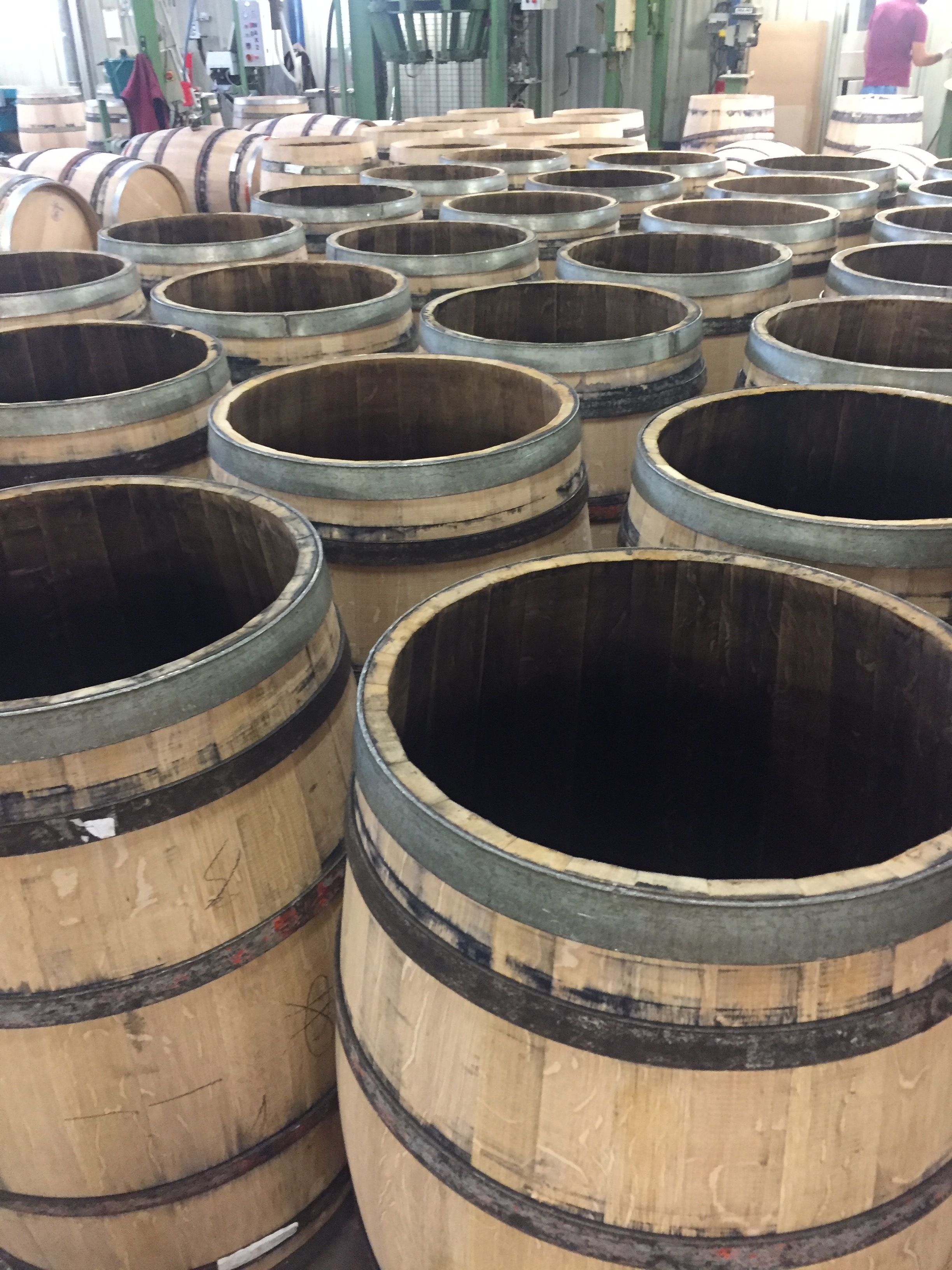
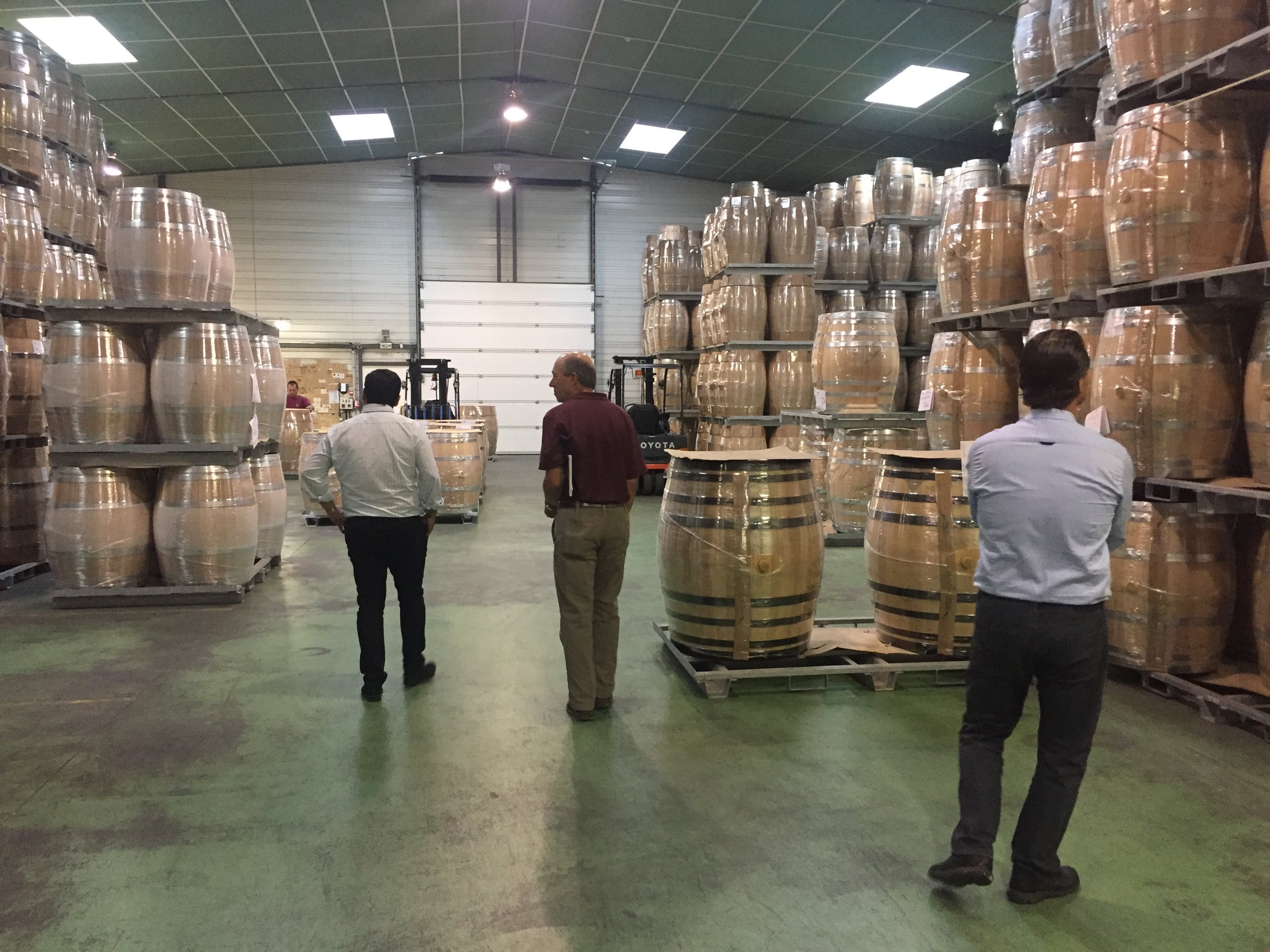
Once the staves are cut, the climate in the mill yard affects the seasoning process. Wet conditions are associated with slower aging and more microbial activity, which can add new and complex flavors. Staves are routinely aged for two years to dry and stabilize the wood, soften the tannins, and reduce or change flavor substances, but in some cases, there is additional benefit to three years of aging. We have seen barrels that have imparted a green sappy taste to wines, the result of poor or inadequate seasoning. Stave seasoning can also be influenced by the position of the pallet in the yard (wood near the outer portion of the yard seasons faster because it is exposed to more wind) and how closely the staves are packed together. Some coopers rotate their stock and have fewer staves per pallet to avoid this variation.
Toasting is another source of significant variation between barrels. Most barrels are exposed to fire to allow the staves to be bent and are then toasted to change the nature and quantity of flavor molecules that are released into the wine. All coopers have their own recipe for this process. Some use higher temperature fires for shorter periods of time while others use lower temperature for longer periods. Some coopers use infrared thermometers to toast to a specific temperature while others add sensory evaluation (aroma and color) to judge when the desired toast level has been achieved. Some turn the barrels over the flame more frequently than others. If you have ever grilled meat on a wood fire, you understand what a difference these variables can make in the final product.
Because of variation in cooper style, it’s often the case that very well-made barrels pair poorly with wine from a single vineyard, or even plot within a vineyard. Many of the best winemakers use an extensive process to evaluate barrels. Several months ago, Polly and I were invited by Eloi Jacob, general manager at Chȃteau Fonplegade, to taste a single lot of 2016 Merlot that had been aged in ten barrels from seven different coopers. We were joined by our consultant Steve Blais, the Fonplegade winemaking team, and representatives from most of cooperages. The tasting was blind to all of those participating, and Eloi had developed a thorough scoring sheet that we used to compare and contrast the aromas and palate of each sample. The differences between the ten samples was stunning.
At Dodon, we also conduct systematic trials of barrels from new coopers to find the right barrels for a wine. Each barrel is tasted and scored for flavor components at least three times in the first year of use. As a result, over the past five years we’ve moved from an even mix of fine and medium grain and toast levels to very fine grains, thin staves, and lower toasts. (Unfortunately, the move to finer grains and lower oak impact also moves us further from the species of oak that grows at Dodon, Quercus alba, so it’s unlikely that we’ll make our own “Dodon” barrels any time soon.) For the 2017 vintage, we purchased from only one of the six coopers we started with five years ago. We’ve instead started working with four smaller coopers who are willing to fine tune the toasts, perhaps adding a minute or two to the standard recipe for a specific situation.
Continuous evaluation and improvement is a very healthy process, one that we embrace fully. We have tasted recent vintages of Dodon wines with most of the coopers that we work with, but to have representatives from all our coopers participate in a single blind evaluation of each other’s barrels would result a much more thorough, critical evaluation. In the end, selecting barrels is a continuous process of systematic trials combined with rigorous evaluative techniques such as the one used by Fonplegade.
August Updates
The bird nets are all up, so our attention is quickly turning to preparing to bottle 800 cases of wine this Friday, August 18. I’m excited about all the wines, especially the 2015 Oronoco and Dungannon. We’re also getting ready for the harvest. The season has been shaping up nicely. Veraison came early, July 20 in Block 40 (Merlot), and went quickly, with superb uniformity across all the blocks. This means that the fruit will ripen evenly and allow us to fully extract all the flavors, always an exciting prospect for a winemaker. The modest rains have kept the wines in peak condition, allowing photosynthesis to work its magic, as have the cooler temperatures with lots of clear sunshine.
Dodon Welcomes Seth McCombs Polly and I are very pleased to introduce Seth McCombs as Dodon’s new Assistant Winemaker. Seth comes to Dodon with 15 years of vineyard and winery experience in Virginia and North Carolina. Born and raised in Lynchburg, Seth started in 2002 in the laboratory at Chateau Morisette where he quickly developed his passion for wine and, like most of us in the industry, learned many parts of the wine business outside his job description. In 2006, he moved to Raffaldini Vineyard and Winery, where he served as Assistant Winemaker, and then in 2011, he became Winemaker at AmRhein Wine Cellars, where he was responsible for a 30-acre vineyard as well as cellar operations. While at Raffaldini, Seth studied Enology and Viticulture at Surry Community College. He was most recently Winegrower at Capstone Vineyards in Linden, Virginia.

Dodon's new assistant winemaker Seth McCombs (left), Tom (middle), and BJ (right), harvest intern, prepare for bottling.
All of us on the Dodon team are thrilled that Seth and his family – Stephanie, Arlo, and Maggie - have been able to join us mid-season for the 2017 harvest, and we hope many more. You will quickly recognize them for their outgoing, easy-going spirits and the fastest smiles in the Mid-Atlantic.
We will, of course, miss former vineyard manager Nick Maliska, who has taken a cellar position at Pritchard Hill’s Ovid in Napa Valley. Nick was with us during a period of rapid evolution and growth. We wish Nick, Lizzie, Sophie, and Loie all the best in the next phase of their wine journey.
Brief Vintage Update The bird nets are all up, so our attention is quickly turning to preparing to bottle 800 cases of wine this Friday, August 18. I’m excited about all the wines, especially the 2015 Oronoco and Dungannon. We’re also getting ready for the harvest. The season has been shaping up nicely. Veraison came early, July 20 in Block 40 (Merlot), and went quickly, with superb uniformity across all the blocks. This means that the fruit will ripen evenly and allow us to fully extract all the flavors, always an exciting prospect for a winemaker. The modest rains have kept the wines in peak condition, allowing photosynthesis to work its magic, as have the cooler temperatures with lots of clear sunshine.
The yields look excellent, just where we expected them. As usual, the Sauvignon is likely to be the first pick, probably the end of August, followed a week or so later by the Chardonnay. I’m looking forward to having new clones of each of these varieties come into production this year, especially the musqué clones that will add significantly to the aromatic character of the wines. Steve Blais, our consulting winemaker, and Lucie Morton, our viticulturist, are planning to visit the third week in September, just in time for the first Merlot pick.
So far, so good. Mother Nature has been smiling. We're excited by the vintage.
What are Dodon Soils?
Dodon’s soils substantially differ from those in other wine growing regions. Termed Marr-Dodon complex soils, they are described as fine-loamy (meaning smallish particle size), siliceous (having high levels of silica that warms the soil), semiactive (modest cation exchange associated with low fertility), mesic (medium temperature), aquic (Dodon series) or typic (Marr series) (aquic soils retain more water than typic) hapludults (derived from sandstone).
When Polly and I were in Bordeaux a few years ago, we visited Damien Bielle, technical director at Château La Gaffelière. La Gaffelière is a Premier Grand Cru Classé estate that lies on the descending slope below St. Émilion’s famed limestone plateau. It’s adjacent to Château Ausone, one of only four class A château in the most recent St. Émilion classification. La Gaffelière is one of 14 Premier Grand Cru Classé B château.
As we looked up the hill, Damien explained how the special soil of the plateau and the hillside location had produced many of the region’s great wines. When we turned to return to the cellar, we could see Château Pavie, also Class A, to the southeast at the base of the slope where the soil becomes more alluvial and sandy, where one might think the soils would be less likely to produce the stunning wines of the plateau. When we asked Damien how Pavie achieved its status despite the presumed challenges of its site, Damien’s response was matter of fact and utilitarian. “They know how to farm it,” he said.
It turns out that the four St. Émilion class A chateau – Ausone, Angelus, Cheval Blanc, and Pavie –each have very different soils from one another, and even within their vineyards, there is considerable variation. The key is that the wine growers at each site intimately understand their soils, and they adapt their viticultural and winemaking methods accordingly.
How are soils classified?
Because soils across the world differ, the United Nations Food and Agricultural Organization has created a comprehensive taxonomy that characterizes soils based on their characteristics and suitability for agriculture. There are six taxonomical levels. The highest, most general level is the soil order; the most specific is the series. There are 12 orders and more than 15,000 series. With so many series, the characteristics of the soils within each are very similar.
There is no dominant soil order among the world’s wine growing regions, let alone specific series that are associated with the best wines. This fact alone leads to the conclusion that high quality wine grapes can be grown on different types of soils. Inceptisols are the most common soil order in Bordeaux, alfisols in Burgundy and the Loire, and mollisols in northern Italy, California, Oregon, and Washington, and the ancient wine regions of Armenia. Alfisols, which are good for many agricultural uses, are also found in Maryland and Virginia west of the fall line.
Dodon’s soils substantially differ from those in other wine growing regions. Termed Marr-Dodon complex soils, they are described as fine-loamy (meaning smallish particle size), siliceous (rich in silica that warms the soil), semiactive (modest cation exchange associated with low fertility), mesic (medium temperature), aquic (Dodon series) or typic (Marr series) (aquic soils retain more water than typic) hapludults (derived from sandstone).
Hapludults belong to the ultisols, an order found in humid climates and characterized by high degrees of weathering, mineral leaching, and acidity. They age very rapidly, leading to rapid turnover in rock and mineral content. With relatively low fertility, they are marginal agricultural soils that require significant inputs for most crops, but these characteristics make them good candidates for viticulture. Ultisols have a well-developed reddish clay horizon (horizons are the distinctive layers that can be seen at various depths below the surface) associated with weathered sandstones and resulting in their common name “red clays” in the southeastern United States.

Dodon’s distinctive soils represent a considerable opportunity to make wine that will differ from those produced in other regions, even when the climate and grape variety are the same. The process of discovering what the final wines will be like adds enormously to the excitement and pleasure of our project. I often wonder whether Dodon Merlots will exhibit the power found in Pavie, the finesse in Cheval Blanc, the minerality in Angelus, some combination, or none of these. While we have some early hints, each vintage brings new learning. What we do know is that understanding the nuances of the vineyard soils and farming them with care and precision are essential to the process of discovery.
How do we study soil?
We started by understanding what we mean by soil, which usually depends on whom we are talking with. Engineers, concerned chiefly with the stability of buildings, roads, and other structures, define soil broadly as any material that can excavated without systematic drilling or blasting. In other words, to an engineer, soil is everything above bedrock, which is about 3,000 feet below the surface at Dodon.
Soil scientists and farmers take a narrower view of soil, defining it as a medium that can support rooted plants. Soils that meet this definition vary in depth, mineral and rock composition, and hydrology. Since most agricultural plants are relatively shallow rooted, only surface soils have been surveyed by the United States Department of Agriculture. Dodon series soils have been characterized to a depth of 72 inches. Because grape vines can send roots more than 200 feet below the surface, they are influenced by soils well below typical agricultural assessments.
Even though soils within a series (Dodon series, for example), have very similar characteristics, there can be, and usually is, significant variation on any given parcel. At Dodon, geologist Bubba Beasley documented this variation using electromagnetic induction imaging to identify plots that differ according to water holding capacity, mineral content, and texture. The resulting image represents a rich mosaic of individual plots, each created hundreds of millions of years ago and transported to Maryland’s western shore uplands. (I’ll describe the origins of Dodon’s soil in a subsequent post.)

How do we use our understanding?
We used the information from the survey to lay out the vineyard in ways that would maximize our chances of creating complex, balanced wine. For example, Merlot grown on clay soils tends to have more structure and intensity than those grown on sandy soils, where the wines are often described as elegant and finessed. Because we think of Merlot as foundational for Dodon wines, most of our Merlot is planted on plots with more clay where we hope it will have good intensity and structure.
The information from our survey allows us to precisely farm each plot. For example, areas of the vineyard dominated by sand and gravel have less water holding capacity than areas with more clay. We are a bit quicker to irrigate those parts of vineyard. Because of the leaching, we include calcium and magnesium in our nutrient management program, providing small amounts of these essential elements to thicken grape skins and provide both more flavor and better disease resistance.
Bubba found that some parts of the vineyard were nearly “dead,” with compacted grey soil that lacked microbial and insect life, undoubtedly the result of fifty years of “conventional” agriculture characterized by excessive use of herbicide and inorganic fertilizers, and by compaction associated with use of heavy equipment. The wines from these areas of the vineyard are weak, lacking the structure and fatness that we want for Dungannon and Oronoco. To restore life to these plots, we’ve been using deep tillage, adding compost and compost teas, and strategically planting deep rooted cover crops to create better soil structure and allow oxygen to enter the soil.
It’s all, of course, a bit of an experiment, with educated guesses dominating our hypotheses. Because the soils differ from those in other parts of the wine growing world, we can’t merely duplicate their methods. And even after hundreds, or even thousands, of years, the Bordelais are still learning. A winemaker from Pomerol recently told us that he had been working for 43 years to improve one plot of Cabernet Franc that consistently ripened a week or two after the others in his vineyard. His last experiment involved adding river gravel to the soil. Even though he added only a small amount, the result was higher sugar levels but also green notes in the final wine, making him worse off than he had been. If the Bordelais don’t have all the answers for their plots after thousands of years of experience, we can’t really know after just ten how to optimize the wine from any given plot at Dodon. And so we've started on a long and interesting journey of discovery and learning.

The Story of Drum Point
Those who have visited know that Dodon has a rich and varied history. To celebrate this heritage, we’ve chosen historical themes when naming Dungannon, Oronoco, and Drum Point, Dodon’s Collectors wines. In this article, we share the story of the Drum Point Railroad.
Those who have visited know that Dodon has a rich and varied history. To celebrate this heritage, we’ve chosen historical themes when naming Dungannon, Oronoco, and Drum Point, Dodon’s Collectors wines. Dungannon was Dodon’s horse that won, in 1743, the first recorded horse race on an oval in Maryland. Like the horse, Dungannon the wine, a blend of Merlot and Cabernet Franc, is earthy and boldly structured. Likewise, Oronoco was the opulent, highly aromatic variety of tobacco that was grown in the region. Oronoco the wine, a Cabernet Sauvignon-based blend that will be released later this summer, is correspondingly luxurious, with hints of tobacco leaf aromas.
This spring, we will release a third Collectors wine, Drum Point 2015. Drum Point is a blend of Sauvignon and Chardonnay that readers will recognize from previous vintages as North Slope. Drum Point is named for a “ghost railroad” that, despite a great deal of planning and investment over several decades in the late 1800’s, was never completed.

Planning for the Baltimore and Drum Point Railroad (BDRR) began as early as 1856. It was formally chartered in 1868, at a time when railroads symbolized progress and were being planned and built across America. Had it been completed, the BDRR would have stretched 34 miles from the Baltimore harbor to Drum Point in Calvert County, near Solomons Island. The aim was to provide access to a warm deep-water harbor for the steamboat trade, creating an opportunity to transport tobacco, grain, fruit, vegetables, oysters, and fish from Southern Maryland farms and watermen to Baltimore for sale and canning.
Physical evidence of the project can be found in Anne Arundel and Calvert counties in the form of railroad beds and their trenches. Slated to go through the Dodon property, BDRR beds here run across the western end of the farm. These berms have remained relatively clear of trees as family and friends used them as riding trails over the past century and decades.
This spring we will release Dodon’s Drum Point 2015 in the spring Wine Club allocation, with release to the general public later in the summer. The wine is a blend of 60% Sauvignon Blanc and 40% Chardonnay. It offers complex wheat, apple crisp and stone fruit, a fresh lively palate and a touch of weight. With 125 cases bottled in August of 2016, we suggest pairing it with sautéed chicken with lemon caper sauce or poached salmon. Affectionately nicknamed the “Grand Dame” of Dodon’s portfolio by a dear friend of Dodon, we hope you enjoy this elegant and thoughtfully made wine.
On April 30th at 2 pm, Dodon Wine Club members and their guests are invited to join Polly on a hike to the Drum Point railroad beds. We will gather under the pavilion for a special pre-release tasting of Drum Point after the hike. Club members and their guests are invited to stay for a bonfire until 6 pm. Dodon wine will be available for purchase by the glass and bottle. RSVP here.


Occasional Notes
The growing season officially started Monday with bud break in the Nebbiolo in the experimental vineyard, and a few Chardonnay in block 9 (the third leaf vines) of the commercial vineyard. It’s always exciting, accompanied by both celebration and a touch of angst.
The growing season officially started Monday with bud break in the Nebbiolo in the experimental vineyard, and a few Chardonnay in block 9 (the third leaf vines) of the commercial vineyard. It’s always exciting, accompanied by both celebration and a touch of angst.

I’ve been asked quite a bit about the effects of March’s cold spell. The short answer is that it delayed vine phenology, reducing the risk that a late season frost would cause bud damage. It also gave us time that would otherwise have been lost to the warm winter to finish pruning.
But as always with nature, the longer answer is much more complicated. False springs, like the period that preceded the March cold spell, are increasingly common, and they can be very disruptive to balance in the vineyard. At Dodon, we’re especially concerned about the consequences on pest control. For example, insect pests like grape berry moth are more likely to survive winter, hatch earlier, and have more generations during the growing season, but natural predators do not necessarily keep the same schedule. Increasing insect species diversity, which we hope will mitigate these pest/predator timing mismatches, is the chief motivation for Dodon’s new cover crop project. It will take a few years to get established, but in the coming years, crops like mustard, buckwheat, cowpeas, and bachelor buttons may be as common as grapevines in the vineyard. As Bob Cannard says, “Half for you, half for nature.”
Our ancestors probably knew much more about maintaining balanced ecosystems than we do now. I’m often reminded about how much wisdom we’ve lost, most recently by a remarkable report published in Nature. Sequencing the DNA from the calculus of 40,000 year old Neanderthal with a dental abscess revealed evidence of salicyclic acid (the active ingredient in aspirin) and Penicillium (the fungus that produces the antibiotic penicillin). While we can’t know for sure, Neanderthals appear to have learned to use the tools at hand as very sophisticated medical treatments, knowledge that we subsequently lost only to rediscover, and then overuse, in the post-Pasteur era.

Winter 2017 Update
Winter is pruning time, and no matter how long we think it will last when viewed from November, the season always passes too quickly. There are lots of competing demands, and sometimes, like this year, it is cut short by warm weather. But like all cultural practices in the vineyard, we don’t cut corners.
Winter is pruning time, and no matter how long we think it will last when viewed from November, the season always passes too quickly. There are lots of competing demands, and sometimes, like this year, it is cut short by warm weather. But like all cultural practices in the vineyard, we don’t cut corners.
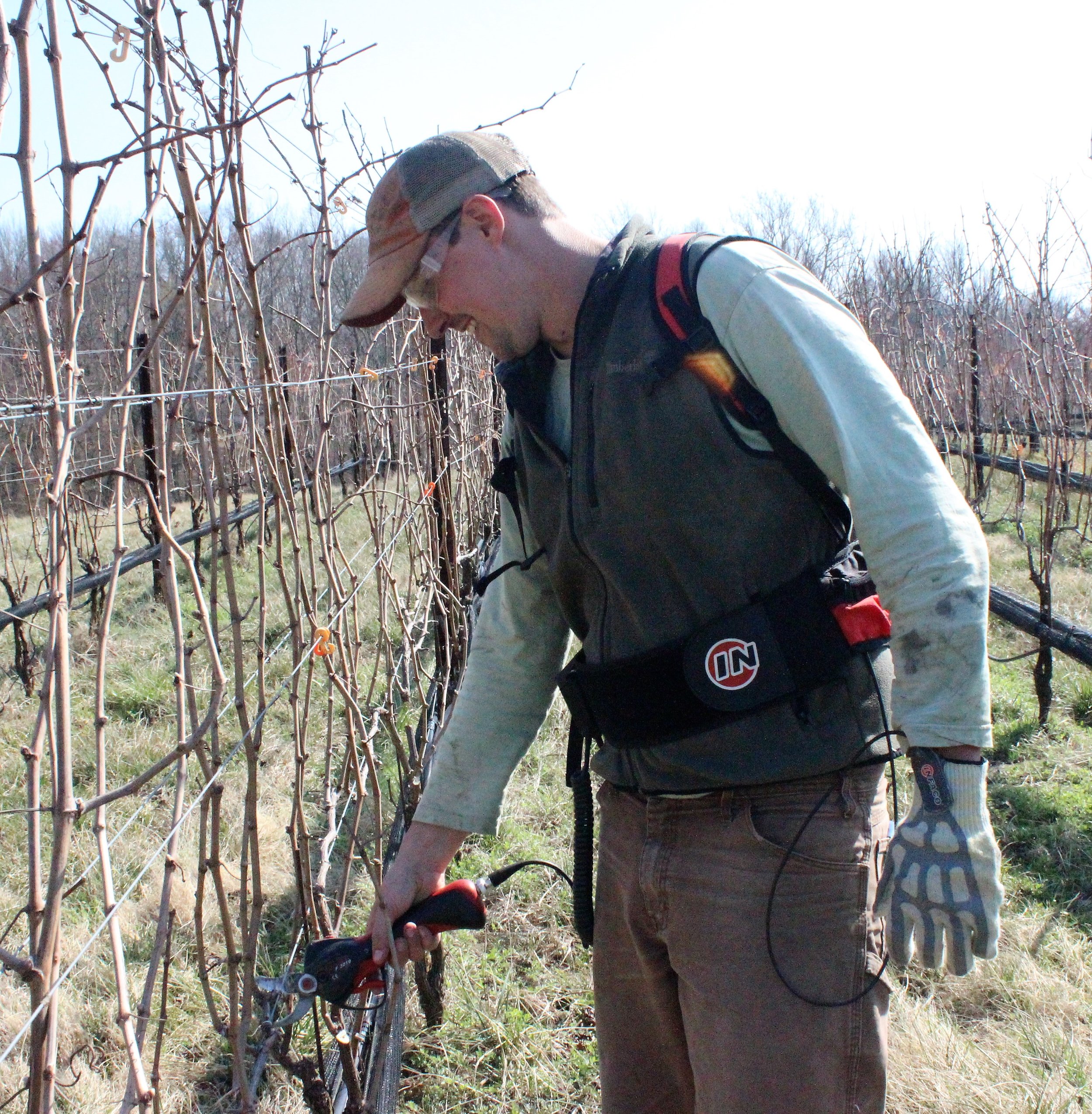
Pruning is a critical task that helps regulate vigor and yield for the coming season. At Dodon, we typically remove as much old wood as possible, using a technique known as cane pruning to reduce levels of fungal inoculum. Assuming the vines were balanced during the previous season, this method assures optimal shoot spacing and the number of fruitful buds per vines. Beyond these basic principles, that are lots of decisions to be made. For example, we always wonder whether to leave an “insurance cane” that would provide extra buds in the event of extraordinary cold that can kills buds during the height of winter.
But now winter is merging into spring, and the vineyard team is rushing to finish pruning and tying the vines. The warm weather has made the work pleasant enough, but to be honest, we would prefer biting cold and snow until late March. By keeping the soil cold, these conditions help maintain dormancy and delay bud break until later in the season when there is less risk of damage from a late season frost. We’ve also noticed that cold soil helps synchronize bloom across varieties, a significant work saver in early June when things are busy in the vineyard. By killing eggs and larva, very cold weather also reduces insect pest pressure throughout the season. All told, we’re glad to see a week or two of colder weather in the forecast.
Why do we care so much about Dodon soils?
Grapevines grow just fine in water supplemented with a few nutrients, a method known as hydroponics. Growing hydroponically has lots of advantages. Because it can be done indoors, hydroponics allows perfect temperature control, and it avoids disease pressure often associated with rain, humidity, and insects. Vegetative growth can easily be regulated by adjusting the amount of carbon dioxide in the atmosphere and the amount of nitrogen in the aqueous solution. It’s little wonder that tomatoes, lettuce and other vegetables, and most commercial marijuana are grown hydroponically.
Grapevines grow just fine in water supplemented with a few nutrients, a method known as hydroponics. Growing hydroponically has lots of advantages. Because it can be done indoors, hydroponics allows perfect temperature control, and it avoids disease pressure often associated with rain, humidity, and insects. Vegetative growth can easily be regulated by adjusting the amount of carbon dioxide in the atmosphere and the amount of nitrogen in the aqueous solution. It’s little wonder that tomatoes, lettuce and other vegetables, and most commercial marijuana are grown hydroponically.

But many wine growers stubbornly cling to ancient notions of terroir, the idea that the place in which the fruit is grown has a major influence on the taste of the final product. These “terroirists” view themselves as interpreters of their vineyards and not as creators of a wine. They view wines that express the characteristics of the vineyard, such as the minerality often seen in cool climates with limestone derived soils, as ambassadors of “place,” and by association, the vineyard, the farm, and the surrounding community.
There are several ways in which soil can affect the way that wine tastes. The first, and probably the most important, is the movement, distribution, and purity of water in the soil. The amount of water available to plants is determined by the soil’s slope, texture, rock and organic matter content, and depth. Vines in areas with too much water available to them tend to grow vigorously, using energy to produce more foliage than is optimal to ripen the fruit. Indeed, wine grapes tend to do best in conditions of modest water deficit during ripening, and it’s this characteristic that has resulted in the aphorism that vines must “struggle” to produce the best wine.
Soil mineral content plays a substantial role in shaping the characteristics of wine. Minerals in soil largely come from weathering rocks, but they have a much more ancient origin, forming just a few million years after the Big Bang. Most of the earth’s 4,500 known minerals are composed of combinations of just six elements – oxygen, silica, aluminum, calcium, magnesium, and iron. For the most part, the effects of minerals on wine are indirect. For example, in wet conditions, orthoclase feldspar (composed of silica, oxygen, and potassium) is converted to kaolinite clay, releasing potassium that is taken up by vines and transported to the berries. During fermentation, high levels of potassium can precipitate tartrates and reduce acid levels, giving wine a flat, flabby taste. On the other hand, high levels of dolomite (an oxide of calcium and magnesium) compete with potassium uptake, thus increasing wine acids, and it is associated with thick skins, resulting in resistance to infection and more intense flavor in the wine.
Finally, living organisms in soil directly and indirectly influence the characteristics of wine. Microbes – bacteria, yeasts, fungi – provide nutrients in digestible forms to the vines, and they compete with plant pathogens. They digest dead plants and animals to form organic matter that acts as a store for nutrients and water. Many microbes make their way into the fermentation tanks, altering fermentation kinetics and the flavors that result. Larger organisms, such as insects and worms, modify soil structure, allowing better drainage and oxygenation that promote vine health and ripe fruit. Together with the other components of soil, living organisms help to form a dynamic, complex ecosystem that is constantly changing and renewing itself.
Those of you who have toured with us know the effort that we’ve made to understand Dodon’s soil and its origins, the care we’ve taken to select the most appropriate varieties and rootstocks, and the attention we’ve paid to laying out the vineyard to best match the plants with the underlying soil. Despite the potential of hydroponics to make consistently good wine, we’ve chosen the more difficult, potentially more costly traditional methods because we believe that soil plays an essential role in crafting wines of depth, harmony, and balance that reflect the place in which they were grown. In subsequent posts, I’ll describe the story of Dodon soils, where they come from, what they are, and how they make Dodon wines.
Looking Beyond Organic Certification: Part I
I’m often asked when leading guests on a tour in the vineyard whether Dodon is “organic,” or at least aspires to be certified as an organic vineyard. It’s a fair question. In many ways, we fit the common image of organic farmers. On a summer visit, you will find our vineyard team out with hoes, clippers, and other hand tools, carefully cultivating the soil and tending the vines. Regulations governing organic certification require practices that are standard operating procedures at Dodon, such as use of organic composts, mechanical weeding, and use of biological controls for insect pests. These methods are labor intensive and expensive, and they illustrate our commitment to sustainability, ecologically-friendly practices, and a balanced ecosystem.
I’m often asked when leading guests on a tour in the vineyard whether Dodon is “organic,” or at least aspires to be certified as an organic vineyard. It’s a fair question. In many ways, we fit the common image of organic farmers. On a summer visit, you will find our vineyard team out with hoes, clippers, and other hand tools, carefully cultivating the soil and tending the vines. Regulations governing organic certification require practices that are standard operating procedures at Dodon, such as use of organic composts, mechanical weeding, and use of biological controls for insect pests. These methods are labor intensive and expensive, and they illustrate our commitment to sustainability, ecologically-friendly practices, and a balanced ecosystem.
But the answer to the question is no. Dodon is not, and does not aspire to be, certified as an organic vineyard.
Despite the pastoral image of the organic farmer, the main difference between organically certified and conventional agriculture is the use of synthetic pesticides. Organic certification standards allow use of non-synthetic, and a few synthetic, chemicals, while conventional agriculture does not have any restrictions regarding use of synthetic compounds. Because non-synthetic substances are derived from biological (e.g., Bacillus thuringiensis toxin), botanical (e.g., neem and pyrethrins), or other sources (e.g., minerals such as sulfur and copper), they are considered more “natural.”
But non-synthetic chemicals are still chemicals, and they are often toxic to non-target organisms, including people. Take pyrethrins, a group of six naturally occurring substances derived from Chrysanthemums. These plant extracts have been used as insecticides for millennia, and depending on the specific extraction methods, many are certified for organic use. Pyrethrins are highly effective against a broad range of insect pests. Unfortunately, they are also highly toxic to beneficial insects, such as honey bees and other pollinators, much more so than many synthetic insecticides that target a narrower range of insects.
Because the real differences between conventional and organically-certified agriculture are small, some of the most ecologically-minded farmers have chosen to forego certification. They believe that meeting certification requirements is a diversion from the real objective to produce healthy food in a sustainable manner and may be detrimental to the crop and the environment. When Polly and I were in California last summer, we visited one such farmer, Bob Cannard, at Green String Farm whose produce is served at Chez Panisse, Alice Waters’ well known Berkeley restaurant. Bob is widely known for his visionary, yet radically unconventional, approach to growing fruits and vegetables.
Bob Cannard with students at Green String Institute. If you look closely you will see the vegetables (our half) among the diverse cover crops (nature’s half).
Bob believes that healthy, tasty, nutritionally complete plants are the result of a large and diverse population of microorganisms in the soil. These microbes fix nitrogen, digest carbon containing organic matter, secrete acids that break down rocks into minerals, and protect roots from invading pests. Creating this diversity requires that we renew the soil with a complex diet of composts, shells, rocks, and decomposing plant material from diverse forbs that also provide habitat for beneficial insects. Bob summarizes it with the phrase, “Half for you, half for nature.” Failure to feed nature its portion leads to imbalanced and depleted soil, unhealthy plants, and inferior food.
None of this diversity and balance is required for organic certification. Most of the organic produce in your local grocery store comes from farms that may meet certification requirements, but they are just as sterile as conventional farms. These farms are home to single crops treated with (organic) chemicals such as sulfur and copper that reduce microbiological life in the soils. In the extreme, some organically certified produce is now grown indoors in water supplemented with nutrients, no soil or biodiversity required.

Cabernet Franc vines after the 2014 harvest in Dodon’s experimental vineyard. The vines on the left, treated using standard pesticides as recommended by the extension service, defoliated following infection with Downy Mildew. The organically treated vines on the right held their leaves much longer, but note the telltale blue tint of the copper.
Our trials at Dodon, done in partnership with Virginia Tech plant pathologist Mizuho Nita, convinced me that while we could successfully produce high quality fruit in most years using methods that would allow organic certification, the environmental costs would exceed those associated with a more ecologically-based program that includes judicious use of synthetic pesticides. For example, while copper adequately protected the vines from fungal pests, it required very high doses that would in the long run poison the soil and reduce microbial life. And a combination of pyrethrins and pepper spray reduced Japanese beetle pressure, but we had to apply it three times a week, reducing beneficial insect levels and creating more problems.
None of this discussion should be taken as criticism of the organic farming movement. By and large, it’s a big step in the right direction. But because the methods required for certification did not advance our environmental or winemaking goals, we’ve chosen to look beyond organic agriculture to a more ecologically friendly approach. In future posts, I’ll talk about what we are doing to create a sustainable, balanced ecosystem that is rich in diverse bacterial, insect, and plant species. We hope that these new techniques will result in healthier vines, earlier ripening, and better wine, all with fewer chemicals, organic or otherwise.
Happy New Year
Happy New Year! We just left the cellar, sniffing, tasting, listening, and stirring one last time in 2016. The ‘16 vintage is coming around nicely. The Sauvignon Blanc and Rosé are developing the flavors and weight that characterize the Dodon site. They’ll be ready for bottling March. The Chardonnay has finished themalolactic fermentation and is settling in for its year-long elévage. The primary fermentations (the conversion of sugar to alcohol) are yet to finish in the reds, but the familiar snap, crackle, pop from the bung hole prove the yeast are still working.
Happy New Year! We just left the cellar, sniffing, tasting, listening, and stirring one last time in 2016. The ‘16 vintage is coming around nicely. The Sauvignon Blanc and Rosé are developing the flavors and weight that characterize the Dodon site. They’ll be ready for bottling March. The Chardonnay has finished themalolactic fermentation and is settling in for its year-long elévage. The primary fermentations (the conversion of sugar to alcohol) are yet to finish in the reds, but the familiar snap, crackle, pop from the bung hole prove the yeast are still working.
The rest of the team has been off the past week to spend time with their families after the bustle of the season. The quiet and calm of the cellar, and the repetitive task of stirring each barrel is the perfect time to reflect on why we make wine. It is a challenging and humbling job. While the seasonal rhythms are comforting, nature is a powerful force and dictates the timeline. There are no choices; we have to be ready for each season. Learning to live in harmony and balance with nature’s forces will take a lifetime, and it’s not something we will ever fully understand.
Why do we do it? Well, we love the challenge of learning to live with nature. But mostly we appreciate the connections with people. We’ve made many new friends this year. The diversity of our wine club members is stunning – scientists, diplomats, business people, environmentalists, farmers, musicians, even an archeologist who has restored a winery that is more than 4000 years old. And our Dodon team is growing as we increase production. Regina Mc Carthy (and her family) joined Dodon this year as the Director of Client Services; Steve Blais from Pomerol became our new consulting winemaker; and we hired a new vineyard associate, Mario Amaya-Rubio. Two newborns- Roberto’s daughter, Jacabeth, and Nick’s daughter, Lois – are of course the best of the ‘16 vintage. Each child reminds us that we are simply stewards, not owners, of land borrowed from the next generation. Good wine brings us together to talk, to learn, and to understand, all while enjoying the beauty that nature gives us. This is what wine does best.
We are thankful for the opportunity to make wine for you, we are grateful to all who have joined us at Dodon over the past year, and we very much look forward to spending 2017 with you.
All the best for the new year.
2016 Vintage Summary
The red wines are now in tank, primary fermentations nearly complete, extended macerations underway, and the conversion from malic acid to lactic acid getting starting. While the next movement of the vintage is still being written, the personality of the growing season is now clear. Starting, as spring always does, with anticipation and hope, the rhythm quickly began alternating between moments of dramatic threat and pastoral idyll. Like Sibelius’ second symphony, the sense was that of an ongoing conversation between death and salvation, personified by increasing tension, fatigue, and anxiety before ending in a final heroic conclusion.
The red wines are now in tank, primary fermentations nearly complete, extended macerations underway, and the conversion from malic acid to lactic acid getting starting. While the next movement of the vintage is still being written, the personality of the growing season is now clear. Starting, as spring always does, with anticipation and hope, the rhythm quickly began alternating between moments of dramatic threat and pastoral idyll. Like Sibelius’ second symphony, the sense was that of an ongoing conversation between death and salvation, personified by increasing tension, fatigue, and anxiety before ending in a final heroic conclusion.
As we reported in June, spring was characterized by a warm March, freezing temperatures in early April, and cold temperatures during bloom that all combined to reduce crop loads by about a quarter. The cold of spring gave way to scorching summer temperatures, with more than twice the average number of days over 90 degrees than is typical. Red spider mites thrived in the heat, puncturing leaf cells to feed on the chlorophyll needed to ripen the fruit. I remember walking the vineyard in late August thinking the vines looked tired, giving the period after veraison a Sisyphean quality. The variation in ripening was startling, with green berries remaining into September in the Cabernet Franc and Petit Verdot blocks, despite two “green harvest” passes to remove lagging clusters.
Phenol development was also out of sync. In temperate years, grape anthocyanins (the chemicals responsible for color) and skin tannins (responsible for structure) develop in parallel. But this year, the anthocyanins developed early and then dropped off as the skin tannins matured. Since overall structure, balance, and age worthiness are in part related to the anthocyanin to skin tannin ratio, picking decisions assumed extraordinary significance.
The next threat was posed by Hurricane Ermine in early September. While she eventually went east, we hustled to get the harvest started in earnest. The Sauvignon blocks gave a solid yield, 3.5 tons, with good acids and sugars. Like 2015, we macerated one lot to add depth and interest to the wine, and this year, we fermented a small amount in oak to add roundness for the blend with Chardonnay. As we reported in the June newsletter, the combination of frost and shatter significantly reduced the size of the Chardonnay crop to 1.8 tons, about half the 2015 yield. This year, we picked about two-thirds on September 12, when there were more apple and other ester derived flavors, and the remainder on September 21 at much higher levels of sugar and ripeness to add body and weight to the final wine.
The final push came in early October. An inch of rain on September 19, followed by cooler temperatures, replaced toil with an ethereal, peaceful tone in the vineyard. But the bliss was short. The threat of 7-10 inches of rain and then a hurricane (Matthew) came just a week later. While we were lucky to have just 2½ inches before picking the red varieties, the berries swelled and many split, motivating long hours at the sorting table to select the best fruit for the wines. The mood at the table was resolute. It helped to remember that winemaking is 90% perspiration, with just hints of inspiration mixed in.
Like Sibelius, we can end on a hopeful note, celebrating the summer and the harvest. Despite the small yields, about what we expected after bloom, the effort was enormous. The product is, however, worthy of that effort. Despite the heat, flavors and color are superb, and in an unusual twist, the acid levels are nearly perfect, giving the wines an unusual level of harmony and balance this early in their development. Sometimes early mischief in children gives way to creativity and brilliance in adults. Like parents, we’re looking forward to raising these wines, watching their personalities unfold.
One Winegrower's Take on GMOs
Support for genetically modified organisms or GMOs got quite a boost this summer when the National Academy of Sciences released their most recent report on GMOs, concluding that, compared to “conventionally” farmed crops, GMOs have had generally, but not uniformly, positive effects on producer income and that they are safe to eat. To be sure, the NAS committee comprehensively reviewed the literature comparing GMOs with conventionally farmed crops, so from this perspective, it fulfilled its narrow statement of task. But many winegrowers will view the scope of the report as limited, comparing two largely technologically driven agricultural methods but leaving out more ecologically-based methods that rely on diversified ecosystems to improve quality and increase yields.
Support for genetically modified organisms or GMOs got quite a boost this summer when the National Academy of Sciences released their most recent report on GMOs, concluding that, compared to “conventionally” farmed crops, GMOs have had generally, but not uniformly, positive effects on producer income and that they are safe to eat. To be sure, the NAS committee comprehensively reviewed the literature comparing GMOs with conventionally farmed crops, so from this perspective, it fulfilled its narrow statement of task. But many winegrowers will view the scope of the report as limited, comparing two largely technologically driven agricultural methods but leaving out more ecologically-based methods that rely on diversified ecosystems to improve quality and increase yields.
What we now call conventional farming has its origins in the Green Revolution, an effort led by Nobel laureate Norman Borlaug to increase crop yields, defined as the number of calories produced per acre of agriculture. Relying on high yield, disease resistant varieties, mechanization, and inorganic fertilizers, the then new agriculture virtually eliminated famine in India, China, and Latin America in the years following World War II. But these techniques also came with challenges. The focus on a few varieties reduced genetic variation and thus increased susceptibility to some diseases. Widespread use of pesticides resulted in increasing resistance to them among the very insects and weeds they were intended to treat, and overuse of fertilizers has polluted ground and other waterways, including the Chesapeake Bay.
GMO technology is largely intended to solve the problems associated with now conventional farming while continuing the search for increasing yield. After a quarter century of experience with crops modified to resist insect pests and herbicides, which represent the majority of commercially available GMOs, some progress is being made. Bt maize is a type of corn modified to secrete a natural bacterial toxin effective against corn borer caterpillars. Use of Bt maize has been shown to increase yields by about 9%, and because it is associated with reduced use of alternative, broader spectrum pesticides, its use also appears to be associated with increased diversity of beneficial insects in farm fields. The benefits of herbicide (usually glyphosate) resistant crops are less apparent. Yields have not increased in most cases, and because the gene has “drifted,” many weeds are now also resistant to this once useful product. And our colleagues Claude and Lydia Bourguignon have shown that use of these herbicides has reduced microbiological activity in soil by as much as 85%, reducing both quality and pest resistance among food crops.
In contrast to the genetic techniques that produce GMO crops, agroecological methods (the approach that we take at Dodon) blend respect for traditional farming with modern tools. For example, creating a diverse agricultural ecosystem that provides habitat for beneficial insects appears to reduce dependence on chemical insecticides. According to Miguel Altieri, Professor of Environmental Science, Policy, and Management at the University of California in Berkeley, these methods have increased yields by 30-50% when compared with conventional methods, much better than the 9% increase seen in studies of GMOs. Altieri has also documented similar benefits using agroecological techniques at Benziger Family Vineyards in Sonoma.
At Dodon, we’re very concerned about some of the unintended consequences of GMOs that were not considered in the NAS report. As weeds have become resistant to glyphosate, several seed companies have created crops that are also resistant to broadleaf, growth regulator herbicides such as 2,4-D, dicamba, and triclopyr. Drift of these herbicides, sometimes over many miles, is common, and they are highly toxic to grapevines. Indeed, we have already seen what we think is triclopyr injury in some of our younger Chardonnay blocks. The source of the triclopyr isn’t clear; it could be a neighboring farm using it in a no-till system, a lawn care company, or a tree company clearing road or power line rights-of-way. What is clear is that widespread adoption of herbicide resistant crops will only increase use of these products on farms, and hence the associated risk to our vines. It’s an issue that keeps me awake at night.

Healthy Chardonnay leaves are shown on the left; on the right note the curled edges and differences in color and lobulation that could be the result of triclopyr exposure.
The focus on yield and a few other traits, such as shelf life, has resulted in striking loss of genetic variation in food crops. Before the Green Revolution, about 30,000 varieties of rice were cultivated around the world. Currently just ten varieties make up the vast majority of rice production. GMO crops are likely to reduce this further. Yet there is a price to pay. Think about the taste of tomatoes at chain grocery stores compared to those you get at the local farmers’ market. Food, like wine, is an ambassador of its community, reflecting the tastes, values, and traditions of the people who live there. When we lose the unique qualities of our local food, we lose something of ourselves.
This is not to say that GMOs are intrinsically bad. They are powerful tools that should be used in appropriate circumstances. Similar genetic methods are being studied to treat cancer, hemophilia, cystic fibrosis, and many other diseases. In agriculture, the Golden Rice Project is a global effort to use genetically modified rice to reduce Vitamin A Deficiency, a global public health problem that causes 500,000 cases of blindness and 2 million deaths in the developing world each year. It is this opportunity that recently caused more than a hundred Nobel laureates to endorse the project. If GMOs can help solve a problem of this magnitude, then by all means consider them. But do so in the context of all the alternatives.
A long time ago, another Nobel laureate, Arno Penzias, told me that the measure of a scientist is the quality of the questions she asks, not the quality of the answers she provides, advice that has served as a guiding principle in many parts of my life. The NAS understands this principle very well, and in response it has designed processes to ensure that its committees ask the most salient questions to examine from all perspectives scientific issues of national and global importance. Above all else, this comprehensive, balanced approach is the reason that the nation’s leading scientists give freely of their time to serve on NAS committees.
But in the case of its GMO report, the NAS seems focused on whether or not to accept GMOs, a dichotomy that I would expect from the manufacturers of GMO seeds and the environmentalists who seek to ban them, but not from an authoritative source like the NAS. It would be better to ask who, what, when, where, and how GMOs should be used. When and in what contexts do they offer the best alternative to the problem to be solved? What criteria should be used to make decisions about their use, and who should make those decisions? How do they stack up against alternatives? As Dr. Penzias admonished, the most important thing is to ask the right questions.