
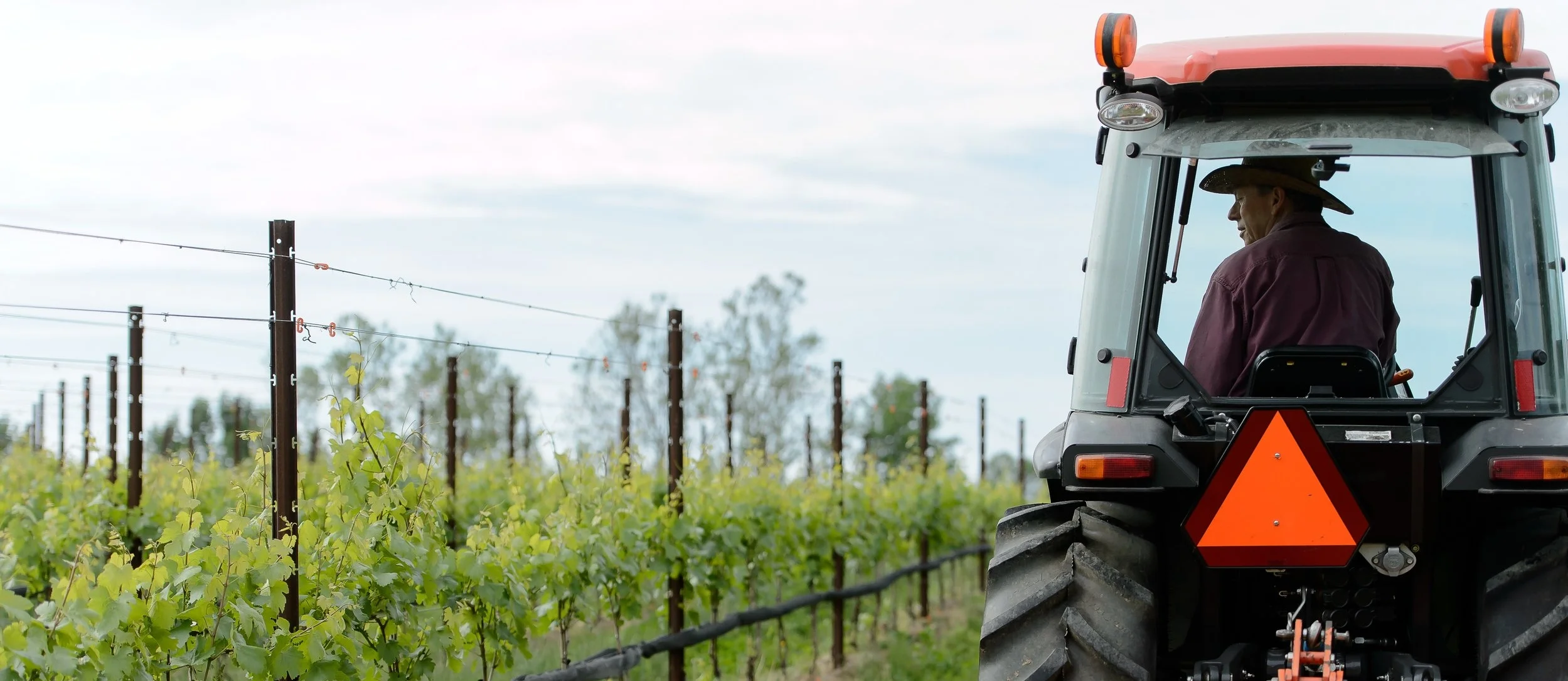

Looking Beyond Organic Agriculture: Part II, Biodynamic Agriculture
In my last post on organic agriculture, I discussed the importance of balance in the vineyard, especially in the soil where microbes play a critical role in creating a healthy environment for plant growth. This notion of ecological balance is central to a form of organic agriculture known as biodynamics.
In my last post on organic agriculture, I discussed the importance of balance in the vineyard, especially in the soil where microbes play a critical role in creating a healthy environment for plant growth. This notion of ecological balance is central to a form of organic agriculture known as biodynamics.
First proposed by German philosopher Rudolf Steiner during a series of five lectures in the 1920s, practitioners of biodynamic agriculture view the farm itself as a self-contained ecosystem that requires balance to function properly. In other words, in optimal circumstances, a farm can function successfully without external inputs.
Biodynamic agriculture is practiced throughout the world in many agricultural systems, including vineyards, and it has long had a certifying organization (Demeter). Many of Burgundy’s most well-known wineries, such as Domaine Leflaive and Domaine Leroy, rely exclusively on these techniques in their vineyards. The practice is also common in Bordeaux (for example, Château Palmer), the Loire (Château de la Roche aux Moines), and Sonoma (Bonterra Organic Vineyards and Benziger Family Wines).
Those who practice biodynamics believe that their fruit is healthier and ripens earlier, and that the resulting wines have more depth and balance than those grown using conventional or standard organic techniques. These winemakers also believe that biodynamic wines are more reflective of the terroir in which they are grown.

Several biodynamic producers tie shoots together and form an arc, tucking the growing end back down into the trellis. Despite the lack of sunshine and absence of hedging or leafing, I didn’t see any mildew, and the wines made from these vines are clearly the product of fully ripe grapes. Something is clearly in balance.
There are many parallels between organic and biodynamic methods, including composting, cover cropping and companion planting, integration of livestock and crops, and avoidance of synthetic pesticides. Indeed, organic certification is a requirement for Demeter’s biodynamic certification. What distinguishes biodynamic from organic agriculture is a set of practices that Steiner believed would harness non-physical “life-forces” that influence biology in desirable ways.
These “dynamic” practices consist of planting, cultivating, and pruning according to phases of the moon, and use of nine “preparations” that include homeopathic doses of specific organic (cow manure seasoned in horns), herbal (for example, tea made from stinging nettles), and mineral (silica) substances that are applied as either soil amendments or foliar sprays.
I’ve been intrigued by biodynamics since we started the vineyard ten years ago. Ideas related to balance and healthy, living soils are consistent with our views at Dodon regarding the best ways to make wine and improve the environment. To explore biodynamic methods in more detail, Polly and I met last summer with biodynamic practitioners in both Burgundy and Bordeaux.
We found that, while many vineyards actively promote the philosophy and tools of biodynamics to improve the quality of wine while reducing environmental impact, there is in practice a very broad range of interpretation and application of these precepts. Indeed, at the practitioner level, the definition of biodynamics is very hard to pin down.
Most of those with whom we spoke endorse applications of the preparations in the hopes of reducing use of synthetic pesticides and fertilizers. For the most part, however, these producers have not identified specific improvements in fruit or wine quality, nor have they noted reductions in their need for organic or synthetic pesticides since they started integrating biodynamic practices. In a difficult vintage, these producers are willing to use non-biodynamic tools as needed.

Eric de Suremain of Château de Monthelie picking stinging nettle used to prepare biodynamic preparation 504. The nettles are buried in wooden boxes or clay pots encased in peat for 1 year and then added to compost. Stinging nettle is said to have a relationship with iron, helps stabilize nitrogen, and promotes formation of humus.
For a small number of producers, however, such as Jean-Michel Comme, technical director at Château Pontet-Canet, and Eric de Suremain, fourth generation owner of Chȃteau de Monthelie and Domaine Eric de Suremain, biodynamics is a way of life. Jean-Michel and Eric have taken extraordinary risks to avoid use of non-organically certified material to maintain balance in their vineyards. Their stories are both interesting and informative.
Jean-Michel and Eric view every aspect of life – the vineyard, the wines, the people, and the broader landscape – in terms of their relationship to nature and balance among the four essential elements of life – earth, air, water, and fire. Their biodynamic practices attempt to integrate these elements to regenerate the land.
Weather, animals, vine varieties, invasive plants, insects and microbial pests, and human activity can all shift this elemental balance from health to disease. Rather than treating disease directly, however, the strategy is to return balance and harmony to the vineyard by feeding the soil. For example, Cabernet Sauvignon, a “fire” variety, usually does not do well in wet areas of a vineyard. In this case, fire and water are in conflict. Jean-Michel, however, has been able to balance these properties to produce stunning Cabernet from low lying areas of his vineyard where water often is in excess.

In the vineyard with Jean-Michel Comme at Château Pontet-Canet. The dip in the background is an area that I would have predicted would have too much water for good Cabernet Sauvignon, but through Jean-Michel’s careful management of weeds and preparations, the fruit is always very high quality.
How does he do it? Jean-Michel scouts his vineyard daily for weeds that are associated with excess water. When found, he might use equisetum (a foliar spray) and silica (a soil amendment). Both are elements with fire-like properties that make up two of the biodynamic preparations. Doing so results in more balanced growth, and the vines are much stronger and have a higher disease resistance.
Jean-Michel also looks for the underlying causes of imbalance and lasting methods to restore it. When he identifies certain plants, bacteria, or animals in the vineyard, he doesn’t necessarily try to change them. Instead he views them as nature’s response to imbalance. In order to form an environment that is both complete and unique, he farms in a way that encourages synergy among the vines and their surroundings. In doing so, he creates a farm with individuality and distinction that ultimately translates into the special wines of Pontet-Canet.
Despite the intuitive appeal of biodynamic agricultural methods, strict adherence comes with considerable risk. During the difficult 2016 vintage in Burgundy, Eric lost more than 90% of his crop, producing just 14 barrels from 40 acres, despite spraying for mildew 28 times, about twice his norm. This level of pesticide, even one that is organic, is likely to intensify imbalance, not reduce it.
And then there is the fundamentally mystical interpretative framework of biodynamics. Despite their natural sources and homeopathic doses, the biodynamic preparations are still chemicals. While they could restore balance in some situations, they could also reduce it if misapplied. We also don’t know with any degree of certainty the benefits of carrying out vineyard tasks according to the phase of the moon, despite the obviously strong gravitational force that it exerts on the earth.
What does all this mean for Dodon? The basic tenets of biodynamic agriculture are very similar to the agroecological methods that we’ve adopted. Both are focused on the relationship of the farm with nature, using biological principles to create balanced, diverse ecosystems characterized by healthy, microbially active soils, beneficial insect populations, and efficient long-term storage of carbon to create productive crop systems. For Dodon, the lessons of Jean-Michel and Eric are to listen carefully to what nature is telling us, and to think critically about our relationship with our surroundings.

A new plot of wildflowers, including astor, buckwheat, coreopsis, dill, and several clovers, in Dodon's experimental vineyard. While the diversity of insect activity was stunning, these crops were too tall to plant under the vines, did not hold up to tractor use, and attracted deer that quickly turned their attention to eating the ripening fruit.
The challenges to creating a balanced ecosystem at Dodon are extraordinary. The property was farmed for nearly a quarter millennium with tobacco, followed by a half century of conventional tillage, synthetic fertilizers and herbicides, and limited crop rotation. Much of the surrounding landscape, farmed in a similar manner, has now transitioned to suburban turf grasses that require synthetic fertilizers and pesticides. All of this most certainly destabilized any natural balance that might have existed prior to the original patent to Frances Stockett in 1658.
It will take time, patience, creativity, intellectual honesty, and perspiration to restore Dodon to a balanced ecosystem. In future posts, I’ll discuss some of the ways, starting with rebuilding the microbial life of the soil, that we are trying to integrate with the surrounding ecosystem and what we’re learning from these experiments
Looking Beyond Organic Certification: Part I
I’m often asked when leading guests on a tour in the vineyard whether Dodon is “organic,” or at least aspires to be certified as an organic vineyard. It’s a fair question. In many ways, we fit the common image of organic farmers. On a summer visit, you will find our vineyard team out with hoes, clippers, and other hand tools, carefully cultivating the soil and tending the vines. Regulations governing organic certification require practices that are standard operating procedures at Dodon, such as use of organic composts, mechanical weeding, and use of biological controls for insect pests. These methods are labor intensive and expensive, and they illustrate our commitment to sustainability, ecologically-friendly practices, and a balanced ecosystem.
I’m often asked when leading guests on a tour in the vineyard whether Dodon is “organic,” or at least aspires to be certified as an organic vineyard. It’s a fair question. In many ways, we fit the common image of organic farmers. On a summer visit, you will find our vineyard team out with hoes, clippers, and other hand tools, carefully cultivating the soil and tending the vines. Regulations governing organic certification require practices that are standard operating procedures at Dodon, such as use of organic composts, mechanical weeding, and use of biological controls for insect pests. These methods are labor intensive and expensive, and they illustrate our commitment to sustainability, ecologically-friendly practices, and a balanced ecosystem.
But the answer to the question is no. Dodon is not, and does not aspire to be, certified as an organic vineyard.
Despite the pastoral image of the organic farmer, the main difference between organically certified and conventional agriculture is the use of synthetic pesticides. Organic certification standards allow use of non-synthetic, and a few synthetic, chemicals, while conventional agriculture does not have any restrictions regarding use of synthetic compounds. Because non-synthetic substances are derived from biological (e.g., Bacillus thuringiensis toxin), botanical (e.g., neem and pyrethrins), or other sources (e.g., minerals such as sulfur and copper), they are considered more “natural.”
But non-synthetic chemicals are still chemicals, and they are often toxic to non-target organisms, including people. Take pyrethrins, a group of six naturally occurring substances derived from Chrysanthemums. These plant extracts have been used as insecticides for millennia, and depending on the specific extraction methods, many are certified for organic use. Pyrethrins are highly effective against a broad range of insect pests. Unfortunately, they are also highly toxic to beneficial insects, such as honey bees and other pollinators, much more so than many synthetic insecticides that target a narrower range of insects.
Because the real differences between conventional and organically-certified agriculture are small, some of the most ecologically-minded farmers have chosen to forego certification. They believe that meeting certification requirements is a diversion from the real objective to produce healthy food in a sustainable manner and may be detrimental to the crop and the environment. When Polly and I were in California last summer, we visited one such farmer, Bob Cannard, at Green String Farm whose produce is served at Chez Panisse, Alice Waters’ well known Berkeley restaurant. Bob is widely known for his visionary, yet radically unconventional, approach to growing fruits and vegetables.
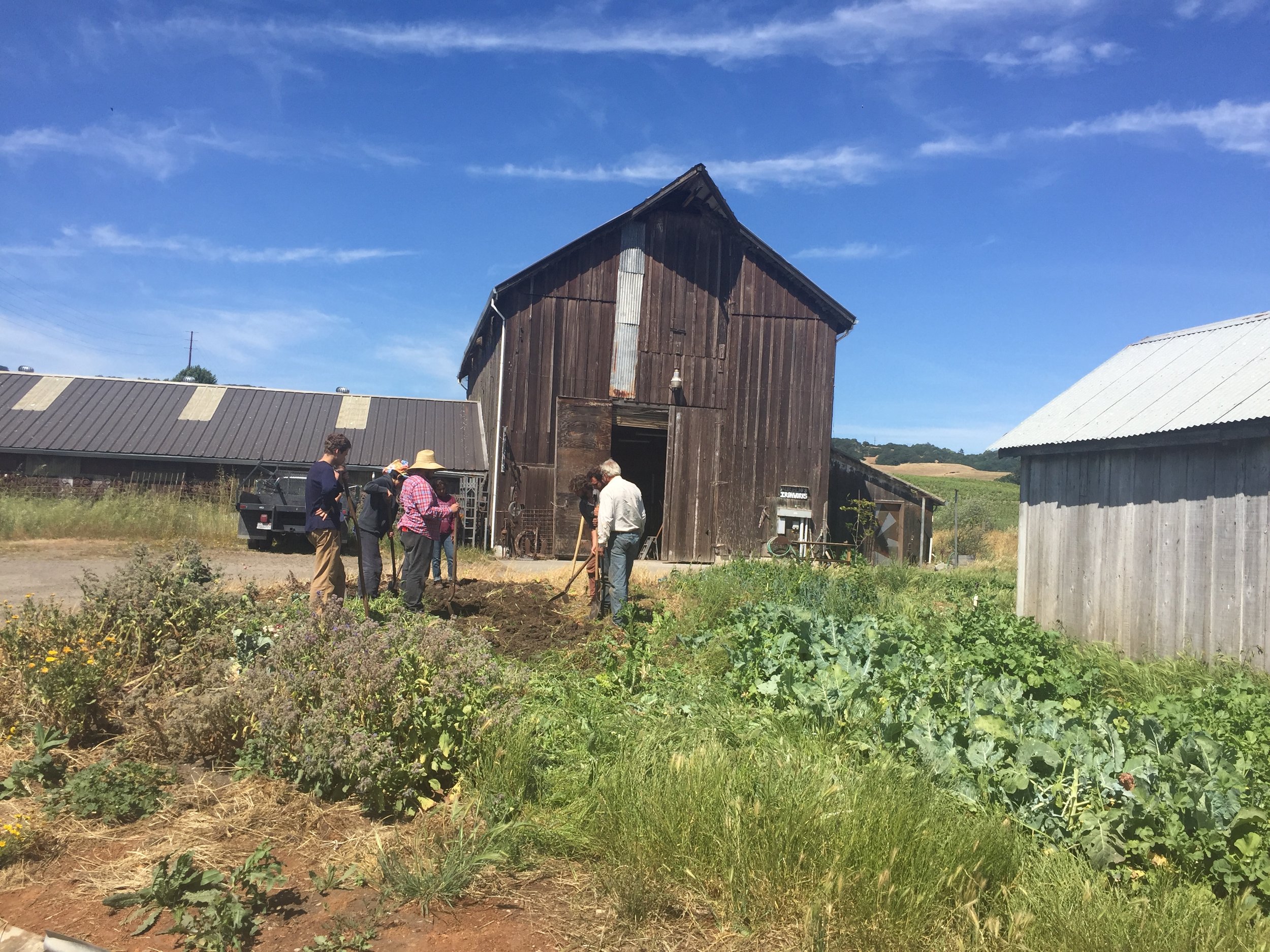
Bob Cannard with students at Green String Institute. If you look closely you will see the vegetables (our half) among the diverse cover crops (nature’s half).
Bob believes that healthy, tasty, nutritionally complete plants are the result of a large and diverse population of microorganisms in the soil. These microbes fix nitrogen, digest carbon containing organic matter, secrete acids that break down rocks into minerals, and protect roots from invading pests. Creating this diversity requires that we renew the soil with a complex diet of composts, shells, rocks, and decomposing plant material from diverse forbs that also provide habitat for beneficial insects. Bob summarizes it with the phrase, “Half for you, half for nature.” Failure to feed nature its portion leads to imbalanced and depleted soil, unhealthy plants, and inferior food.
None of this diversity and balance is required for organic certification. Most of the organic produce in your local grocery store comes from farms that may meet certification requirements, but they are just as sterile as conventional farms. These farms are home to single crops treated with (organic) chemicals such as sulfur and copper that reduce microbiological life in the soils. In the extreme, some organically certified produce is now grown indoors in water supplemented with nutrients, no soil or biodiversity required.

Cabernet Franc vines after the 2014 harvest in Dodon’s experimental vineyard. The vines on the left, treated using standard pesticides as recommended by the extension service, defoliated following infection with Downy Mildew. The organically treated vines on the right held their leaves much longer, but note the telltale blue tint of the copper.
Our trials at Dodon, done in partnership with Virginia Tech plant pathologist Mizuho Nita, convinced me that while we could successfully produce high quality fruit in most years using methods that would allow organic certification, the environmental costs would exceed those associated with a more ecologically-based program that includes judicious use of synthetic pesticides. For example, while copper adequately protected the vines from fungal pests, it required very high doses that would in the long run poison the soil and reduce microbial life. And a combination of pyrethrins and pepper spray reduced Japanese beetle pressure, but we had to apply it three times a week, reducing beneficial insect levels and creating more problems.
None of this discussion should be taken as criticism of the organic farming movement. By and large, it’s a big step in the right direction. But because the methods required for certification did not advance our environmental or winemaking goals, we’ve chosen to look beyond organic agriculture to a more ecologically friendly approach. In future posts, I’ll talk about what we are doing to create a sustainable, balanced ecosystem that is rich in diverse bacterial, insect, and plant species. We hope that these new techniques will result in healthier vines, earlier ripening, and better wine, all with fewer chemicals, organic or otherwise.
In my last post on organic agriculture, I discussed the importance of balance in the vineyard, especially in the soil where microbes play a critical role in creating a healthy environment for plant growth. This notion of ecological balance is central to a form of organic agriculture known as biodynamics.